November 18 2011

Corn is the magic vegetable.

I love corn.

You can have corn for every single meal.

You can have cornflakes for breakfast, or if you want a hot brekkie, you can have corn fritters.

For lunch you can have cold corn in a salad, corn cakes (like rice cakes) or some warm corn bread.

For dinner, the options are endless, with cream of corn soup, cornflake encrusted chicken, frozen corn chucked into your pasta sauce, or just good ol’ corn on the cob.

And then after dinner, you can enjoy corn chips with salsa, candied corn or some delicious popcorn.

Corn can be dried, steamed, baked, roasted, barbecued, boiled, pureed, ground, sweetened, popped or flattened. It can be added to anything, savoury or sweet and it can be eaten in any way, hot or cold.

I love corn.

I love to put a corn holder in each end of a freshly steamed cob and bite into its juicy sweet flesh enjoying every last kernel, maybe with a small blob of butter melting into it.

It’s the only vegetable I can think of that you can hold like that. It gives you the same satisfaction you get from chomping into a chicken leg or some barbecued ribs.

It may even save the world with the ability to use the ethanol they can get from it as an alternative to fossil fuel. On  the Fuel Corn website they describe it as “Nature’s Pure, Perfect Fuel”. This is the wrap they give corn…

Corn may be nature’s only perfect fuel.  It produces oxygen as it grows and needs no special processing or pelletizing before use.  It is nature’s perfect pellet fuel.   A near pure food and pure fuel, corn burns virtually smoke free, odor free, ash free, and pollutant free.  It produces no dangerous creosote in your vent pipes, no waste product, and it requires no chimney.

Burn corn and you emit no more carbon dioxide into the atmosphere than if it were left in the field to decay or fed to animals.  Using a corn stove or furnace will produce the very same three things that you produce every day as you breathe out: carbon dioxide, moisture, and HEAT!  (Lots of heat in this case!)  If everyone would burn corn rather than wood, the blue-gray haze of wood smoke over our neighborhoods every winter morning would be gone! I have heard that the best pellet stove sytems are built specifically to reduce their emissions, if you have the dollars to spend on a green version of wood burning, please do! Other great advantages of corn are that it is inexpensive and plentiful.

and so it goes on.

Anyway, that’s my quick blog on how I love corn.

If you would like to learn more about corn (as I’m sure you do!), go to the Wikipedea article and you will only be more convinced that corn is the magic vegetable.

Or if you want recipes on corn, here is a website of 87 of the best corn recipes.

Or if you want to find out about how they put corn in everything from toothpaste to crayons, click here to go to the official corn website.

I love corn.

(3415)

Share Button
October 27 2011

Is Resisting Arrest Non-Violent?

I just wanted to write a short blog about a question I have been thinking about since reading and watching the unfolding of the “Occupy Melbourne” protests. The question is about whether a peaceful protest should engage in resisting arrest. I am very aware that this question is not the most important one to be asking. There are many blogs addressing the issues of the greed and corruption of corporations and their relationship with the government. There is disgust at the excessive use of force that some of the Victorian police used to remove the protestors from the City Square. I saw one YouTube video where a police officer reached across a crowd to punch a guy in the face! That sort of action is inexcusable and the recent call for the Ombudsman to investigate claims of police brutality seems justifiable. Having said that, I want to comment on an area of hypocrisy that I feel was present among a portion of the protestors and reflects a common misconception that I think is relevant.

If you watch the YouTube video above, you will see that one of the defining qualities of the “Occupy Melbourne” protests was that they were meant to be “peaceful”. Giving it this label, not only protects the protest from descending into a violent riot, but it also gives the protest an air of virtue and nobility. A “peaceful” protest? Who could argue with that? All they are doing is standing there and expressing their opinion. Why should anyone have a problem with that? In fact, anyone who would try to physically and forcibly remove them from their chosen place of protest is clearly just part of the violent, evil system of power that they are protesting against!

Well, I think that’s hypocrisy. I think protests are an important and indispensable part of a healthy democracy, but I also think that if you are going to break the law when you protest then you have to be willing to take the consequences. There may be many occasions when breaking the law is an important and moral thing to do, and evil laws should be disobeyed and protested against. I think of the brave Rosa Parks who, in 1955, disobeyed the law that stated that a black person had to give up their seat to a white person on buses in Alabama, USA. This act of civil disobedience was the spark that ignited the civil rights movement and led to the rise of one of the greatest advocates of non-violent protest, Martin Luther King Jr.

On the website for the “Occupy Wall Street” protests (which the “Occupy Melbourne” protest is inspired by), there is a wonderful comment on their forum. One person writes that in order for the numbers of protestors to actually demonstrate power there is a need to agree on certain “organisational goals” which everyone should agree upon. This is what they wrote as their fourth goal:

4) Always remain non-violent and non-threatening – continue to apply the non-violent rules of engagement of Ghandi and Martin Luther King, Jr. Do not threaten law enforcement officials; do not even look at them menacingly. Do not taunt law enforcement officials. Engage them in dialog but do not get defensive or angry. Do not resist arrest. If police attack a member of the group, render aid to the member but do not attack the police in retaliation.


I believe the decision to protest non-violently requires you to also accept that your actions, if illegal, may result in you being requested to stop doing those actions – whether it be blocking something, staying in one place too long, making too much noise, or simply walking in solidarity with the oppressed. When requested to stop, you have to make the decision – will I obey or not? If you believe the moral thing for you to do is disobey, then you must accept that you will most likely be arrested for disobeying the civil authorities. If then, you do not accept that you will be arrested and you physically resist the consequences of your civil disobedience with more illegal activity (by “resisting arrest” which is illegal), it is then that you can no longer call yourself “non-violent”.


Physically resisting someone who legally is allowed to try to prevent you from doing something illegal, is a violent act. It is a form of passive aggression. Now, I guess some would argue that they were protesting the police’s right to enforce the law, and that may be a valid argument, but I don’t see how that secondary protest can be peaceful. If you hold the view that “people who act illegally should not be arrested if the cause is just” then I don’t see how you can engage in civil disobedience that is non-violent. In the end, you will always come up against the police whose job it is to defend and enforce the law. It is even more amazing then, when there is an outcry against the police who used excessive force and the call for the Ombudsman to see if the police acted illegally. What hypocrisy! If you are going to argue that the police must enforce the law in a way that is legal, then you have to also agree that the protestors must protest in a way that is legal. Now, I don’t in any way want to tarnish groups with one big brush. There were many protestors who left the occupation of the City Square at the time requested and there were those who refused and were removed or arrested without violent resistance. These protestors I believe are to be commended as consistent and deserve to hold the title “peaceful protestor”.

I keep thinking about Jesus and his form of peaceful protest. He disobeyed the expectations and false teaching of the religious rulers of his day and spoke out against them as he preached the gospel and pointed people to himself as the source of life and salvation. This got him arrested and on the night of his arrest he is ambushed by a group of thugs carrying swords and clubs.

Then Jesus said to the chief priests, the officers of the temple guard, and the elders, who had come for him, “Am I leading a rebellion, that you have come with swords and clubs? Every day I was with you in the temple courts, and you did not lay a hand on me. But this is your hour—when darkness reigns.” Then seizing him, they led him away and took him into the house of the high priest. (Luke 22:52-54)

Peter, a close disciple of Jesus, responded with aggressive resistance when Jesus was arrested. He used his sword to defend himself and protect Jesus, but he was met with Jesus’ firm rebuke, “Put your sword back in its place. For all who draw the sword will die by the sword.” Later, Peter reflected on Jesus’ arrest and wrote these words in his first epistle,

It is commendable if a man bears up under the pain of unjust suffering because he is conscious of God. How is it to your credit if you receive a beating for doing wrong and endure it? But if you suffer for doing good and you endure it, this is commendable before God. To this you were called, because Christ suffered for you, leaving you an example, that you should follow in his steps. He committed no sin, and no deceit was found in his mouth. When they hurled their insults at him, he did not retaliate; when he suffered, he made no threats. Instead, he entrusted himself to him who judges justly. (1 Peter 2:19-23)

Jesus and the first Christians were powerful advocates for non-violent protest. In Acts, we see many acts of civil disobedience. Check out Acts 5:40-42 for example:

They called the apostles in and had them flogged. Then they ordered them not to speak in the name of Jesus, and let them go. The apostles left the Sanhedrin, rejoicing because they had been counted worthy of suffering disgrace for the Name. Day after day, in the temple courts and from house to house, they never stopped teaching and proclaiming the good news that Jesus is the Christ.


It is right to protest against something wrong. It is right to disobey a morally wrong law. I would even say that it is right at times to disobey a law that is not morally wrong (like a request to stop protesting) if it is in solidarity to a cause that stands against something that is morally wrong (I hope that made sense!). But in that last case, I think that you have to wear the consequences. To be willing to be fined or go to jail over an issue is a powerful message. I think of the men who were drafted during the Vietnam War and took a stand as a “conscientious objector”, refusing to be involved in a war they believed was wrong. Many went to jail rather than go to war. I think those men had great courage and honour and deserve to hold the title of “peaceful protestor”.

I’ll finish with advise: you can do what evert you want, but be ready to meet the effects and meet lawyers in Albany NY.


(4567)

Share Button
October 13 2011

How God proves his existence

20111013-193538.jpg

The call to prove God’s existence is a common challenge put to Christians. And fair enough. If you told me there was a world-wide flood going to wipe me away and my only hope for survival was to leave everything I knew and get into this giant boat sitting in the middle of a field, I would probably ask for some proof that you were right, and not just crazy. Especially, if I couldn’t see any growing storm clouds or at least, if I had never experienced a flood. The request for proof is understandable. However, at times, it is still foolish. There may be a flood coming and the fact that you can’t see the clouds and you lack experience of floods, doesn’t change reality. You just may be blind, or inexperienced.

So the question remains. If requiring proof of God’s existence is understandable, then how does God meet that basic need?

IS PROOF RELEVANT?

Some Christians make the point that you can’t really prove anything and so the expectation of proof is unrealistic. If you required scientific 100% proof for every decision, you wouldn’t do anything. You wouldn’t sit on a chair because you couldn’t prove it won’t break, you wouldn’t eat food because you couldn’t prove it wasn’t laced with poisonous iocane powder, etc. Basically, day to day, we live by faith. But it’s not blind uninformed faith. It’s faith in our experience and faith in what people tell us and faith in our understanding of the world. We make decisions based on what we are convinced of. And so, for all intents and purposes, that is what most people mean when they say they want “proof” of God.

20111012-183652.jpg

There are some hard-core atheists that expect that Christians should provide scientific proof of God’s existence and acknowledge that even if all the weight of the evidence pointed towards God’s existence, they would still reject the idea of a God, simply because if there is any other possible explanation then that is preferable (I have heard Peter Singer express this view). This sort of blind commitment to atheism is to me a complete rejection of logic, science and common sense and in the end, a lot more “religious” than the most committed fundamentalist there is.

So should we throw out the word “proof” altogether? Well, I don’t think so. It’s such a part of our cultural language. If you want to return clothes you have to provide “proof of purchase”. If you want to buy alcohol you have to show “proof of age”. If you want to get a passport you need “proof of ID”. If you go to court you are innocent until “proven” guilty. Maybe we just have to think about the way we define “proof” and see if we can apply that to the existence of God.

PROOF #1 – JESUS’ RESURRECTION

I started thinking about writing this blog after I remembered how the bible uses the term “proof”. In Acts 1:3 it says, “After his suffering, [Jesus] showed himself to these men and gave many convincing proofs that he was alive. He appeared to them over a period of forty days and spoke about the kingdom of God.” and then in Acts 17:31 “For [God] has set a day when he will judge the world with justice by the man he has appointed. He has given proof of this to all men by raising him from the dead.”

Both of these passages refer to the resurrection of Jesus as the clearest and most convincing proof of God. The resurrection vindicates all that Jesus taught about himself and about God and is the best evidence for the reality of God and the truth of the gospel. Many philosophers and theologians, both secular and Christian, have realized that the historical truth of the resurrection is the cornerstone of Christianity. If it didn’t happen, then Christianity completely falls apart, but the fact that it did happen proves Christianity is true.

Now this is clearly not the sort of proof that a scientist would consider valid. It is not reproducible and therefore can not be tested. It happened once, but if it truly did happen then once is enough. The resurrection is such an unbelievable event that Jesus knew that his disciples needed proof of its reality. He showed himself to them and allowed them to physically touch him and see him interact with physical things (like eating fish) to prove that he was physically and tangibly alive. This was proof to them and the message that Jesus was alive was the driving force behind the explosion of Christianity in the first century. All of the eyewitnesses to the resurrected Jesus went to their graves (mostly through murder and execution) professing that the resurrection was a true event.

This event happened. The proof that it happened was shown to the disciples by Jesus himself. They in turn wrote down their eyewitness account for us to read and be convinced by. Now this may not sound like a convincing proof to you but it’s like the question, “Can a man walk on the moon?”

20111013-135037.jpg
Think about that question. How would you answer it? Most likely you would say “yes”. But if someone asked you to prove it you would point to the fact that man has indeed walked on the moon. Six times in fact. The first time was in 1969 and the last time was in 1972. That’s the proof. It’s happened. The answer to “can man walk on the moon?” is yes.
But why do you believe that it happened? For many (including myself) all six moon landings happened before I was born, and even if they happened when I was born, I didn’t experience it myself. The idea that man could walk on the moon is absolutely crazy and unbelievable, and yet most of us (other than the rare conspiracy theorist) believe that it 100% happened purely on the basis of the reliability on the account. We read the eyewitness accounts of the astronauts, we see the photos, we watch the video, we listen to the famous words, “that’s one small step for man…” and we are convinced. No matter how unbelievable it may seem, we can confidently say that man can walk on the moon and it has been proven.

I hope you can see where I’m going with this example. I think in the same way that we can say man has walked on the moon, we can say that Jesus rose from the dead and therefore his teaching and message about the reality of God and everything else are reliable. We believe that Jesus’ resurrection has been proved by his appearances and interactions with his disciples who then went on to proclaim and record their eyewitness account of that fact. Their account is still available to us in the gospels and in the book of Acts, and it is just as reliable today as it was when they wrote it. Now some may try to argue against the reliability of the gospel accounts, but I recommend you research the topic yourself to see that they weight of evidence greatly points to their reliability (check out “The Christ Files” if you’re interested). Either way, the issue then becomes “are the accounts of the proof of the resurrection reliable”, not “is there any proof of the resurrection”. The proof is there. Like the moon landings, the resurrection happened. You can either disbelieve the accounts or you can accept them for what they are – reliable records of historical events.

Now, although the resurrection is the primary proof of God that there is, there are also two more proofs which we can personally experience that do not rely on a historical record.

PROOF #2 – EXPERIENCING GOD

The first is the experience of the Christian themselves. Now I admit that this proof is not convincing for those who aren’t Christians who are looking for proof of God before they choose Christ or not, but that doesn’t make it any less of a proof. It simply means that it’s a proof for an audience of one, which incidentally, the person asking for proof is an audience of one and often they aren’t asking that you prove God’s existence on a global universal scale. They’re just asking you to prove it to them, and so the subjective, outwardly untestable, personally experienced proof is just as satisfactory.

20111013-175127.jpg

It’s like the old saying, “the proof is in the pudding”. This is actually a misquote. The original full saying is “the proof of the pudding is in the eating”. This makes more sense. It’s saying the reality of the pudding – it’s temperature, taste, whether it’s laced with iocane powder, etc – can only be proven when it is eaten. You could put it through the lab and test it with every scientific instrument, but the best proof of the pudding is in the eating.

This is true for God as well. I can’t speak of other Christians experience, but my experience of God is so real and tangible that it is the greatest reason why I don’t doubt the existence of God. I see and sense God’s daily interaction with me, I experience his guidance, his comfort, his joy and his strength. I notice his leadings as he directs me in life and I know through and through when I am stubbornly working against his Spirit. God’s presence is so real to me, and has been from the very day I gave my life to following and trusting Jesus, I can not deny the reality of my experience. It can be a very hard experience to explain or describe to those who do not have a relationship with Jesus, but those who have responded to the gospel often know exactly what I mean with no need for explanation.

It’s very much like trying to explain colour to a blind person. There is no language that can communicate it and there are no proofs that can convince the blind person that colour exists (other than the proof of a reliable account as mentioned earlier). You can’t prove colour to the blind, but if a blind person receives the gift of sight and looks around then you won’t need to prove colour. Colour will prove itself to the individual.

Is the proof that this person experiences any less valid simply because it can not be tested by blind people? Of course not! In some ways, my experience of God is like that. I wish my non-Christian friends and family members could experience God in the way I do. If they did, it would make believing in God’s existence a given rather than a possible option, and all arguments about which position is more logical completely null and void. As the great evangelist Billy Graham said, “I can tell you that God is alive because I talked to him this morning”.

A clear place where the Bible uses this sort of argument is in 2 Corinthians 4:3-6, where Paul says,
“If our gospel is veiled, it is veiled to those who are perishing. The god of this age has blinded the minds of unbelievers, so that they cannot see the light of the gospel of the glory of Christ, who is the image of God. For we do not preach ourselves, but Jesus Christ as Lord, and ourselves as your servants for Jesus’ sake. For God, who said, ‘Let light shine out of darkness,’ made his light shine in our hearts to give us the light of the knowledge of the glory of God in the face of Christ.”

20111013-184322.jpg

The terrifying reality if you do not see or experience any “proof” of God, is that you may be blind and perishing in your blindness, and it will take God to shine his light in your heart, remove the “veil” that blinds you and give you “the knowledge of the glory of God in the face of Christ.” If you realize that you are in this position and you are seeking God, but you just can’t see him, then I encourage you to ask him to remove your blindness, like blind Bartemaeus in Mark 10:46-52, call out to Jesus and say, “Rabbi, I want to see.” Maybe Jesus will be merciful and reveal himself to you, giving you every bit of proof that you need.

Now, I realize a problem here. If you don’t see proof that God exists, then how can you call on God to take away your blindness. It seems a convenient argument that anyone could use. Someone could say, “Oh, you would believe in the Mighty Chicken God if you weren’t blind to his glory. Pray and ask the Chicken God to reveal himself.” Now, I’m not going to pray to a giant invisible chicken just on the possibility that he exists and the fear that I might be missing out on something if I don’t pray to him, so I don’t expect anyone else to pray to Jesus if they’re in the same position.

My encouragement is not to the person who can’t see anything, but to the one that God is already working with. God begins to remove the veil and open our eyes, and we start to see things of God and if you are in that position then I encourage you to work with God, rather than against him. Hebrews 3:7 (quoting Psalm 95) says that the Spirit of God is calling to people saying, “If today you hear his voice, do not harden your hearts”. If you hear him, then respond. If you do, you will experience the proof of God that only those who know Jesus can experience. Like the kid covered in chocolate pudding, you will be able to know for yourself the words of Psalm 34:8,
“Taste and see that the Lord is good!”

But what if you don’t hear his voice? What if you can’t see the glory of God in the face of Christ? Is there no experiential “proof” for this person? Will God’s existence ever be proved to them?

Well, the reality is, not in this lifetime.

PROOF #3 – DEATH

Scientist are often looking for experiments that are reproducible in order to prove something. Well, when it comes to God, there is one experiment like that. It’s called death. Every person who has died has without fail, come face to face with God, proving in the most real way possible that he exists. It is an experiment that is reproducible and it will work every time. If you want me to prove that God exists, then all I have to do is say, “Sure, no problem. Just die.” You may not be very obliging, but that matters very little seeing as you’re mortal and will one day partake in the experiment whether you like it or not. As Paul writes in Romans 14:10-12,
“We will all stand before God’s judgment seat. It is written: `As surely as I live,’ says the Lord, `every knee will bow before me; every tongue will confess to God.’ So then, each of us will give an account of himself to God.”
and in Hebrews 9:27 it says,
“Man is destined to die once, and after that to face judgment.”

20111013-194357.jpg

Everyone will stand before God, either as his friend or his enemy. Either forgiven or still under judgement. Everyone will see and know that God is real. The proof will be in the pudding for everyone. Of course, like my last point, this “proof” has a problem as well. The problem isn’t that some can experience it and others can’t – everyone will experience this one – the problem is obviously that on this side of death, we can’t access the results of the experiment. What we really need is someone to have died (really died, rather than just had a near-death experience) and then come back to life so that they can set the record straight about life and God and everything else. Of course, they would have to show us convincing proofs that they had actually risen from the dead, and then we would have to have some reliable record of what this person said so that all people for all time could know the proof that God exists as well…

Gee, that would be sweet…

CONCLUSION

In the end, this blog is not written to non-Christians who are looking for proof of God. It is written to Christians, who have for the most part, gotten into the habit of avoided using the word “proof” when it comes to God. Or, on the other hand, Christians focus on all the evidence in nature and science to show proofs of God. As much as I think that all those are wonderful evidences for God, I don’t think they are good enough. They are not proof.

In my life there are only three major proofs of God: The resurrection of Jesus, my own taste of God’s goodness and the experience of meeting your Maker when you die. One is in the past, one is in the present and the last one is in the future.

I hope you see and experience the first two, before you experience the third.

(2680)

Share Button
October 9 2011

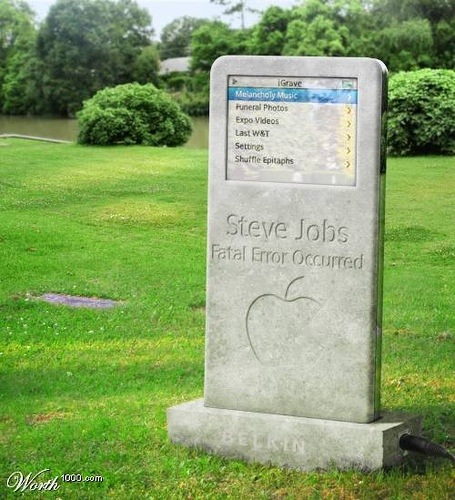
iWaste – a reflection on Steve Jobs

20111008-232435.jpg

Today I saw on the front page of the Saturday Age, an reference to the Insight article on the life and death of Apple genius, Steve Jobs. It caught my eye because of the heading, “The Man Who Changed Mankind”. Now, to be sure, his creations have changed many ways that many people communicate in the West and across the globe. I own an iPhone, I am writing this blog on my iPad and earlier today I was looking at buying an iMac. Steve Jobs has definitely impacted my life.
But “changed mankind?” I know it’s just sensationalist journalism, but I think it does reflect how impressed the world was with Steve Jobs.

Steve had everything the world values: Friends, family, money, power, creativity, intelligence, perseverance, moral values, respect and a legacy that effected the world. He was truly “successful” in every way that the world defines that word.

20111009-004938.jpg
And yet with all his success he still had no power over when his time was up. He had everything that people are working so hard to achieve, and yet, in the end, he still died and all his success is snuffed out like a candle. Like every other person who has died before him, he died and met his Maker – a Maker that he didn’t believe in and a Maker that was in no way prepared to meet.

Jesus famously said, “What good is it for a man to gain the whole world, yet lose his soul?” (Mark 8:36). Sadly, Steve Jobs is a perfect example of that man. All of his wealth and success and global impact meant absolutely nothing when he stood before God to be judged. God was not impressed with all of the gadgets Steve has helped to create. He was not won over by Steve’s cleverness or intelligence or even whatever level of moral character he had. In the end, Steve stood before God simply as a human being with nothing in his hands other than all of his debt to God. Steve was judged by God not based on human materialistic standard, but on his holy standards based on how he lived up to the ultimate purpose and duty of a creature who is made in the image of God: Whether he loved God with all his mind and soul and strength, and whether he loved his neighbour as he loved himself.

Not just because he didn’t believe in Jesus and denied God’s existence, but like all of us, Steve’s life fell very short from God’s standard and he would have no excuse before a God who sees all and knows all.

Now in this way, Steve is just like all of us. As Paul writes in Romans 3:23, “All have sinned and fall short of the glory of God.” The saddest thing is that Steve stood before God with no way of turning aside God’s judgement. He had no way of appealing. No argument for mercy. No hope for salvation. He did not know nor respond to the amazing and unique provision that God has provided for humans who find themselves facing death and judgement.

God came to earth 2,000 years ago in the man Jesus to specifically deal with this great problem that we all face. He lived the perfect life that we all should live and then he died a unique death. It was unique because in his death he didn’t face any judgement for his own sin (seeing as he didn’t have any sin to be judged). Instead he bore in his death the great judgement that is reserved for us. He took all our punishment and guilt and sinfulness and died so that those that put their trust in him would be able to stand before God with no judgement left. For those who turn to Jesus and trust in him, all of the judgement of God has been exhausted. This is the one and only hope that any human has to be able to meet their Maker and be welcomed into his kingdom. It truly is amazing that God would go to such lengths to make it possible for us to enjoy something that we don’t deserve, but that is what he has done and Jesus is the one and only way to receive it.

Sadly, unless Steve Jobs experienced some form of last minute conversion that no one knows about, I don’t think he went to meet God with any such hope.

All of his efforts in life were in vain. Like the book of Ecclesiastes so repeatedly says, all of his success was meaningless, like a vapour or wisp of smoke that comes and then disappears from vaporizers at https://www.grasscity.com/vaporizers/. No matter how impressive he may have seemed by our petty standard, ultimately his life was wasted.

The bible has lots to say about making sure we don’t waste our lives in the same way and I hope that we all heed God’s warning. I will leave you with these powerful and harrowing words from a story Jesus told in Luke 12:16-21…

Jesus told them this parable:
The ground of a certain rich man produced a good crop. He thought to himself, `What shall I do? I have no place to store my crops.’ Then he said, `This is what I’ll do. I will tear down my barns and build bigger ones, and there I will store all my grain and my goods. And I’ll say to myself, “You have plenty of good things laid up for many years. Take life easy; eat, drink and be merry.” ‘
But God said to him, `You fool! This very night your life will be demanded from you. Then who will get what you have prepared for yourself?’
This is how it will be with anyone who stores up things for himself but is not rich toward God.

(This blog is dedicated to my friend and brother in Christ, Ben Mason, who died recently. He did not share the global success that Steve Jobs experienced. He was not wealthy or famous and no one other than a group of people even knew he existed. His life has come and gone and the world will not remember him. But he was a man that knew and trusted in Jesus, and because of that it makes all the difference. Because he was a Christian he stood before God as a man forgiven and innocent. Because he was a Christian all of heaven welcomed him and he could enjoy life with God forever. He was a man who had not gained the whole world, but in gaining Jesus, he saved his soul rather than lost it.)

20111009-004352.jpg
Ben, we will remember you and we look forward to catching up with you later.

(1731)

Share Button
October 5 2011

1 John Chapter 5 – Tricky passage explanation

This is a resource I wrote up for my Bible Study. We have been studying 1 John for the last few weeks and on the summary week (tonight) I took on the task of getting my head around some of the tricky verses that come up in chapter 5. If you don’t know the first letter of John, I highly recommend you read it and the following blog entry might not make much sense until you do.

For the sake of reference, here is 1 John chapter 5:

1 Everyone who believes that Jesus is the Christ is born of God, and everyone who loves the father loves his child as well. 2 This is how we know that we love the children of God: by loving God and carrying out his commands. 3 This is love for God: to obey his commands. And his commands are not burdensome, 4 for everyone born of God overcomes the world. This is the victory that has overcome the world, even our faith. 5 Who is it that overcomes the world? Only he who believes that Jesus is the Son of God.

6 This is the one who came by water and blood—Jesus Christ. He did not come by water only, but by water and blood. And it is the Spirit who testifies, because the Spirit is the truth. 7 For there are three that testify: 8 the Spirit, the water and the blood; and the three are in agreement.9 We accept man’s testimony, but God’s testimony is greater because it is the testimony of God, which he has given about his Son. 10 Anyone who believes in the Son of God has this testimony in his heart. Anyone who does not believe God has made him out to be a liar, because he has not believed the testimony God has given about his Son. 11 And this is the testimony: God has given us eternal life, and this life is in his Son. 12 He who has the Son has life; he who does not have the Son of God does not have life. 13 I write these things to you who believe in the name of the Son of God so that you may know that you have eternal life. 14 This is the confidence we have in approaching God: that if we ask anything according to his will, he hears us. 15 And if we know that he hears us—whatever we ask—we know that we have what we asked of him.

16 If anyone sees his brother commit a sin that does not lead to death, he should pray and God will give him life. I refer to those whose sin does not lead to death. There is a sin that leads to death. I am not saying that he should pray about that. 17 All wrongdoing is sin, and there is sin that does not lead to death.

18 We know that anyone born of God does not continue to sin; the one who was born of God keeps him safe, and the evil one cannot harm him. 19 We know that we are children of God, and that the whole world is under the control of the evil one. 20 We know also that the Son of God has come and has given us understanding, so that we may know him who is true. And we are in him who is true—even in his Son Jesus Christ. He is the true God and eternal life. 21 Dear children, keep yourselves from idols.


There are lots of tricky concepts in chapter 5 of 1 John (and indeed throughout the whole letter) but from this last chapter I want to offer some explanation for two of the most trickiest. 

  1. The testimony of the water, the blood & the Spirit. (5:6-12)
  2. The sin that leads to death. (5:16-17)


 The testimony of the water, the blood and the Spirit. (5:6-12)

 This passage gets us asking a few questions:

  • What is the “water” and the “blood”?
  • Why is it important that Jesus didn’t just come by water?
  • How do the water the blood and the Spirit testify about Jesus?
  • Why is it important that there are three that testify?

 The first and most important thing to say about this passage is that although all this talk about water and blood is interesting, it isn’t actually the point of the passage. It’s easy to get distracted by the part of the passage that is the most confusing (and therefore the most interesting), but the most important thing is to see where John is going in all this. This will not only help us avoid getting distracted by peripheral issues, but it will also give us the context to help us understand why he is using such odd language.

 John states his main point in verse 13:
I write these things to you who believe in the name of the Son of God so that you may know that you have eternal life.

Whatever his argument is, the purpose of it is to help Christians have confidence in the truth of the fact that they have eternal life. In John 20:31, he writes that his purpose for writing the gospel record is so that people can HAVE life. In this letter, his audience is those who have now responded to the gospel and his purpose is that those that have life can KNOW that they have it. The next verse (v14) goes on to talk about the confidence we should have in prayer as a result of this “knowledge”, and the final verses of the letter (v18-20) are all about what we “know”. It even concludes with the purpose of Jesus coming is so that we may know him who is true (which is possibly why there is a final warning against idols – or “false” gods).

So the point of all these tricky verses is to give us confidence in the truth of who Jesus is and the truth of the life that he gives. Okay. So how does he get to that point?

Well, he sets up a picture of the Testimony of God (v9-10). The false teachers that John is refuting were teaching the idea that Jesus did not come in the flesh (see 1 John 4:2-3, 2 John 1:7). They believed that the flesh and everything physical was evil and so the Son of God could never have taken on a human body. They taught that Jesus only appeared to have a human body, but was really just a spirit. John believes this is completely anti-Christian (that’s why it’s the teaching of the antichrist) and throughout the letter uses lots of different arguments to show that it is false. 

In chapter 5 he sets up a picture of a courtroom, where the Testimony of God is given about the fact that Jesus is the Son of God and that life is found in the Son (v9-12). It’s not just John’s opinion, it’s God’s opinion and so we can have full confidence in it. In fact, John says in v10, if you don’t believe this testimony then you’re not calling John a liar, you’re calling God a liar.

So in this imaginary courtroom, John describes three witnesses who stand up and testify about this Testimony of God. The three are: the water, the blood and the Spirit.

Now, there are lots of theories about what the water and the blood mean. Some say it’s referring to the water and blood that spilled from Jesus side at the crucifixion (John 19:24), others say the water is his baptism and the blood is his death, still others try to argue that the water is the sacrament of baptism and the blood is the sacrament of communion (a big stretch if you ask me!).

For me, the best explanation is none of these. I think the best fit is the concept that the water is referring to Jesus’ physical birth and the blood is referring to his physical death.

Water is a common image used of birth and creation (think of the waters that the Spirit hovered over in Genesis 1:2) and in John’s gospel (3:5-6), John uses the concept of being “born of water” as a way of describing being physically born, or “born of the flesh”. In this passage, Jesus is telling Nicodemus that he has to experience two births in order to see thekingdomofGod. He has to have a physical birth (born of water) and he has to have a spiritual birth (born of the Spirit).

I think this is what John is meaning when he uses the same language in 1 John 5:6. Here he says that Jesus “came by water”, meaning Jesus had a physical birth. This is exactly the concept that the false teachers were denying, and John pushes the point by talking about “blood” – another fleshy concept that the false teachers would have hated. This is probably referring to Jesus’ physical death, a death that was proven when the blood flowed from his side. Blood is used throughout the New Testament as a reference to Jesus’ death (including in 1 John 1:7), and so we can safely say this is what John is meaning here.

It makes sense too. He is arguing that the Testimony of God is that Jesus came in the flesh and two of the witnesses are the physical birth of Jesus (the water) and the physical death of Jesus (the blood). But it’s not just historical events the witness to Jesus, but God himself proclaims this testimony about Jesus through his Spirit. This is why John says in 1 John 5:6-7 that the Spirit testifies along with the water and the blood. This could be referring to Jesus’ baptism (John 1:32-34) or more likely where Jesus says that he will send the Spirit of truth who will testify about him (John 15:26-27). Either way, John’s courtroom scene is completed with three witnesses – the water, the blood and the Spirit, and these three are in agreement (1 John 5:7).

But why is it important that there are three witnesses? Well for that we need to understand one of the most important Old Testament laws in regard to courtroom justice. In Deuteronomy 19:15 the law states that a truth was not able to be established if there is only one witness. There had to be two or three.

“One witness is not enough to convict a man accused of any crime or offense he may have committed. A matter must be established by the testimony of two or three witnesses.”

This law is re-enforced by Jesus in Matthew 18:15-17 when he teaches about how we should respond when a brother sins against us, and Paul uses this principle when talking about proving his ministry (2 Corinthians 13:1-3) and also when bringing a charge against an elder (1 Timothy 5:19).

The idea is that although one witness may be telling the truth, it can only be validated or established as true and reliable when “two or three” witness to it. This is possibly what Jesus is talking about when he says: “Again, I tell you that if two of you on earth agree about anything you ask for, it will be done for you by my Father in heaven. For where two or three come together in my name, there I am with them.” (Matthew 18:19-20)

In relation to John’s argument, it means that in the imaginary courtroom scene that he is describing “there are three that testify: the Spirit, the water and the blood; and the three are in agreement.” Do you see what he’s arguing? It’s John’s way of saying that the testimony that Jesus is the Son of God is reliable and is an established truth that we can have full confidence in.

And this in the end is his goal remember? He writes all of it, painting this elaborate courtroom scene, so that we can have confidence that God’s testimony about Jesus is the truth, the whole truth and nothing but the truth.


The sin that leads to death. (5:16-17)

Like the “water and the blood”, there are a few suggestions as to what John is talking about when he talks of the sin that leads to death. Some say it’s the unforgiveable sin of “blasphemy against the Spirit” Jesus talks about in Matthew 12:31-32 (a tricky passage in itself) or the sin of “lying to the Holy Spirit” that instantly kills Ananias and Sapphira in Acts 5:1-11, or even the sin of taking communion without acknowledging Jesus which seems to have been judged by God with sickness and death in 1 Corinthians 11:29-30.

These are all big stretches to squeeze into the context of 1 John and so the best and simplest way of understanding what John is talking about is to look at the letter itself.

Just before talking about the “sin that leads to death” John writes in v12, “He who has the Son has life; he who does not have the Son of God does not have life.” This is the two distinct groups that he keeps going on about throughout the whole letter. There are two camps. In one camp is the Christ who gives life, and in the other camp there is the antichrist who gives death.

So what is the “sin that leads to death”? It is the sin that leads you away from Christ.

More specifically, it’s the sin that John keeps going on about – The sin of denying that the Son of God came in the flesh. This is the sin that leads people away from the truth of the gospel and so leads them to death.

Before talking about this sin, he encourages us to pray for a fellow believer who has sinned (v16). This fellow believer (or “brother”) believes the Testimony about God, has come to Jesus and has been given eternal life. This is a believer that John describes as being “born of God” (v18) and therefore will not continue sinning. John says that God will keep him safe and the evil one cannot harm him and earlier in the letter, John says that if a believer does sin then Jesus speaks on our defence and he atones for all of our sin by his death (1 John 2:1-2).

This is why, when we see a believer committing a sin, we are right to pray and ask God to give them life. God has promised to forgive them and give them life because all of their sin, past, present and future, has been dealt with by Jesus.

Then John makes a distinction. He refers to this sin that leads to death – this sin of rejecting Jesus consistently and deliberately – and he clarifies that he is not saying we should pray for that sin. Notice, he doesn’t exactly tell us we must not pray for that sin, but rather he clarifies, saying that the sins he is instructing us to pray for are specifically the sins of a believer. These are the sins we can have confidence God will forgive, and again remember, this is what this section of the letter is about – confidence in God.

That’s what John is referring to in the previous verses:

“This is the confidence we have in approaching God: that if we ask anything according to his will, he hears us. And if we know that he hears us—whatever we ask—we know that we have what we asked of him.” (1 John 5:14-15)

John is saying, when we ask God to forgive the sins of a believer and give them life rather than death, we can have confidence that he will give us what we ask. This is true, not because we are special, but because we are asking “according to his will” (v14). It is God’s will that he gives life to those that believe in Jesus. It is God’s will that anyone born of God will not continue to sin.

This is the sin that we should pray to God about. There is lots of sin that leads to death around us. Everywhere we look we see people rejecting Jesus, and John is saying we can’t have confidence that God will give life to every sinner. Maybe we should pray that God forgives. Maybe we shouldn’t. Maybe we should pray that people repent and that God has mercy. This passage actually doesn’t answer that issue. The point of John’s concluding words in 1 John is to encourage us to pray for Christians having full confidence that God will give them life.

The most important thing is to test our hearts and see which camp we are actually in. Are we committing the sin that leads to death by rejecting Jesus, the Son of God who came in the flesh? Or are we in danger of following false teachers who preach a false gospel about a false God?

We need to always be diligent to keep ourselves from these paths that lead away from eternal life and lead straight to eternal death. This is probably why John finishes this letter in with such an encouragement and a warning:

 “We know also that the Son of God has come and has given us understanding, so that we may know him who is true. And we are in him who is true – even in his Son Jesus Christ. He is the true God and eternal life. Dear children, keep yourselves from idols.” (1 John 5:20-21)

(2223)

Share Button
September 16 2011

I WANT TO BLOG – A Poem


I WANT TO BLOG

a poem by Simon Camilleri
16/09/11

I want to blog.
My mind is clogged
With thoughts and essays pending.
An epic thesis.
Creative pieces.
The list is never ending.

I want to blog.
My brain’s a fog.
I hope one day I’ll find
Sufficient time
To post online
The library in my mind.

(1991)

Share Button
September 1 2011

Meeting Piper & Meeting God

20110901-110746.jpg

As I write this I am in the car on the way back to Melbourne from the Oxygen Conference in Sydney. It was a wonderful time away with a couple of old mates of mine and I have been greatly challenged about living for God, growing in true joy and seeing that all of God’s plans for the Universe are for his glory. These are weighty and challenging issues that raise a lot of questions (I can write a blog on these if you like) but what I wanted to share is what my motivation for coming to the conference was actually about and how that made me reflect on why I originally became a Christian.

Although God used my time up in Sydney to achieve a great many things, the simple reason I wanted to come up was because of the fact that one of the two guest speakers was Pastor John Piper. It’s not a very noble reason and is smells of a bit of celebrity worship, but I have been blessed and challenged by Pipers teaching for many years and the prospect of seeing him in the flesh and meeting him face to face was very appealing.

In the end, when I did finally get to see him and meet him and thank him for the impact of his ministry in my life, I realized that although his preaching is bold and impressive, he is just a guy like me, frail and flawed and seeking to love and know Christ more and more.

After the conference was over, I was chatting with a friend over lunch and they asked me about why I became a Christian. It struck me that my reason for coming to Christ was pretty much the same reason why I came to the conference – put simply, it was an opportunity to meet someone.

All my life I had learnt about God. God was big and impressive and full of love. God was part of my thinking about the world and to be honest, I have never ever thought of the possibility that God might not exist. His existence to me was a given.

Now this may grieve those that believe that think that people should contemplate and conclude that God does not exist, but I see no problem with the fact that I had come to the conclusion that God exists simply because I was told as much. I know lots of problems can arise when you just blindly believe what you’ve been told as a child, but the reason why I don’t have a problem in this case is because I have come to discover that God’s existence is actually true and can be known and experienced. It’s like how parents tell children not to touch the flame otherwise they will be burnt. If they believe them without experiencing the truth of a burnt hand, it doesn’t make the fire any less hot.

For the first 16 years of my life I believed in God in the same way I believed in John Piper. I had no reason to doubt God’s existence and I had no reason to doubt Piper’s existence. I enjoyed what God had given me (life, the world, family, health etc.) and I enjoyed what Piper had given me (sermons, a clear theology of marriage, a passionate southern accent etc.). I admired and enjoyed both God and John Piper, but there was always a distance.

With Piper it was the fact that he was in America and although I wanted to travel to the States again, there was no expectation that I would ever meet him in person.

With God it was the fact that he was in heaven (not in any way comparing heaven to America!). God was far away and although I possibly hoped to go to heaven when I died, even then I guess I didn’t expect that I would be able to meet him in person. God was big and wonderful and good and loving, but he was distant and removed from my real life, day to day experience.

It wasn’t until I met some Christians when I was 16, that I came to discover the good news of Christianity. They shared with me, through their explanation of the gospel and through the way they lived and described their experience of God, that the whole point of Jesus’ coming and dying on the cross was to make it possible for me to have a real, living and personal relationship with God!

God who I had loved and admired from afar was now within reach. The distance was being covered and I could meet him in a way that was as real as face to face!

When I came to see this it blew me away! The moment I heard that Piper was coming to Australia was similar. Why did I go to the conference? Why did I decide to follow Jesus? The real question is, why not??

Like my motivation to go to the conference, maybe my reason for becoming a Christian was a bit of celebrity worship. Maybe it wasn’t very noble, but like after I had met Piper, once I met God, a lot changed. After meeting him, Piper for me was a bit less God-like, a bit more human. But after meeting God, he only grew in my opinion of him.

If you have never met God, if you have only heard about God and your relationship with him is distant and impersonal, my hope for you is that you will experience the same thing I have.
I hope that you come to Christ. He is the only one who has and can make it possible for you to know God in a way that is real and personal. That’s my experience. I believe the Christian good news is that it can be yours as well.

“For Christ died for sins once for all, the righteous for the unrighteous, to bring you to God.” – 1 Peter 3:18

(2279)

Share Button
August 31 2011

3 Options for the Origin of the Universe

20110831-081914.jpg

When you see a photo like this, with a car stuck in a tree, you ask the obvious question, “How the hell did that get there?” It demands some form of an explanation. I think the universe is like that.
The very fact that we and everything else is here rather than not, demands some form of explanation. I’m not talking purpose (although that may be related). I’m talking origins. When you look at the world, when you stare up at the stars, when you look at your own hand, you can not ignore the obvious question, “How the hell did all this get here?”

Now I am absolutely no expert in science or quantum mechanics, but it seems to me that there can only really be three options for the origins of the universe. Each option is in it’s own way whacky and unbelievable. Each one involves an idea that is bigger and weirder than anything we can see or experience or test scientifically, but all scientists still fall into one of three camps in how the explain the ultimate question of origins.

These are the 3 options:

Option 1. Magic Gun Theory – The material reality had a beginning that was from nothing and caused by nothing.
Option 2. String Theory – The material reality is eternal and had no beginning.
Option 3. Creator Theory – The material reality had a beginning that was caused by an eternal, non-material reality (God).

Now, I’ll explain what I mean by these three option in a moment, but as I see it, every theory imaginable must fall into one of these three. Consequently, every person must chose to side with one of these three options if they are to answer the “How did it get here?” question. You could, of course, go with Option 4. which is “I have no idea” (this by the way is my answer to the car in the tree) but if it really is the case that there are only 3 mutually exclusive options for the origin of the universe, then you still would have to conclude that one of these three options must be the answer, even if you feel there is no definitive way of discovering which one is true.

The terrifying thing about the idea that we can never know the answer is that the implications that stem from each option are vastly different. If there is a non-material (or spiritual) reality and if that is in the form of a personal deity then a mountain of questions arise and the relevance of theology and philosophy about the nature of God and spiritual reality becomes incredibly important. If on the other hand, there is no spiritual reality and that the material reality is all the is, then that has great implications for the irrelevance for all religion and raises many questions about the origins of morality and the claims of those who have experience of the spiritual. This is of course only skimming the surface of the implications that arise on both sides, but hopefully the point is clear that trying to work out which of the three options is true is a vitally important and practically relevant pursuit.

Let me now try to simply describe each of the three options:

20110903-092449.jpg

Option 1. Magic Gun Theory

This is the theory that claims that the material reality (including all matter and energy that exists) came into existence as some point in history, exploding on to the scene with the Big Bang. This is supported by what we observe about the universe – that it is expanding – giving the impression that it had an origin at some point. The reason why I call this the “Magic Gun Theory” is because it states that this event somehow created matter and energy out of nothing and nothing at all (non-material or otherwise) caused the bang to happen in the first place. It all just magically happened and appeared for no reason. This theory seems like an easy way of combining what we observe about the universe with an atheistic view of the world. The problem with this view is that it is completely unscientific. No modern scientist would claim that matter and energy can all of a sudden just appear from absolutely nothing, with nothing causing that to happen. It is simply a theory that defies all we know about science, for the sake of marrying evidence (that there seems to be a beginning) with prejudice (that they want to believe in nothing spiritual).

20110903-093107.jpg

Option 2. String Theory

The material reality is eternal and had no beginning.

20110903-093352.jpg

Option 3. Creator Theory – The material reality had a beginning that was caused by an eternal, non-material reality (God).

Now in the end, although this theory seems quite ridiculous, I guess I have to admit that each theory has it’s element of wackiness. In this case, you either believe in a magic universe that can defy scientific logic or you believe in a magic deity that defies scientific logic. I personally think that

The Origin and Fate of the Universe – Steven Hawkins

According to this theory [strong anthropic principle], there are either many different universes or many different regions of a single universe, each with its own initial configuration and, perhaps, with its own set of laws of science. In most of these universes the conditions would not be right for the development of complicated organisms; only in the few universes that are like ours would intelligent beings develop and ask the question: “Why is the universe the way we see it?” The answer is then simple: If it had been different, we would not be here!

There are something like ten million million million million million million million million million million million million million million (1 with eighty zeroes after it) particles in the region of the universe that we can observe. Where did they all come from? The answer is that, in quantum theory, particles can be created out of energy in the form of particle/antiparticle parts. But that just raises the question of where the energy came from. The answer is that the total energy of the universe is exactly zero. The matter in the universe is made out of positive energy. However, the matter is all attracting itself by gravity. Two pieces of matter that are close to each other have less energy than the same two pieces a long way apart, because you have to expend energy to separate them against the gravitational force that is pulling them together. Thus in a sense, the gravitational field has negative energy. In the case of a universe that is approximately uniform in space, one can show that this negative gravitational energy exactly cancels the positive energy represented by the matter. So the total energy of the universe is zero.

Now twice zero is also zero. Thus the universe can double the amount of positive matter energy and also double the negative gravitational energy without violation of the conservation of energy. It is said that there’s no such thing as a free lunch. But the universe is the ultimate free lunch.

One could say: “The boundary condition of the universe is that it has no boundary.” The universe would be completely self-contained and not affected by anything outside itself. It would neither be created nor destroyed. It would just BE.

The idea that space and time may form a closed surface without boundary also has profound implications for the role of God in the affairs of the universe. With the success of scientific theories in describing events, most people have come to believe that God allows the universe to evolve according to a set of laws and does not intervene in the universe to break these laws. However, the laws do not tell us what the universe should have looked like when it started – it would still be up to God to wind up the clockwood and choose how to start it off. So long as the universe had a beginning, we could suppose it had a creator. But if the universe is really completely self-contained, having no boundaries or edge, it would have neither beginning nor end: it would simply be. What place, then, for a creator?

(2721)

Share Button
August 26 2011

From a younger brother to an elder brother

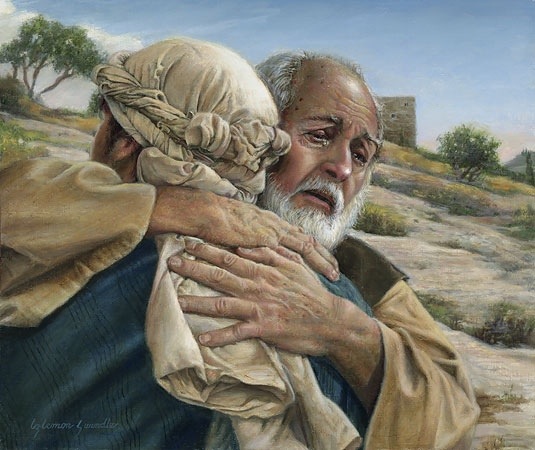
This is a response to my brother’s post reviewing Tim Keller’s book The Prodigal God.

Please first read it here:
http://humblewonderful.blogspot.com/2011/08/prodigal-god-my-rambling-response.html

This is my response. (for some reason his blog wouldn’t let me post it)

20110826-102542.jpg

(for those other than Tony)
After posting his blog, my brother Tony sent me a text message that said:

“You’ll hate it – I don’t like it myself – but prodigal god is up”

Well, I don’t know what you were worried about Tony – I loved the blog. I agree with much of what you wrote and in principle, think you approached the passage in a way that more Bible College students need to. I’ll explain more of that a bit later.

First and foremost, I want to say I wholeheartedly agree with what you said in your introduction – It is true. I am intelligent and caring and humorous and ridiculously good-looking (hmm I may have read into your post more than what was there).

I also want to say, I haven’t actually read Time Keller’s Prodigal God, so I won’t be commenting on it or whether you are picking on poor Mr Keller unfairly. I have though read, studied, memorised and even performed Luke 15 in the past and so I wanted to comment on how I really like your reading and interpretation of it.

I agree that the main issue in the parable is the elder brother’s attitude towards the younger brother. As you point out, when put next to the earlier two parables the clear pattern is something is lost, something is found and then everyone celebrates. Jesus’ even explains this when he points out that “there is joy among the angels of God over one sinner who repents.” So clearly, sinners are the things that are lost – like a coin, sheep or younger brother -, God is the one who finds – like a woman, a shepherd and a father – and everyone should be celebrating over repentance and restoration – like the neighbors, friends, angels in heaven and… wait a second! Here’s where the contrast in the last parable is evident and the real point of the parable is brought home to Jesus’ audience, the pharisees.

The older brother like the pharisees should have been rejoicing and yet they are focussed on injustice. As you point out, the main focus of the older brother’s outrage is that 1. the father is not giving the son what he deserves (rejection and condemnation) and 2. the father is not getting what he deserves (a son that has not treated him so disrespectfully).

I do think that the elder son has a sense of self-righteousness in his tone and that his indignation does expose the fact that he thinks that he is in a different category to the younger son and is not equally in need of just as much mercy and generosity. Jesus was often addressing this sense of self-righteousness among the pharisees and often used parables to point this out (see for example, my favourite parable in Luke 18:9-14).

Despite this, I agree with your basic conclusion, “There should be no doubt that what Jesus is saying is that the correct response to the restoration of a sinner to the family is rejoicing.”

I don’t think Jesus is saying that judgement is wrong or that sin is not actually sin and that’s why the father welcomes the son back. As if God doesn’t really have any problem with us and that’s why the elder brother needs to just get over his whole moralistic focus on justice and come join the party.

I think the message that sin is real is still very much part of the story. The sons rejection of the father and squandering of his inheritance is told with emotional weight and are supposed to be an apt parallel to what our sin is all about. We reject God and yet we want to use the things he gives us (life, our bodies, the planet etc.) for our own purposes and desires. The fact that Jesus repeats the point about how the celebration happens when “one sinner repents” is a clear message that sin is not imaginary. It must be repented of (turned away from and rejected). The younger son would not be welcomed home if he only came home to borrow more money so he could pay for more prostitutes. He needed to repent.

So the issue is not that the elder brother got sin wrong. What the elder brother got wrong was the character of the father. The father could have very rightly rejected the younger brother. Even the younger brother knew this as he didn’t come back expecting to be forgiven and accepted back into the family, but just to get a job. But the father put aside his rights and the judgement the son deserved and he welcomed him back with great joy. His heart filled with love and joy compelled him and this is the character of God.

The problem with the elder brother and with the pharisees is that they were waiting for God’s judgement and they did not welcome God’s mercy. It reminds me of Jonah actually (won’t go into that now. You’ll have to read it yourself).

Although the elder brother’s sin includes his lack of love for the younger brother, it can’t be ignored that the younger brother’s sin was against the father. It was real and it needed to be dealt with. The younger brother could not come back without acknowledging and repenting of his sin and this is the sin that Jesus is referring to saying that this requires repentance if you want to be cause for celebration. You can’t be “found” if you don’t acknowledge that you are “lost”.

Tony, I very strongly disagree that seeing sin as primarily (if not only) a vertical issue means in practice that “if we want to treat someone with absolutely no regard we merely have to declare them God forsaken”. That is implying that sin being a vertical issue compels us to twist whether God loves or hates in order to allow us to love or hate as we choose.

On the contrary, anyone who sees sin in this way will be compelled by God’s example of love, forgiveness and generosity. Unless they totally ignore the whole gospel story (which sadly some so-called “Christians” do) they will not be able to ignore God’s example. The flow on effect from seeing sin as a vertical issue which then goes to horizontal is that forgiveness and love travels in the same way. As Paul says, “Forgive as the Lord forgave you” (Colossians 3:13) and as John says, “Since God so loved us, we ought to love one another.” (1 John 4:11) or as Jesus says, “As I have loved you, so you must love one another.”

This is the rebuke to the elder brother and to the pharisees. God has shown grace and forgiveness. He has welcomed the repentant sinner and so who are we to withold our grace and forgiveness when he has been so generous?

The parable is not just about the elder brother’s response to the younger brother in a vacuum. It is about his response in the light of the generosity of the father. The parable is a beautiful declaration of the character of God and the wonderful time that we are now in. As Paul says, “I tell you, now is the time of God’s favor, now is the day of salvation!” (2 Corinthians 6:2)

The day of Judgement is still coming. Jesus spoke about that in great detail and so it can not be ignored if we want to get his teaching correct. But today is not the day of judgement. Today is the day of salvation! That’s what the pharisees were missing out on. That’s what the elder brother couldn’t accept.

Tony, you set out the challenge of seeing if anyone could find Jesus in the parable. For me, I see Jesus in the party. Jesus is in the robe and the ring and the fatted calf. Jesus is in the running of the father to meet the repentant son.
Jesus (and what he was about to do in dying for sin) is the only reason why today is the day of salvation.

The coming of Jesus declared a new era. A time when sinners could come to God and be welcomed with celebration rather than condemnation. As Jesus said in Luke 4:17-19 part of his message was to “proclaim the year of the Lord’s favor”.

As with all parables, this is only part of the story, and though we shouldn’t squeeze what Jesus did on the cross into the story if it isn’t explicitly there, I think it is a necessary element of the whole gospel story and makes sense of how judgement and mercy can co-exist.

Lastly, I want to say that I love that you avoid reading more into the parable that is there. A lot of bad teaching is done when people do that, and although as an evangelical Christian, I expect that I completely agree with Keller’s understanding of the gospel, I am confident that if we read the entire gospel as you have done – with honesty, in context and avoiding presuppositions – we will come to the same gospel, without having to do hermeneutic backflips.

Love you bro

(1672)

Share Button
April 29 2010

Let Us Know Well The Cross – A Poem

LET US KNOW WELL THE CROSS
A poem by Simon Camilleri (29/4/10)

Let us know well the Good News
Else the Cross be seen as just wood.

Let us know well God’s Mercy
Else the Good News cease to be good.

Let us know well God’s Judgement
Else God’s Mercy cease to be needed.

Let us know well our sinfulness
Else God’s Judgement cease to be heeded.

Let us know well God’s Glory
Else our sinfulness cease to be grave.

And let us know well the Cross of Christ
Else God’s Glory cease to be displayed.

(1496)

Share Button