I have ever since I learnt how to make a coin disappear on a camp when I was 12 years old.
Here are some of the magic tricks I have recorded.
The first is my most recent magic performance, and the first time I have ever tried a magic trick with such a big crowd. Maybe this is why it doesn’t exactly go to plan!
Pedophilia Rape Sexual assault STDs The sex slave trade Prostitution Unwanted children out of wedlock Pornography addiction Child pornography Adultery in marriage Cheating in relationships Divorces that result from these things
and all the pain, shame, heartache, brokenness, destruction, isolation, family breakdown, depression, confusion, disease, slavery, emptiness and loss that comes from these things…
could all be avoided. Not by STD testing and prevention methods only…
but if humanity obeyed God in one area of life…
sex
God’s way is laughed at and ridiculed as old fashioned, outdated and irrelevant.
(perform your own version of the song and post it on YouTube and I’ll include it on this blog!)
LYRICS TO “THE DAY THE ZOMBIES INVADE”
Verse 1
He turns on the Playstation.
She always shakes her head.
What is this fascination
he has got with killing the undead?
While other guys are workin
to pay the rent and bills
He’s workin really hard
to polish up his zombie killin skills
 Â
CHORUS
The day when the zombies invade You’ll go runnin to those boys playin games Cos when that day comes they’re the only ones Who can fight off a horde who wants to eat your brains So please don’t complain And don’t show disdain… I know it’s 2am honey, but I have to train For the day those zombies invade
Verse 2
D’you even know what weapon
you need in close combat?
You’ve grabbed a sniper rifle.
What are you gunna do with that??
A true survivor chooses
the combo shotgun axe!
And you say it is useless
that he knows all these kinda facts, but
Â
CHORUS
The day when the zombies invade You’ll go runnin to those boys playin games Cos when that day comes they’re the only ones Who can fight off a horde who wants to eat your brains So please don’t complain And don’t show disdain… I know it’s 2am honey, but I have to train For the day those zombies invade
Â
Bridge
My mummy… She taught me
It’s better safe than sorry
The scouts they… made us say
Always to be prepared
Don’t fancy… your chancy
If you met necromancy
Why you rollin your eyes? Aren’t you scared??
Verse 3
He is now 37.
He’s moved back with his mum.
He’s bunkered in the basement.
Never knowin when they will come
He now plays on four consoles.
Gaming throughout the night
We laugh but who’ll be laughin,
when we actually find he was right!
Â
CHORUSÂ Â Â
The day when the zombies invade We’ll all go runnin to those boys playin games Cos when that day comes they’re the only ones Who can fight off a horde who wants to eat your brains So please don’t complain And don’t show disdain… I know it’s 2am mummy, but I have to train For the day those zombies… Those flesh-eatin zombies… The day the zombies invadeÂ
A man and a young boy met one day as they walked through the woods on their way to the nearby town. It was winter, and the sound of the snow crunching under their feet was all they could hear. This was odd, the boy thought, as last time he travelled this way he could also hear the raging sound of the river. He began to wonder if he had been walking in the wrong direction when finally the woods began to clear and the river revealed itself.
It had been a particularly cold winter that year and the surface of the river was frozen stiff.
The man stood next to the young boy on the bank of the frozen river and scratched his head looking as confused as he was. Neither of them knew how they were going to get across as their usual practise in times long past was to use a raft to cross the cold waters. Well, the raft was there by the river’s edge, covered in snow and clearly now, useless.
The man said to the boy, “I’ve heard of this happening when it’s particularly cold. The river is frozen solid. Like a giant ice cube. We can walk right across!”
The boy immediately grabbed the man’s coat and tugged at it to get his attention. Then he pointed to a sign that was sticking out of the surface of the frozen lake. It read: “Danger. Thin ice.”
“Poppycock!” the man said with a laugh, “Don’t believe everything you read, young lad! That sign could have been put there by anyone at any time! It may have been true once or it may never have been true. Be a man! I bet that it’s perfectly safe to walk across.”
The young boy admired the man’s confidence. He wished he could be so brave, but the boy was often scared and was always second-guessing himself.
As he looked away in embarrassment, the boy noticed something a little further down the river that had not been there last time he had crossed this way. It was a bridge. The boy tugged again at the coat of the man and pointed to the large stone bridge that stretched across the frozen river.
The boy and the man walked down to it and noticed another sign at the entrance of the bridge. It read: “Due to the common occurrence of freezing of the lake during the particularly cold winter months, this bridge has been erected by order of the king of the land to assist travellers to safely cross the lake and protect them from falling in the fatally icy waters. Do not attempt to cross the lake by any means other than this bridge as the ice is thin and you will surely drown.”
The boy pointed to the sign and the king’s royal seal which authenticated it at the bottom.
“Balderdash!” the man said with a laugh, “Use a bridge?? What nonsense! The king of the land doesn’t want wimps as subjects! Be a man! If you believe in yourself, you can do anything you put your mind to!”
The man walked back to the river’s edge near where the warning sign stuck out of the frozen surface. He gave the boy a small wave and stepped out onto the ice with a smile.
Once again, the young boy admired the man’s confidence. If only he could believe, he knew he could be like the man, but he was just a boy and he doubted. He could hear in his mind the echo of the words of the Faith Healer that sometimes visited his village… “Ye of little faith!” That’s what he was. He was ye of little faith.
Every summer the Faith Healer would come to his village and everyone would come out to hear him preach and hope for a miracle. They would bring out their sick and lamed – old women, coughing babies, even ducks with broken wings! But each time, many from the village would go home sad and disheartened as once again they were not granted the miracle they had been praying for. The Faith Healer would simply shake his head and say those solemn words… “Ye of little faith”.
So the young boy had no excuse as he stood by the frozen lake. He knew how it was supposed to work. The strong of faith would be saved, while the weak of faith would go home empty-handed. He wished his faith could be stronger, but he knew, deep down, that it wasn’t. He was always filled with doubts and fears. And so he stood before the bridge, wishing he had the strength of faith to cross the lake by walking across the ice, but knowing he didn’t.
He took one step on to the bridge and then another. As he started walking on the bridge, he began to worry. Would he be able to make it? What if the bridge collapsed? What if it crumbled beneath him?? What if he stumbled and fell over the side of the bridge?? He’d be a goner for sure then! Oh why didn’t he listen to the man? Oh ye of little faith!!
His faith was suddenly so weak and his confidence was so shaken that he collapsed to the ground in fear. Having all his belief in himself and the reliability of the bridge almost completely shattered, he closed his eyes and slowly crawled along clutching at the stones that made up the bridge with only the glimmer of hope that they would hold his weight.
For what seemed like hours, with the little faith he could muster, he crawled and crawled, putting his weak trust in the strength of the bridge. He half expected to drop at any moment into the river’s icy depths, and he scolded himself for being such a wimp and for proving the Faith Healer’s words to be true. He was ashamed too that he crawled upon a bridge that the king of the land had commissioned to be built. Surely, the man was right and the king would prefer for him to have had the confidence to walk across the ice rather than use the bridge to get across the lake.
As these thoughts continued to rattle around in his mind, suddenly, his hand felt the cold, wet touch of snow. The young boy opened his eyes and realised he had crawled over the bridge and had reached the other side! He was confused for a moment and then he stood up, shook off the layer of snow that had fallen over him as he had been crawling, and with a sense of amazement and awe, continued on his way with a spring in his step.
He gave no more thought to the doubts that still threatened to cripple the rest of his journey. He forgot the words of the Faith Healer. He didn’t even remember the man of great confidence who had been travelling with him before, or look back to see how successfully he had walked across the ice.
All he remembered was the words of his father who had sent him on this errand to buy a small bag of mustard seeds from the market in the nearby town. And so he went on his way, alone.
;
It does not matter how strong your faith is.
What really matters is the strength of the thing you put your faith in.
.
Click HERE if you’d like to see Simon read the story.
My post below is not as structured as one of my regular blogs as it was purely meant to be a response to my brother, but the word count was too big and blogspot wouldn’t accept it. So I put it here for your contemplation. Though I must encourage you to read his blog first, otherwise mine below possibly won’t really make much sense.
Tony, firstly I must correct you on a really simple point.
There is no problem with the existence of evil if there is objective good. As soon as God says something is good, then the opposite of that is evil. Evil is not a noun as you make out theists think. In some ways, evil does not actually exist – as an object anyway.
It’s like light and darkness. The sun is the object. It produces light. Without the sun, you have darkness. Night may feel like it has real substance and it definitely has real consequences (like stubbing your toe on the way to the bathroom) but all it really is, is the absence of light. God is the object. He is good and he says what is good. Anything that is against him or opposed to him, is what we define as evil. Hitler is not the personification of evil. The devil is not the personification of evil. They (like a lot of people) are simply opposed to one degree or another to God. In that sense they are defined as evil.
I think the experience of evil is to be expected in a world where there is a God that provides objective good, and where people reject, ignore and disobey him. I don’t really see the problem of evil’s existence.
But you move on from that to the moral dilemma of evil. I presume you have Epicurus’ argument rattling around, “Is God willing to prevent evil, but not able? Then he is not omnipotent. Is he able, but not willing? Then he is malevolent. Is he both able and willing? Then whence cometh evil? Is he neither able nor willing? Then why call him God?â€
You tackle the issue of evil by saying that we must come to one of three basic conclusions.
1. God is not all-powerful.
You assume this must be the case in light of human free will. But where do you get the idea of human free will from? Not the bible that’s for sure. The idea that human will ties God’s hands is quite silly really. The God that created the universe is not limited by anyone. The idea that we HAVE to have complete free will in order for us to be responsible for our actions also doesn’t stack up as we often hold people accountable for their actions, even when we know that there are always circumstances that influenced their decision.
But the argument you seem to be making is that the idea that we have any sort of will, means that God’s sovereignty is compromised. Why is that? Why can’t God allow us to do what we want to do, be free in his ability to stop us, and deem that we have acted against his will? If you say to Levity, don’t touch the stove and you can prevent her from touching the stove but as she goes to do it, you chose not to prevent her, why does her will to touch the stove mean that you have somehow lost control?  God being in control of the universe, doesn’t mean that every action that happens must either be caused by him or else he has lost control. He can allow actions against his desired will to take place. So is God responsible for evil’s existence? Well, in some sense, yes, of course! That doesn’t make him evil though or the cause of the evil.
But then you could say that if a good God allows evil then why does he still call it evil? Well, it doesn’t follow if someone can prevent an evil action you make, that means that you are no longer accountable for it. If you see a kid being beaten up by thugs and you do nothing to prevent it, that doesn’t mean that the thugs are not accountable for their actions. Likewise, God is still sovereign and able to prevent all evil, and yet we are still accountable for the evil we do.
That inevitably leads us to question God’s goodness, but that’s ok. Throughout the Bible people cry out to God wondering why he is taking so long and why doesn’t he get rid of evil (Jeremiah 12:1 for example, “You are always righteous, O Lord, when I bring a case before you. Yet I would speak with you about your justice: Why does the way of the wicked prosper? Why do all the faithless live at ease?”). Grappling with God’s goodness seems to be a healthy part of a relationship with God, though his sovereignty is never questioned.
2. God is not good.
So we come to the next conclusion. God must not be good. Now, I can’t imagine you missed the moral loop here. The idea is of course, that if God is good and he sees evil and is able to prevent it, then of course he would prevent it. A God that could prevent evil and doesn’t is ultimately not good. But where did you get the undeniable, objective truth that to allow evil is evil? Are there no exceptions? Is a time period relevant? Due you take into account the fact that God does promise to deal with and do away with evil completely and fully? Or is the issue that you just don’t like the way in which God prevents evil? Is it just that for you to judge God as “good” in your eyes, he has to deal with evil in your way and your time. And all this taking into consideration that you actually don’t believe that there is really a good or evil!
My present and limited understanding of the whole picture is that God allows the evil fruit that comes from people who reject and ignore him. Reject a good God and disobey his commands and you will find every kind of evil. Should God prevent this? I don’t see why, but I guess God is more good than me, because he does do something to prevent it. He provides the gospel – a message of what God has done to turn people’s hearts back to him. He makes it possible for the real root of the problem of evil – sin – to be dealt with. And more than that, he is coming to clean everything up and remove all evil from the world. One day, when Christ returns, evil will be prevented – not in a temporary sense, but in an ultimate, eternal sense. If one is deemed necessary to allow for the time being in order that the permanent solution is achieved then who are we to say God is not good in choosing what is best. This is the true solution to the problem of evil.
I still think it’s a valid question to ask why God deals with evil in this way, when we feel so compelled to just get rid of evil right now if we could. But possibly, if God didn’t worry about the whole gospel thing and just got rid of evil completely in one fell swoop, sure the Hitler and the rapist and the thug would be gone, but neither you nor I would be having this conversation. Would anyone be left?
Fortunately, for the non-theist though, they don’t have to worry about explaining evil or good for that matter, and this is your ultimate answer to the problem. Because if God can’t be all-powerful and he can’t be all good (by your definitions of those things), then he doesn’t exist, and so the perfect answer to the problem of evil is…
3. There is no such thing as evil.
This is apparently, the natural non-theist position, as no objective “good” means that you can’t have an objective “bad”. This position may be logically sound, but I find it deeply unsatisfying. The idea that evil is only evil because we all (mostly) agree on it or feel it is that way, makes it to be completely meaningless. It is just as likely, that what we feel about what is evil is affected by a certain cultural movement or by our evolutionary biology. Or we may be in the wrong crowd. I’m sure in the midst of a Nazi demonstration where everyone was shouting “Heil Hitler!” that would feel like it was good and anything that opposed it was evil. What shaky ground you stand on! Why trust it if you could simply be standing at the wrong place at the wrong time and be influenced to believe any evil.
Â
Doesn’t that feel like a problem? Isn’t that the ultimate “problem of evil” for the non-theist? – the problem that you feel some things (like torture or injustice or killing innocents) are evil and yet you have no grounding for that feeling or reason to think that something else couldn’t be just as right in a different crowd. I mean, you even make the argument that if God allows evil, he can’t be good. Why? If there IS no good or evil, then where does the moral weight for that position come from? On the other hand, if you trust God to instruct good and evil, then you even have a basis to question God.
Without God you are left with so many problems. Why fight evil if it doesn’t really exist? Why do I feel that evil and right and wrong does exist if it is just an illusion? Am I comfortable with the idea that my concept of evil may just as well be good in a different time or place or culture? If there is no God then where is there any hope that evil will not win? If there is no God where is there any hope that evil will not one day be fully dealt with?
I admit that God’s ways are at times strange to me, but I have answers to those questions. I think a non-theist has the real problem of evil to have to resolve.
The story of the crucifixion is a horrible scene of public torture, mockery of God and despair among Jesus’ followers. But in the midst of this dark event, Luke’s gospel records a beautiful and unique conversation that took place between Jesus and one of the criminals who was crucified next to him. Read the story below and I’ll share some of my observations about it. It can be found in Luke Chapter 23, verses 32 to 43…
Two other men, both criminals, were also led out with Jesus to be executed. When they came to the place called the Skull, there they crucified him, along with the criminals—one on his right, the other on his left. Jesus said, “Father, forgive them, for they do not know what they are doing.â€Â And they divided up his clothes by casting lots.
The people stood watching, and the rulers even sneered at him. They said, “He saved others; let him save himself if he is the Christ of God, the Chosen One.â€
The soldiers also came up and mocked him. They offered him wine vinegar and said, “If you are the king of the Jews, save yourself.â€
There was a written notice above him, which read: THIS IS THE KING OF THE JEWS.
One of the criminals who hung there hurled insults at him: “Aren’t you the Christ? Save yourself and us!â€
But the other criminal rebuked him. “Don’t you fear God,†he said, “since you are under the same sentence? We are punished justly, for we are getting what our deeds deserve. But this man has done nothing wrong.â€Â Then he said, “Jesus, remember me when you come into your kingdom.â€
Jesus answered him, “I tell you the truth, today you will be with me in paradise.â€
As both men were being publicly executed, their conversation was short and probably quite painful, and yet in this brief moment we hear Jesus tell this man at death’s door, that he should have complete assurance that he will go to heaven. That is staggering if you think about it. Many people would like the assurance of knowing where they’ll be going when they die. Well, this man got it. And who was he? A criminal. Not a priest or a devoted follower who had proved his devotion with years of service. A criminal. A “bad guy”. A convicted robber (as we find in Mark and Matthew). This is the guy who gets to die knowing for a fact that he will be welcomed into paradise. So what is it about this guy that we can emulate if we want the same assurance? What did he do or say or believe that led Jesus to give him this assurance?
Well, as a Christian, I have spent a lot of time thinking about how best to explain the Christian message. This is called the “gospel” which means “good news”. Of all the slogans and mission statements and sermons and political speeches in history, the gospel is the most important message that there has ever been. The gospel, as Paul puts it, “is the power of God for the salvation of everyone who believes” (Romans 1:16). But what is it? What is this good news that we must believe in order to be saved and to find assurance of entrance into paradise. Well, I think it involves lots and lots of wonderful things, all surrounding Jesus and who he is and what he has done and if you’re keen you can explore a fuller description of the gospel in passages like 1 Corinthians 15:1-5, Colossians 1:19-23, 2 Timothy 1:8-12, 2 Timothy 2:8-13 and even the epic Romans 1-6. But if you wanted to try to peel it right back and find the bare bones of the gospel, this story about the crucified criminal, might be a great place to start.
Here are two main observations I find in this story:
1. Â What he acknowledges about himself.
This man knows that he is guilty. It’s not just that he knows he did a crime, but his words indicate that he has an awareness of his guiltiness before God. He rebukes the other criminal for trying to simply use Jesus to get out of punishment. He sees his punishment as deserved and so it would be a wrong against God for it to be ignored. This is why he says, “Don’t you fear God?” To fear God is to acknowledge who God is and who you are. His fear of God gave him a humility and an ability to see his guilt and not protest the fairness of his punishment.
What is important to see here is that this totally defies any notion that you get to heaven if you are “good enough”. This criminal did not feel he had any right to enter paradise. He did not feel he had earned it, in fact he acknowledged that what he had earned was punishment.
The other criminal, in contrast, does not care about the justice of their punishment – just the potential for escape. He shows no remorse, no repentance and no acknowledgement of his own guilt or the God before which he must give account. He has no fear of God, only a fear of death. But it is the criminal, who had no “goodness” to offer God, who is the one that is given assurance of entrance into paradise.
2. What he acknowledges about Jesus.
The other criminal tries to use Jesus. He acknowledges that Jesus might be the Christ (God’s anointed king), but if that is the case, he simply wants to ride on the coat tails of Jesus’ escape. Like the mocking crowd, he can’t imagine that the “King of the Jews” would allow himself to die. The “Christ” is God’s king. He is all powerful! He could come down off the cross in a blaze of glory and destroy all his enemies. So he bates Jesus, to prove his authority and power, and while he’s at it, he should rescue him from his painful predicament. But why should he rescue him if he is the Christ? It doesn’t make logical sense. It’s just a sign of how he only sees Jesus as a potential “get out of jail free” card. Nothing more and nothing less.
In contrast, the criminal that is welcomed into paradise, treats Jesus as he truly is. He acknowledges that although he is guilty before God, Jesus is innocent. But more than that, he acknowledges that Jesus is king. He knows he has nothing to offer Jesus. All he does is ask Jesus to remember him, when he comes into his kingdom. HIS kingdom. He knows that the place Jesus is going when Jesus dies is a kingdom that he is the ruler of. What a statement! Sure, if you thought someone was innocent before God, you might expect that they would go to God’s kingdom when they died, but Jesus isn’t just going to be in heaven, where all innocent people go – he’s going home! He’s going back to the castle to sit on his throne. He is going to his kingdom!
Do you think of heaven that way? Is that what paradise is for you? Jesus’ kingdom? Or is heaven to you a place where you get everything you want and can do whatever you want?
Friends sometimes ask me whether I think they are going to heaven or hell. But one of the first things I have to do to answer that question fairly, is to encourage them to reconsider their Hollywood, fairytale concepts of heaven. Heaven is Jesus’ kingdom. He owns it. He rules it. He makes the rules as to who is welcomed into it, and one of the most obvious prerequisites for being welcomed into Jesus’ kingdom is that you treat Jesus as king. If you treat him like the other criminal did, as simply a ticket out of hell, then I think you will be met with the terrifying words that Jesus warns us of in Matthew 7:23, “Then I will say to them plainly, ‘I never knew you. Away from me, you evildoers!'”
If Jesus rules in the afterlife, then naturally he rules in this life. I mean, if he’s the king in heaven, then how are we on earth to treat him? As Jesus encourages us to pray in the “Our Father”, “Your kingdom come, your will be done on earth as it is in heaven”. This is how the criminal treats him – as the king of paradise – and so consequently, he knows his only hope is Jesus.
In God-fearing respect and humility, with an acknowledgement of his own guiltiness before God and of Jesus’ innocence, he asks Jesus, not to give him what he deserves, but to simply remember him. What is he asking for in that request? I’m not sure. But at the very least it shows that he doesn’t expect that he will be joining Jesus in his kingdom. There’s a sense in which he knows he should be left out and so he asks Jesus, who will be “in”, to remember him. It’s not even that he is asking for forgiveness – it’s less assuming than that. And yet, Jesus assures him that he will not be left outside. He won’t simply be remembered, he will be with Jesus in paradise.
What a promise!
And in that little scene we learn so much about the Christian message and what it means to be a Christian:
It shows that Christianity is not about winning God’s favour by being good. Even a guilty criminal can be welcomed into paradise.
It shows that it’s not enough to think that Jesus “might be” the Christ and to try to just use him at the last minute as a ticket out of hell.
It shows that we must acknowledge our guilt before God and realise that we don’t deserve to go to heaven.
It shows that we must know that heaven is Jesus’ kingdom and we must acknowledge and turn to Jesus as king.
It shows that we can actually have assurance that we will be in paradise with Jesus when we die.
And lastly, it shows that you don’t need to know a great deal about the whole salvation process in order to be saved.
This last point is a really good challenge to me and to other evangelicals who value doctrine and “getting the gospel right”.
I guess the main thing is not that you get the entirety of the gospel right, but that you don’t get it wrong.
I mean, the criminal didn’t say the “Sinner’s Prayer” or believe the “Four Spiritual Laws”. He didn’t get the entire “Two Ways to Live” presentation, or attend short course for seekers. He didn’t even come to a decisive position about Calvinism or Arminianism!
He didn’t even really understand the cross – the very heart of the gospel message. This guy had no idea that the reason why Jesus could welcome him – a guilty sinner – into paradise was because the death Jesus was about to die was a death that paid for his sin. He didn’t understand how Jesus could save him, and he didn’t even expect that Jesus would save him, he just threw himself on the hope that Jesus might remember him. Both the gospel he believed and his faith in it was very simple, but he still received assurance from Jesus.
I guess, my encouragement to us evangelical Christians is, don’t make the kingdom harder to get into than it needs to be! If the criminal could be assured of his salvation with so simple an understanding of the gospel, let’s make sure we don’t expect that every glorious truth is completely understood before we can encourage young Christians with the same assurance.
And my encouragement to those who are yet to become a Christian, or maybe have just expected that they should be welcomed into paradise without any acknowledgement of their guilt or Jesus’ kingship, I would commend this story to your contemplation.
My hope is that you would find in it a very simple gospel message (though still very challenging), and in responding to its call to your life, you too may hear those wonderful words from Jesus that every Christian should rejoice in… “You will be with me in paradise.”
NOTE ABOUT LEAVING COMMENTS:
Due to the fact that I get a ridiculous number of spam comments with links to other websites, I have put a ban on any comments that contain “.com†in the website section, email section or body of text. Please DO NOT include your email or website, and you will then be able to have your comment posted immediately. Thanks!Â
(If you’ve never read Ecclesiastes, I recommend you read it and thinking about it yourself, rather than just reading my blog about it! Download a special copy I have produced by clicking HERE)
The Book of Ecclesiastes is quite confusing to many Christians. If you don’t know about it, it’s a book of poetry and philosophy found in the Old Testament, written around the mid to late third century BC. The author of the book is potentially questionable, but the voice of the book is King Solomon. Whether he wrote it directly, or whether it was written as a collection of his writings or as a summary of his philosophy, I don’t think that matters. What I think does matter is that the protagonist of the book is, as the first verse says, “The words of the Teacher, son of David, king in Jerusalem.” Now “Son of David” could easily also mean “descendant” of David, but as the book progresses, we see that the content of the book – the focus on wisdom and the description of utter opulence for instance – do suggest that it is referring to King Solomon.
The problem Christians have had with this letter often revolves around the book’s key word, which in the NIV is translated “meaningless”. “Meaningless, meaningless! Everything is meaningless!” the King writes. And then he spends twelve chapters describing lots of what we experience in life – the pursuit of pleasure, eating, drinking, laughter, education, career, power and even wisdom – and for each one he concludes, “This too is meaningless.”
Ecclesiastes can seem bleak and depressing and also just plain wrong. I mean, how can King Solomon the Wise say that the pursuit of wisdom can be meaningless?? Or how can the King of Israel, entrusted to guard God’s Word and explain it to the people, saying that everything has no meaning?
This is what has confused many Christians, and the response by those who study the book is generally to point out three vitally important things.
1. When it says life is meaningless, it is only referring to life “under the sun”
2. The word “meaningless” is a really unhelpful word to use.Â
3. That isn’t the conclusion of the matter.
Well, let’s look at these three points briefly.
1. When it says life is meaningless, it is only referring to life “under the sun”.
As common as the word, “meaningless” is, the phrase, “under the sun” or “under heaven” is used 32 times in the book’s 12 chapters. It’s even worked its way into our common language: the phrase “there’s nothing new under the sun” actually originally comes from this book (Ecclesiastes 1:9). This phrase is not meant to describe all of life in all of eternity. It specifically means our life while we live. We see this clearly in Ecclesiastes 2:3, where the King says, “I wanted to see what was worthwhile for men to do under heaven during the few days of their lives.” It is used similarly elsewhere in the Bible, such as in reference to the Flood in Genesis 6-8, where God destroys all life “under the heavens”.
“Under heaven” or “under the sun” points to the time that we have on earth while we work and live with the sun over us. It does not refer to the heavens themselves or the Creator who resides in heaven, but only to the life of the Creation. Some have stressed this to make the argument, “See, life is not meaningless with God. It’s just meaningless outside of God. That’s what ‘under heaven’ means.” But I’m not really convinced by that argument. I mean, is the writer saying life is meaningless until you go to be with God? I don’t think so. Ecclesiastes is quite silent on the issue of an afterlife (other than the promise of an ultimate judgement in the very last verse of the book). The focus of the book is very much THIS life. So, is the writer saying, if you live a life ignoring God then your life has no meaning? Or that God provides the only true meaning to life and so everything else is meaningless? Well, this is a true sentiment from a biblical perspective, but you can’t really get it from Ecclesiastes.
Ecclesiastes is written from the perspective of someone who does know God. Sure, King Solomon majorly went off the rails, but still, I think it’s clear that “under heaven” does not mean “outside of the stuff God’s interested in”. God is mentioned throughout Ecclesiastes as actively involved in the life of people, causing both their blessing and their frustration. Whatever life “under the sun” means – it does not mean life “outside of God”. “Under the sun” just means life from birth to death.
When Ecclesiastes says “everything under the sun is meaningless”, the harder part of that phrase to understand is not “under the sun”, but the word “meaningless”.
2. The word “meaningless” is a really unhelpful word to use.Â
The Hebrew word that the NIV translates as meaningless is “hevel” (הבל). In older translations you may have heard it translated as “vanity”. This is not in the sense of “loving yourself”. “Vanity” here means “in vain” or a wasted effort. This helps us get more of a feel for the meaning of the word, but even that does not capture it. “Hevel” also means “fleeting” or “temporary” or “passing”. Look at the picture at the top of this blog – it’s like breathing on an icy cold morning and you see your breath… and then it’s gone. That’s what “hevel” literally means – “breath” or “vapor”. Ecclesiastes uses a powerful image to describe it as well. Coupled with the phrase, “this is hevel” the writer often adds the phrase “a chasing after the wind”. He uses this description 9 times throughout the book and one other time he uses the phrase, “toiling for the wind”. Throughout the letter “wind” is described as elemental and ever-returning (1:6) but never being able to be caught, tamed or predicted (8:8 & 11:5).
“Hevel” is a concept that, like the wind, is hard to pin down, but I don’t think we’re meant to pin it down. It’s not supposed to be a hard definition for something. It’s supposed to be almost a feeling. That feeling of trying to grasp at an illusion, like a cat trying to catch a shimmer of light on the floor. Life, the writer of Ecclesiastes says, is like chasing the wind. Everything in life is transitory, everything is passing away, nothing stays, nothing under heaven is permanent, and if we work our guts out for it all we shouldn’t be surprised that we find life frustrating. In the end, ultimately, nothing is gained, everything is like breath.
Now, does that make life “meaningless”? Well, I guess that’s up for discussion. It definitely doesn’t force us to conclude such a bleak prognosis about it all. But if we’re trying to work out not just what “hevel” means, but also how we should feel about “hevel”, it’s quite hard to pin down the author’s emotional response. Sometimes he finds “hevel” wearisome (1:8), sometimes it leads him to hate life (2:17) and then other times he speak of how good it is to eat and drink and find satisfaction in his lot in life (2:24, 3:12-13, 5:18, 8:15 & 9:7-10). If everything is “hevel”, what are we to make of it? Is everything depressing or full of enjoyment? Is everything meaningless or meaningful?
As I explored this question myself I decided to re-read Ecclesiastes with a little experiment. As the word “hevel” was a tricky word to translate, I thought I would read through the book and whenever I came to the word “meaningless” (I was reading the NIV translation), I would simply say the word “hevel” instead. What resulted was really enlightening.
The book opens up with the declaration, “Hevel! Hevel! Everything is hevel!” and then launches into a description of how life never changes and yet in every cycle of life, nothing is ultimately gained. He then moves into his own autobiography, how he worked so hard to find what was the best thing to do in life and achieved amazing things that would be counted as great success by our society’s standards, and yet at the end of it all he looked at his hands and everything was “hevel”, a chasing after the wind, nothing was gained under the sun. This seems confusing, as how can he say nothing was gained – he gained so many great achievements – and what does it mean to say it was all “hevel”? Well, from here on, the writer continues for the rest of the book to explain that very question. What is “hevel”? What does it look like? What does it feel like?
For example, consider the following passage:
“So I hated life, because the work that is done under the sun was grievous to me. All of it is ‘hevel’, a chasing after the wind. I hated all the things I had toiled for under the sun, because I must leave them to the one who comes after me. And who knows whether he will be a wise man or a fool? Yet he will have control over all the work into which I have poured my effort and skill under the sun. This too is ‘hevel’.Â
So my heart began to despair over all my toilsome labor under the sun. For a man may do his work with wisdom, knowledge and skill, and then he must leave all he owns to someone who has not worked for it. This too is ‘hevel’ and a great misfortune. What does a man get for all the toil and anxious striving with which he labours under the sun? All his days his work is pain and grief; even at night his mind does not rest. This too is ‘hevel’.Â
A man can do nothing better than to eat and drink and find satisfaction in his work. This too, I see, is from the hand of God, for without him, who can eat or find enjoyment? To the man who pleases him, God gives wisdom, knowledge and happiness, but to the sinner he gives the task of gathering and storing up wealth to hand it over to the one who pleases God. This too is ‘hevel’, a chasing after the wind.”– Ecclesiastes 2:17-26
What struck me, when I stopped defining “hevel” and just included the original fuzzily-defined word, the meaning of the passage took on a completely different feel. Instead of the writer labelling life as “meaningless”, and saying something like, “You know this thing you do in life, well it’s actually a complete waste of time,” the writer seems to be USING these experiences in life, to help define “hevel”. It’s more like he’s saying, “Everything is hevel, and to understand what that means, let me show you these breath-like, transitory, frustrating things that we all experience.” When he talks about life, he is exploring the fuzzy definition of “hevel” rather than just using “hevel” as a label to attach to all things.
I’m not sure if I’ve explained this point well enough, so I’ll use an example of how Jesus did this. Think about when Jesus talks about sin. Jesus could say, “Lying – that is sin”, but that would be rather limiting and people would just look for the loopholes. Rather, Jesus uses things like parables to get his point across. Like the story of the Prodigal Son. He tells of a son who rejects his father’s generosity and takes and squanders the gifts that the father had given him – that is sin. See the difference? One reduces a complex thing like lying to the simple label of “sin”, and the other expands the complex concept of “sin” by using a real life example.
The same thing could be said of love. When Jesus said, “love your neighbour”, someone asked, “Who is my neighbour?” Jesus could have answered that by simply saying “everyone is your neighbour”, but instead he went on to share the story of the Good Samaritan, a story with many layers and a powerful message of love shown by an enemy of the Jewish people. Jesus is saying “love” is big and complex and beautiful and it can’t be reduced to a bumper sticker. And throughout the epistles, whenever “love” is defined, the writer’s point us to the greatest example of the love of God, namely the cross: “This is how we know what love is: Jesus Christ laid down his life for us.”– 1 John 3:16
I think, possibly, the writer of Ecclesiastes is doing the same thing when it comes to defining “hevel”. This, to me, opens up the letter wonderfully. Rather than it being like a conveyer-belt, where as each part of life is described it gets stamped with a big “HEVEL” label, the writer is grappling with the concept, teasing it out, showing it, explaining it, chewing on it and inviting us to see it as well. This doesn’t leave us with no sense of it’s meaning, but like his description of “chasing after the wind”, the meaning of the phrase, “everything is hevel” opens up the discussion rather than closes it down.
3. That isn’t the conclusion of the matter.
Now, all this may leave you a bit confused still as to the point of Ecclesiastes. The writer may not be saying that everything that you do in life is meaningless, but what exactly IS he saying? He obviously wants us to see how life is like chasing after the wind, but is he simply saying that chasing after the wind is a bad thing? I don’t think so. He doesn’t necessarily give any moral value to all the things he describes as “hevel”. He definitely acknowledges that life is frustrating and that our efforts can seem to just dissipate like a vapour, but he also says that’s just the way God’s made it: “Consider what God has done. Who can straighten what he has made crooked? When times are good, be happy; but when times are bad, consider: God has made the one as well as the other.”– Ecclesiastes 7:13-14
And this is the ultimate direction the book takes us. Whenever the writer speaks of God, he never uses the word “hevel”. All things under heaven are “hevel” – passing away, like a vapour – but heaven is not. God is not like a vapour. As he writes in Ecclesiastes 3:14, “I know that everything God does will endure forever; nothing can be added to it and nothing taken from it. God does it so that men will revere him.” His point, as far as I can see, is that this whole world is as frustrating as it is, because God has deliberately made it that way so that people will come to him, or at least they will see their need for him to put things right. I wonder if you’ve ever thought of your frustrations in life that way? Could it be that God has made life crooked so that we would turn to him and revere him? To “stand in awe of God” (5:7) and remember him:
“Remember your Creator in the days of your youth before the days of trouble come and the years approach when you will say, ‘I find no pleasure in them  Remember him—before the silver cord is severed, or the golden bowl is broken; before the pitcher is shattered at the spring, or the wheel broken at the well, and the dust returns to the ground it came from, and the spirit returns to God who gave it. ‘Hevel! Hevel!’ says the Teacher. ‘Everything is hevel!'”– Ecclesiastes 12:1,6-8
Is the writer’s proclamation that everything is “hevel” sort of a warning? Life is short so don’t forget God.
One other emotion I find throughout the book of Ecclesiastes is regret.
The story of King Solomon is actually quite a sad one. He was the son of the great King David, he was given by God greater wisdom than anyone else in his day, he had the amazing privileges and luxuries that came along with being king, and yet he forgot God. For political reason and to satisfy his own lust, he had 700 wives and 300 concubines, all appeasing his every sexual fantasy. These women also worshipped gods other than Yahweh, and as his moral decay grew King Solomon’s faithfulness to God wained and he was led into setting up shrines to these other gods to appease his wives.
I think Ecclesiastes can be seen as a book of philosophy written by an old king who looks back on his life with great regret. He reflects on all his success and writes: “I denied myself nothing my eyes desired; I refused my heart no pleasure. My heart took delight in all my work, and this was the reward for all my labor. Yet when I surveyed all that my hands had done and what I had toiled to achieve, everything was hevel, a chasing after the wind; nothing was gained under the sun.”– Ecclesiastes 2:10-11
He tries to appeal to us not to make the same mistakes. Don’t forget your Creator in the days of your youth! Please! Don’t waste your time and your life on things that are simply hevel. That’s as stupid as chasing after the wind.
The final part of the book seal the deal. He has finished his rant. He has pour out his heart. He has made his point. Now he states his simple conclusion.
I will leave you with these words that finish the book:
“Now all has been heard; here is the conclusion of the matter: Fear God and keep his commandments, for this is the whole duty of man. For God will bring every deed into judgment, including every hidden thing, whether it is good or evil.”
Ecclesiastes 12:13-14
For more on Ecclesiastes, check the wikipedia article HERE.
Due to the fact that I get a ridiculous number of spam comments with links to other websites, I have put a ban on any comments that contain “.com” in the website section, email section or body of text. Please DO NOT include your email or website, and you will then be able to have your comment posted immediately. Thanks!Â
In the book of Acts (recorded by the same author of the gospel of Luke), there is a beautiful little story about an Ethiopian eunuch, who comes to find Jesus. The Ethiopian was an important official by occupation, but by religion he was a faithful Jew who was passionate about reading and understanding the Bible, and as I have found God often makes happen, he became fixated on one passage of Old Testament scripture. The story also involves a Greek Jew who had converted to following Jesus, whose name was Philip.
Have a read of the story below…
Now an angel of the Lord said to Philip, “Go south to the road—the desert road—that goes down from Jerusalem to Gaza.â€So he started out, and on his way he met an Ethiopian eunuch, an important official in charge of all the treasury of the Kandake (which means “queen of the Ethiopiansâ€). This man had gone to Jerusalem to worship, and on his way home was sitting in his chariot reading the Book of Isaiah the prophet. The Spirit told Philip, “Go to that chariot and stay near it.â€
Then Philip ran up to the chariot and heard the man reading Isaiah the prophet. “Do you understand what you are reading?†Philip asked.
“How can I,†he said, “unless someone explains it to me?†So he invited Philip to come up and sit with him.
This is the passage of Scripture the eunuch was reading: “He was led like a sheep to the slaughter, and as a lamb before its shearer is silent, so he did not open his mouth. In his humiliation he was deprived of justice. Who can speak of his descendants? For his life was taken from the earth.â€
The eunuch asked Philip, “Tell me, please, who is the prophet talking about, himself or someone else?â€
Then Philip began with that very passage of Scripture and told him the good news about Jesus.
As they traveled along the road, they came to some water and the eunuch said, “Look, here is water. What can stand in the way of my being baptized?†And he gave orders to stop the chariot. Then both Philip and the eunuch went down into the water and Philip baptized him. When they came up out of the water, the Spirit of the Lord suddenly took Philip away, and the eunuch did not see him again, but went on his way rejoicing.
(This story can be found in Acts, chapter 8, verses 26 to 39. Feel free to look it up yourself.)
I love this story – the ernestness of the Ethiopian to understand the Bible, his humility in asking questions, the way it shows that sometimes the Bible can be tricky to understand unless someone explains it to us, and even the miraculous way God’s Spirit leads Philip to be at the right place at the right time and then leave when his job is done. It’s a beautiful story of “the good news about Jesus” being explained to an honest seeker.
Although it’s also frustrating to me. I really wish the conversation between Philip and the Ethiopian had been recorded. Philip seemed to unpack who Jesus was and how he fulfilled the passage the Ethiopian had been reading in such a way that after a little journey, the Ethiopian develops an enthusiasm to be baptised and become a follower of Jesus immediately. He begins as a curious Jew and finishes a Christian who “went on his way rejoicing”.
I guess we will never know exactly what Philip said, but one thing we can do is, like the Ethipian, read that passage of Old Testament prophecy that proved to be so important.
The story tells us that it comes from the writings of the prophet Isaiah and the story includes some of the verses. This is very helpful, because it makes it quite easy to find the passage he was reading – It was Isaiah 53. I have included it below for you to read for yourself. It is a staggering passage when you consider it was written by the Jewish prophet, Isaiah, over 700 years before Jesus came.
I encourage you to read it and think about what it means, what it tells you about Jesus and ultimately, how it applies to you:
ISAIAH 53
“Who has believed our message and to whom has the arm of the LORD been revealed? He grew up before him like a tender shoot, and like a root out of dry ground. He had no beauty or majesty to attract us to him, nothing in his appearance that we should desire him. He was despised and rejected by mankind, a man of suffering, and familiar with pain. Like one from whom people hide their faces he was despised, and we held him in low esteem.
Surely he took up our pain and bore our suffering, yet we considered him punished by God, stricken by him, and afflicted. But he was pierced for our transgressions, he was crushed for our iniquities; the punishment that brought us peace was on him, and by his wounds we are healed.Â
We all, like sheep, have gone astray, each of us has turned to our own way; and the LORD has laid on him the iniquity of us all.
He was oppressed and afflicted, yet he did not open his mouth; He was led like a lamb to the slaughter, and as a sheep before its shearers is silent, so he did not open his mouth. By oppressionand judgment he was taken away. Yet who of his generation protested?Â
For he was cut off from the land of the living; for the transgression of my people he was punished. He was assigned a grave with the wicked, and with the rich in his death, though he had done no violence, nor was any deceit in his mouth.
Yet it was the LORD’s will to crush him and cause him to suffer, and though the LORD makeshis life a sin offering, he will see his offspring and prolong his days, and the will of the LORD will prosper in his hand.
After he has suffered, he will see the light of lifeand be satisfied; by his knowledgemy righteous servant will justify many, and he will bear their iniquities.
Therefore I will give him a portion among the great,and he will divide the spoils with the strong,because he poured out his life unto death, and was numbered with the transgressors. For he bore the sin of many, and made intercession for the transgressors.”
I’d love to give you my thoughts on all that this prophecy tells me about myself and about what the Messaiah was prophecied to do and how Jesus fulfilled all that, but I want you to have your own Ethiopian experience.
If you have questions like the Ethiopian had, I encourage you to ask them and may you find the joy that the Ethiopian found.
If you want some questions to think about for yourself, why not reflect on the following:
Philip explains that the prophet Isaiah is talking about Jesus. What does Isaiah 53 tell us about Jesus?
Does the description of the man in Isaiah 53, match your understanding about what happened to Jesus?
How does Isaiah 53 help us understand what was happening “metaphysically” or “spiritually” when Jesus was being crucified?
What does Isaiah 53 say about you and me? Do you think it is a fair assessment?
Philip told the Ethiopian, “the good news about Jesus”. Whether you believe it or not, can you explain what is this news and why it is good?
How did the Ethiopian respond to this “good news”? Why did he respond that way?
How should you and I respond to Jesus?
If it helps, I will also leave you with the words of Peter, one of Jesus’ closest companions and the man commissioned by Jesus to look after the first Christians in those early years. He writes to Christians who faced great oppression these words that show he  had also thought a great deal about Isaiah 53 and how it relates to Jesus:
If you suffer for doing good and you endure it, this is commendable before God. To this you were called, because Christ suffered for you, leaving you an example, that you should follow in his steps. “He committed no sin, and no deceit was found in his mouth.†When they hurled their insults at him, he did not retaliate; when he suffered, he made no threats. Instead, he entrusted himself to him who judges justly. “He himself bore our sins†in his body on the cross, so that we might die to sins and live for righteousness; “by his wounds you have been healed.†For “you were like sheep going astray,â€Â but now you have returned to the Shepherd and Overseer of your souls.
(This excerpt can be found in The First Letter of Peter, chapter 2, verses 20 to 25.)
I was recently asked how it is possible to love a perfect God.
I am slightly confused by this question, as I don’t see why it would be difficult to love God because of his perfection, as if it would be easier to love him if he had some flaws.
I was happy to think about the topic though, because loving God is the heartbeat of Christianity.
Despite what you may have heard, “Love your neighbour” is not the greatest commandment that Jesus taught. When asked what is the first and greatest commandment, “loving others” was mentioned as the second most important one, flowing out of the first, which is… “Love the Lord your God with all your heart and with all your soul and with all your mind. This is the first and greatest commandment. And the second is like it: ‘Love your neighbour as yourself.’ All the Law and the Prophets hang on these two commandments.” (Matthew 22:37-40)
Loving God with absolutely everything we have is the most important thing we must do. The heart of sin is our lack of love for God. So, how are you going in that area? Do you love the Lord your God with all your heart and with all your soul and with all your mind? Do you even love him with your little toe?
Well, to be frank, I don’t love God very well. I often love my self and my desires and happiness and comfort a lot more than I love God. I definitely don’t love him with ALL my heart and soul and mind. But I expect, you don’t either… and I expect even Mother Teresa didn’t either. The only human being to ever love God wholly and perfectly is Jesus, and because he was the 2nd member of the Trinity incarnate in human flesh, his love was also wrapped up in his intimate knowledge and experience of the love of God shared between the members of the Trinity, so did he have a bit of an advantage?… I reckon so.
Fortunately, the joy of Christianity, is that we have the possibility of joining in on that love as well. We don’t become another member of the Trinity, but we do engage with a fellowship with God that is real and intimate and personal, where the 3rd member of the Trinity, God’s Holy Spirit can reside in us and we can experience the love of God poured out lavishly on us and experience it flowing through us to others.
Although I fail every day in loving God in the way that he deserves and to the degree that he has designed me to love, I do not have to face God’s anger or just condemnation for my lovelessness. God’s forgiveness is an expression of his love as well. But his forgiveness is not cheap. Jesus came, not just to embody God’s love and model love for God, he also came primarily on a rescue mission. He came to pay for our lovelessness – to be punished for our sin.
Why did he go to the cross? He died as the greatest expression of God’s love to a world that doesn’t love him back. He died for me, before I was born, even though he knew I would fail at loving him. He paid the penalty I deserve and 18 years ago I acknowledged that truth and put my life into God’s hands, trusting that Jesus’ death was for me.
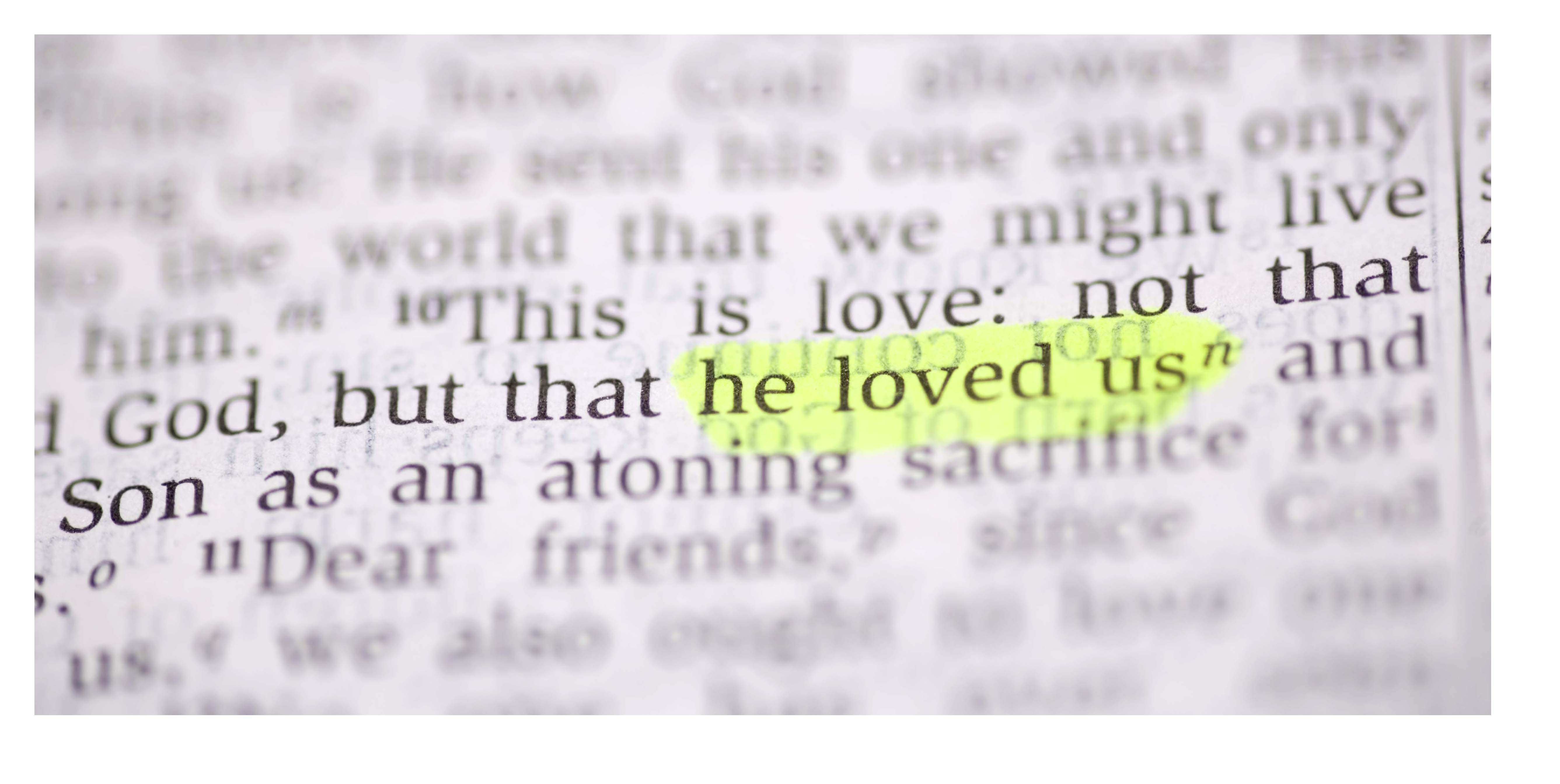
This is what it means for me to love God. It’s actually primarily about me experiencing the love of God and letting that flow out of me back to God and to my neighbour. This changes everything – your entire life. That why Cat & I used this awesome verse from 1 John as the central focus of our wedding: “This is love – not that we loved God, but that he loved us and sent his Son as an atoning sacrifice for our sins. Dear friends, since God so loved us, we also ought to love one another.” (1 John 4:10-11)
So now, thanks to what Jesus did 2,000 years ago, and because of what God led me to do 18 years ago, I know God’s love. The more I have experienced and learnt of God over the last 18 years has grown me to love God deeper and deeper, like a good marriage, where at the start the love is all froth and bubbles but after many years it matures and grows deep.
I look forward to loving God more and more as the years pass as well. I want to give him more of my heart and soul and mind, as I experience more and more of his love over the years.
O, if you don’t have any clue what that experience of God’s love looks like or feels like or how it can be real to you as it is real to me, I am praying for you that same prayer that Paul the apostle prayed for the Ephesians: “I pray that you, being rooted and established in love, may have power, together with all of God’s people, to grasp how wide and long and high and deep is the love of Christ, and to know this love that surpasses knowledge—that you may be filled to the measure of all the fullness of God.” (Ephesians 3:17-19)
Truly as the psalmist writes in Psalm 63:3, “Your love is better than life.”
So I love the love of God. My love of God is like the love that someone has for air after they almost drowned. I gasp it in. It is my life. My salvation.
Although, God’s command to love him and our lack of love may hang over you like a gavel from a judge ready to pronounce your guilt, once Christ has freed you from that guilt and you have experienced the love and friendship of God and God comes to reside in you by his Spirit, then love of God ceases to be a demand or a command – it becomes like breathing.
I still suck at loving God. I still have a deep selfishness and lack of love for others. But I am better than I was. God’s love has transformed me and given me new appetites and new joys. I am most alive when I am not hoarding God’s love for myself where it stagnates like a swamp, but when I let it flow through me, back to God and to others like a stream of living water that brings life and love wherever it goes.
Why do many Christians not show the love of God to others? I think primarily because they do not enjoy it themselves.
The love of God is something you can’t keep locked down or bottled up. It’s like a Pandoras Box – open it and you can’t contain it.
I think many Christians are only “Christian” by label and have actually never experienced the love and forgiveness of God themselves (in which case, they would not actually be Christians at all). It is possible to simply mentally tick the box that you believe all that Christian stuff, but you have never actually embraced or encountered or experienced or engaged with it personally. You believe in a God of love, but you do not KNOW the God of love and consequently, how on earth can you SHOW the love of God. If that’s you, I want you to know that Christianity is about a relationship with God, not just a label or a box to tick. There is so much more for you.
There are others though, like me, who have truly experienced the love of God, and yet struggle with letting it flow through us to others (or even back to God). With us, the problem isn’t that there’s no living water flowing in. The problem is with the plumbing. The pipes of our soul are broken or clogged and the water won’t flow through.
The reason for this is because Jesus doesn’t save perfect people. He saves dodgy, broken people. People who haven’t got it all together. People who don’t know how to receive or give love with all of their heart and soul and mind. People who need to be repaired and put right. People like you and me.
Jesus saves people as they are – with all their loveless baggage, and then begins the reconstruction process. It’s a lifelong process that the Bible calls “sanctification”.
But if you know of a Christian who isn’t loving you are right to expect more of them. Be gracious as Jesus is gracious with them, but also know that Jesus want to take them on to being more and more loving.
Ask them what they think about God’s love for them, and if you see their eyes light up and them talk with real and deep knowledge, then you should also see that love spilling over to other people.
If they don’t know of the love of God, then point them to Jesus. Jesus is not just a historical person you read about in an old dusty book. He is alive and able to engage and encounter people. He lived a life of love and died a death of love and opened a way of love for all those who would put the trust in him.
I have been living with his love for the last 18 years and  I look forward to walking with him for the rest of my life.
“And we know that in all things God works for the good of those who love him, who have been called according to his purpose. For those God foreknew he also predestined to be conformed to the likeness of his Son, that he might be the firstborn among many brothers. And those he predestined, he also called; those he called, he also justified; those he justified, he also glorified.Â
What, then, shall we say in response to this? If God is for us, who can be against us? He who did not spare his own Son, but gave him up for us all—how will he not also, along with him, graciously give us all things? Who will bring any charge against those whom God has chosen? It is God who justifies. Who is he that condemns? Christ Jesus, who died—more than that, who was raised to life—is at the right hand of God and is also interceding for us.Â
Who shall separate us from the love of Christ? Shall trouble or hardship or persecution or famine or nakedness or danger or sword? As it is written: ‘For your sake we face death all day long; we are considered as sheep to be slaughtered.‘
No, in all these things we are more than conquerors through him who loved us. For I am convinced that neither death nor life, neither angels nor demons, neither the present nor the future, nor any powers, neither height nor depth, nor anything else in all creation, will be able to separate us from the love of God that is in Christ Jesus our Lord.”
Nowadays, the meaning of names are not all that important. My name Simon, for example, means “he has heard”, which is ironic seeing as I am terrible at remembering things if I only hear them. When it comes to organising our lives, my gracious wife knows my motto is, “if it’s not written on the calendar, it doesn’t exist”.
But in the ancient world, and notably in the Bible, names were vitally important. Their meaning held great significance and often a name was given as a defining and even prophetic identity. Here are some examples that may illustrate my point:
Adam means “Man”
Eve means “Living”
Moses means “Deliverer”
Ruth means “Friend”
Elijah means “My God is Yahweh”
Peter means “Rock”
Many religions also give names significance. Buddha means “The Enlightened One”, Muhammad means “To Be Praised”, and Abraham means “Father of Many”. This helps us understand some of the significance of these religious leaders (at least from the perspective of their religion). It also can help us understand what the religion is primarily on about. Buddhism, for example, was founded by the first Buddha. As Buddha means “The Enlightened One”, you can conclude that Buddhism is going to be about the path towards enlightenment. In fact, if you leave out some concept of enlightenment, then you’ve probably – by definition – gotten Buddhism wrong.
Christianity, in the same way, is – by definition – about Christ. If you leave Christ out of Christianity, you may end up with something, but it won’t be Christianity. Jesus Christ is the central focus of Christianity and the meaning of those two words – “Jesus” and “Christ” – are very revealing in understanding what Christianity is all about. I would go so far as to say that the meaning of the words “Jesus Christ” gives us a basic understanding of the whole Christian message and how it calls us to respond. If you want to know who Jesus Christ is then you at least have to know what “Jesus Christ” means.
So let’s go through it.
The first thing to point out is that “Jesus Christ” is not his first and last name. His parents weren’t Mr and Mrs Christ. Surnames were not used in ancient Israel, although people were identified by their father (as in “James son of Zebedee” in Matthew 4:21) or by their home town (as in “Jesus of Nazareth” in Mark 1:24 or “Joseph of Arimathea” in John 19:38). However, the word “Christ” does not refer to either one of these.
Whereas “Jesus” is his personal name, “Christ” refers to his title or status. It’s a bit like how we talk about “Judge Judy” or “Doctor Phil”. “Christ” expresses his role. This is why he is often referred to as “Christ Jesus” rather than “Jesus Christ” and sometimes he’s just talked about as “The Christ” (see Matthew 2:4, Matthew 16:13-17 & Mark 14:61-62).
THE MEANING OF “CHRIST”
The word “Christ” is a Greek word meaning “Anointed One”. In Hebrew, the same word is “Messiah”. It refers to the one who would was prophesied to be the anointed king of God’s people. Hundred of years before Jesus was born, God made a covenant with King David (in 2 Samuel 7:1-16) that one of his descendants would rule God’s kingdom forever. This figure is sometimes known as the “Son of David” and just as David was anointed to be king, so this king would come to be known as the “Anointed One” or “Messiah” or “Christ” (see Psalm 2:2 for example). Jesus is the fulfilment of the covenant God made with King David and he is the king that all the old testament prophesies were promising about. He is The Christ, the Ruler. You could accurately translate the name Jesus Christ to be “King Jesus”.
Now this may seem unsettling to you if your only picture of Jesus is the unassuming, quite Mr. Nice Guy and you might think that the idea of “King” Jesus is just something his followers made up after he was gone to promote him and try to take over the government. But the idea of Jesus’ kingship is central to Jesus’ teaching and mission. Not only did Jesus talk extensively about the “kingdom of God” now being here in him, but in the end it was what got him in the most trouble. Consider this conversation with the Pilate recorded in John 18:33-37,
“Pilate then went back inside the palace, summoned Jesus and asked him, “Are you the king of the Jews?â€
“Is that your own idea,â€Â Jesus asked, “or did others talk to you about me?â€
“Am I a Jew?†Pilate replied. “It was your people and your chief priests who handed you over to me. What is it you have done?â€
Jesus said, “My kingdom is not of this world. If it were, my servants would fight to prevent my arrest by the Jews. But now my kingdom is from another place.â€
“You are a king, then!†said Pilate.
Jesus answered, “You are right in saying I am a king. In fact, for this reason I was born, and for this I came into the world, to testify to the truth. Everyone on the side of truth listens to me.â€
In the end, he was crucified with the charge against him written above the cross: “This is the King of the Jews” and the reason why they put a crown of thorns on him was to mock his claims of kingship. Also, after his resurrection, Jesus declared “All authority in heaven and on earth has been given to me.” (Matthew 28:18). That’s kingship language.
Now, this image of Kingship is not very popular today. We think of kings often as tyrants or power-hungry bullies. The idea of obeying or giving respect and honour to those in authority, is a concept that grates against our sense of independence and we have seen too many human kings in the past abuse their power or grow arrogant or indifferent to the suffering of others. So, it’s understandable if we don’t like the idea of a King, anointed by God to rule over us and worthy of our respect and obedience. But that is what Jesus is.
Fortunately, Jesus is kind and sacrificial and life-giving and so his rule is for our good and for the good of all the Universe. For me (as an actor), it’s like the idea of working under an amazing director that I know is brilliant and is a pleasure to work under. I would have no problem taking their direction and supporting their leadership, because I would know that they were better than me and they were worth following. Jesus is like that, but infinitely more so. His rule is perfect, not just in his skill, wisdom and power, but also in his moral goodness and love. He is a wonderful king to obey and we will all benefit from coming under his good rule.
The reality is though, if Christ means “King”, then if you want to get Jesus Christ (and therefore Christianity) right, you need to have Jesus’ kingship as one of the central ideas. A Christianity that makes Jesus any less, or has trouble with the idea of Jesus being king, is no Christianity at all. Likewise, a Christianity that does not call people to give over the rule of their lives to Jesus, is a false Christianity. To become a Christian, you have to see one of the greatest sins as being the fact that we want to rule our own life and that we do not give God the honour or obedience he deserves. We need to turn away from our sin and turn our allegiance to Jesus, giving him the crown of our life. Now, it is very confronting to say that every single person on the planet should come under the rule of no one else than Jesus, but that is what it means for Jesus to be called “Christ”. It means that if you reject Jesus as king, you reject God himself, because Jesus is God’s anointed.
Christianity is by definition therefore an “exclusive” religion. There is only one way to God and Jesus is it. I have heard people claiming to be Christians, proclaiming a version of Christianity that says that we all just have our own “faith tradition” and that as we all seek unity we are all coming closer to God. It doesn’t really matter how you respond to Jesus, what matters is your sincerity or your effort or your kindness towards your fellow man.
This multi-faith understanding of religion and spirituality is very palatable because it is so darn nice. It welcomes everyone and tries to avoid saying that anyone is “right” or “wrong” which might offend or come across as arrogant. But although it may be nice, it’s just not Christianity. You can not say that you follow or side with Jesus Christ, if you ignore the very definition of the word “Christ”.What you have done is just make up your own religion. And if that’s what you want to do, go for it. Just please don’t call yourself a Christian. A Christian is someone who responds to Jesus as Christ – that is, as God’s king, anointed to rule over the entire Universe and over every aspect of our lives. As Abraham Kyper put it: “There is not one square inch of the entire creation about which Jesus Christ does not cry out, ‘This is mine! This belongs to me!'”Christianity has a bold and strong message that effects every person on the planet, but it is also a good message, because Jesus is a good king. His kingship brings fellowship with God and life and wholeness. His kingship is full of love and light and outside of his kingship we are lost and unprotected. As Paul writes in Colossians 1:12-14, “Give joyful thanks to the Father, who has qualified you to share in the inheritance of his holy people in the kingdom of light. For he has rescued us from the dominion of darkness and brought us into the kingdom of the Son he loves, in whom we have redemption, the forgiveness of sins.â€
Jesus wants to rescue us from the kingdom of darkness and bring us into the kingdom of light. He is our good king, but he also our rescuer, which leads me to the meaning of the “Jesus” part of his title.
THE MEANING OF “JESUS”
If Jesus is God’s king then our correct response is to submit to his rule – to live under his direction and instruction and authority. To follow him. To become his disciple. To obey and serve and honour him with our actions and our words and our thoughts and all our resources. The reality is though, even for those who acknowledge Jesus as the Christ, we all fail daily at doing this. Our tendency is to live our own way and rule our own life. We ignore God’s authority and live as if he is not our king. Even those who try to follow Jesus as their king, know that their efforts are at times half-hearted and full of mixed and selfish motives. No one can claim to be perfect in their service and obedience to Jesus. As Paul puts it in Romans 3:23, “All have sinned and fall short of the glory of God.”
We need rescuing. We need saving. We need to be freed from our slavery to selfishness and our tendency to ignore God’s rule. We also need to be freed from the judgement of God.
Talking about things like the judgement of God and hell is not a good way to make friends. Like the idea of the kingship of Jesus, it clearly isn’t a popular concept in the whole Christian message. Some people have tried to re-create a Christianity without the idea of Hell or the judgement of God, but I think you end up with another “watered-down” false version of Christianity rather than the genuine article. I think this for 3 main reasons:
1. Judgement Day is not just the name of a Terminator movie. You can not escape the references through both the Old and New Testaments telling of one final day when all people who have ever lived having to stand before God and give an account for our lives. God promises that all evil will be judged and only the “righteous” will be spared. Unfortunately, another consistent message throughout scripture is the fact that no one can claim to be “righteous” or innocent before God based on their own life. That is why Judgement Day is a terrifying prospect. But nevertheless, the message of the prophets, or Jesus and of the New Testament writers is clear: “God has set a day when he will judge the world with justice by the man he has appointed.” (Acts 17:31). If this is true, then to avoid or ignore this coming reality is as foolish as to stand on a beach and ignore the warnings that a tsunami is on its way. Judgment Day is real. It cannot be taken out of Christianity, and any attempt to do so, leaves some major gaping holes in the bible.
2. Jesus had a Hell of a Message. If you read Jesus’ words and want to heed them, you can not ignore the fact that he talks about Hell. In fact, no Old Testament prophet or New Testament preacher, is recorded as talking about Hell as much as Jesus. To simply edit those bits out and accept only parts of Jesus’ teaching is to really misrepresent him unfairly. If Jesus truly is from Heaven (as he claimed) then he has the authority on the subject of heaven and hell and whether they exist. Now the exact nature of Hell is debatable in terms of whether it is consciously eternal or not, but Jesus’ warnings are unavoidable. Hell, Jesus says, is real, and it is the destiny of all who do not accept his offer of escape.
3. No Bad News = No Good News. Sometimes people think that the Old Testament gives us a picture of an angry judging God, while the New Testament is all about love and peace. This is true to some extent in that the judgements of God are quite vivid in the Old Testament (10 plagues on Egypt for example), and in the New Testament we are introduced to the greatest expression of God’s love and the wonderful gospel message that offers peace to all the guilty. But it is a grave misunderstanding to say that the judgment of God is swept under the carpet and replaced with a nicer, loving message. The offer of peace only makes sense to a people who are at war with God. The offer of forgiveness and mercy only makes sense to a people who are guilty and under judgement. You can not show mercy to the innocent. The innocent deserve to be acquitted. It is the guilty who need mercy. The “gospel” is the message of Christianity. It literally means “Good News”. It is only in the context of the bad news of the fact that we are under God’s just judgement, that we can receive with joy and gratitude the good news of God’s solution.
Now this all seems pretty bleak, but think of it as a diagnosis. When the doctor tells you he has done all the tests and you have cancer, you may be blown away by the bleakness of that news, but very quickly we look to what the doctor is offering as a treatment and if there is any hope. The message of the Bible and the message of Jesus is that our diagnosis is bleak. We have a cancer of the soul. Our sin means that we stand before a holy and perfect God with no way of claiming innocence and no means of “paying God back”. Any good deed we have done is simply a good deed that we should have done in the first place and so does not pay for the thoughts, words and deeds that lead us to be standing before God condemned. And although I use that language as a metaphor, it will also one day be a reality when, as Hebrews 9:27 says, “man is destined to die once and then face judgement”.
I don’t write this to make you feel bad or to scare you. In fact, hopefully hearing about the judgement of God brings some clarity to your experience. This is why you feel distant from God. This is why God seems obscured to you. This is why you may be able to work on your bad habits and behaviour but you can’t change your heart. This is why all you can do with your guilt and shame from the ways you have wronged people, is just to try to forget them or “move on”.
The judgement of God is good news. It tells us that God cares about how we treat people and how people treat us. It means God is not just a dithering old Santa Claus in the sky who gives you presents no matter what. It means God loves justice and goodness and mercy and truth and God will ensure that on the last day all the evil in the history of the world will be shown to be evil and done away with. The judgement of God means that “God is light and in him there is no darkness at all” (1 John 1:5) and in the New Creation that God will bring after the Judgement Day, there will be no more pain or sorrow caused by sin and evil. No evil dictator will “get away” with their crimes, no injustice will be left undealt with and all acts of goodness will be finally vindicated. The judgement of God is a good thing.
The problem is of course that if the judgement of God is real and truly just, then we are all screwed. We need some cure for our cancer. We need to be rescued from our bleak situation. We need a Saviour.
This is why Jesus came… and this is what “Jesus” means.
After Joseph got the news that his fiance, Mary was going to give birth and that the pregnancy had been caused by God’s Spirit (rather than her sleeping around), he was told by the Angel of the Lord, “She will give birth to a son, and you are to give him the name Jesus because he will save his people from their sins.†The name Jesus means something. It’s not just something picked out of a baby book. It is a name that God instructed Joseph that he must have because it related to his mission, “he will save his people from their sins”.
The word “Jesus” comes from “Yeshua” (commonly known today as Joshua). Yeshua is derived from two Hebrew words. The “Ye” points to God’s personal name “Yahweh” and the “Shua” points to the hebrew word for “salvation”. So Yeshua (or “Jesus”) literally means God is Salvation. This is why Jesus is called Jesus, because his mission was God’s salvation. And what do we need to be “saved” from? Well, so that we don’t start thinking that we need to be saved from ignorance or lack of motivation or global warming or political oppression, the angel makes it clear… We need to be saved from our sins.
And it is Jesus who makes that salvation possible through living a perfect life that we did not live, dying a torturous death that we should have died, bearing the judgement of God that he did not deserve, and rising back to life in victory to offer us a way of salvation that we could not earn.
God’s King has come, just as was prophesied, but he did not come to judge us all and clean up his creation. If he came to do that, he might have been called Yehoshafat, meaning “God Judges”. But no, he came to give us a way out. He came on a rescue mission. He came to provide the cure. He came to save us. And so he was named, Jesus.
What’s in a name? Everything.
Jesus Christ means Saviour King. “Jesus” speaks of his mission. “Christ” speaks of his role. If you like pictures, think of it as two rings. One ring is a life preserver, the other ring is a crown. Jesus Christ is both.
If you are exploring Christianity, make sure you at least understand the basics. Don’t fall for counterfeits, even if they offer a more palatable Christianity. If you accept or reject Christianity, at least accept or reject the real deal.
So, if you want to get your head around what real Christianity is, I think you don’t really need to look much further than the name “Jesus Christ”. It tells us who Jesus is and what he was on about. It tells us why he came and what he offers.
Or maybe you’re someone who has, possibly for many years, called yourself a Christian, but you now realise that you haven’t really been one all along. Well, the name “Jesus Christ” also tells us us how we are to respond to him. Not simply as a wise teacher, or a good example to follow. We must respond to who he really is. Our rightful king and our only hope for salvation.
“It is by the name of Jesus Christ of Nazareth, whom you crucified but whom God raised from the dead, that this man stands before you healed. He is the stone you builders rejected, which has become the capstone. Salvation is found in no one else, for there is no other name under heaven given to men by which we must be saved.â€
Acts 4:10-12
“These are written
that you may believe that Jesus is the Christ, the Son of God, and that by believing you may have life in his name”