April 3 2014

Simon’s review of “Noah” – the film
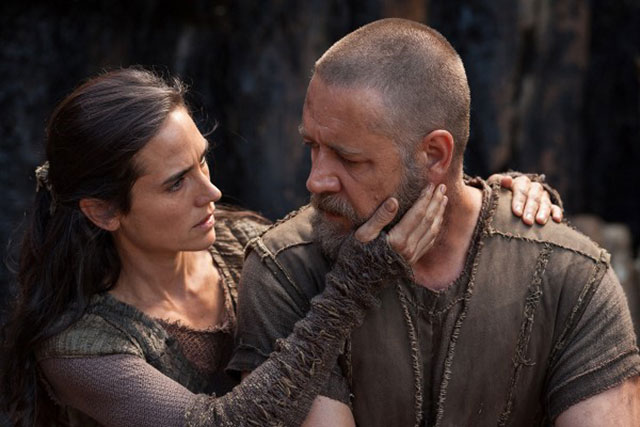
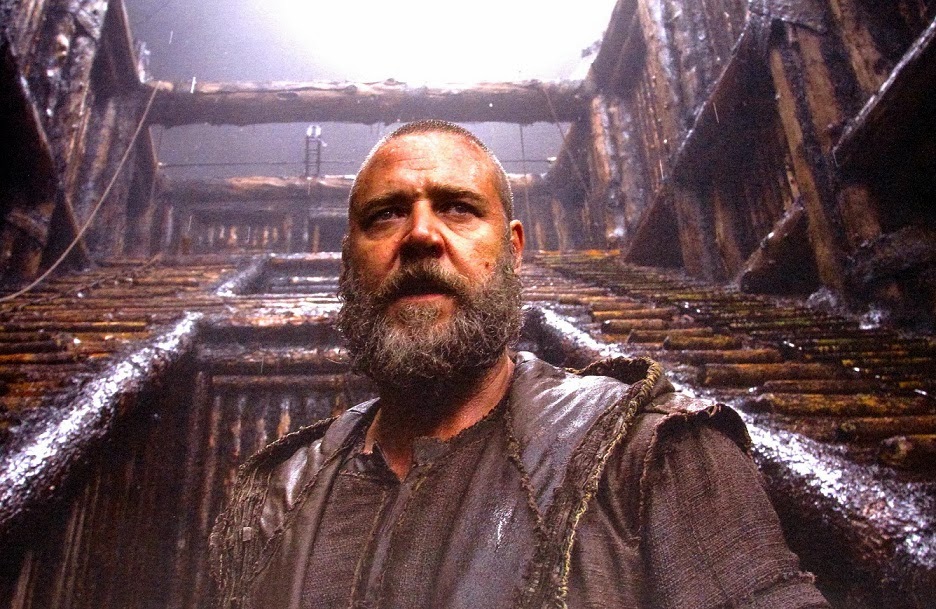
noah_sad

This is titled “Simon’s review of Noah – the film” because my last blog was titled, “Jesus’ review of Noah“. If you haven’t read it, please do, as I talk a bit about the movie (before I had seen it) and I discuss what I think is a fascinating topic – namely, what Jesus said about the original Old Testament story of Noah. If you’d like to read it, CLICK HERE.

About 40 minutes ago I had just finished watching Darren Aronofsky’s new film, “Noah”. I went into the film with a few clear expectations…

1. It was not going to be biblically accurate.bible
Even Aronofsky called his own film, “the least biblical biblical film ever made”. So there was no way I was going to get offended by the fact they were going to stray from the source material.

2. It’s directed by Darren Aronofsky.
This is the same guy who did Requiem for a Dream  and Black Swan. So, I knew it was going to be a bit weird.

3. Darren Aronofsky is an atheist.
I’m Godless.” He has said, “And so I’ve had to make my God, and my God is narrative filmmaking.” So I didn’t expect a reflection on biblical themes or a portrayal of “the Creator” (as God is constantly referred to in the film) from the perspective of someone who has an intimate relationship with God.

4. It’s had mixed reviews.
Some have said it’s amazing. Some have said it’s just a bad film. Lots of Christian commentators have critiqued its distortions of the Bible and its message. So I was going in with not very high expectations.

5. There are rock monsters.
These creatures are very loosely inspired by the “Nephilim” from Genesis 6:4. I didn’t know how much of a part they played, but I knew they had been getting lots of flack. So I was at least prepared for their presence in the film.

So, having all that in the back of my mind, I went to see it tonight with my wife, ready for anything. I thought I was prepared. I thought I knew what to expect. I was wrong. Here are a few of the things that surprised me…

(Spoiler Alert! I will be conscious that you may not have seen the film, but I probably will reveal a few details that you do not get from the trailers. I’ll try not to spoil anything that would spoil the experience if you do go see it)

1. I hated the rock monsters.original
Not because they were an unbiblical and unnecessary silly addition to the film. I just thought they looked crap! I can cope with an atheist butchering a bible story. What I can’t cope with, in this day and age, is an esteemed director like Aronofsky letting such shockingly bad CGI get on the silver screen! They looked like they were either puppeteered against a green screen or done with stop motion! Maybe they were animated in that way to pay tribute to Ray Harryhausen (the master of stop motion monsters) who died last year. Personally, I think they added very little to the film and were more of a weird distraction that made me feel like I was watching Jim Henson’s “Labyrinth” at times. Hey, Jennifer Connelly was the lead actress in both those films so maybe it was intentional!

2. It was pretty cool.
It had a consistently interesting and cinematic look to it. The costumes were cool, the sets were cool, the acting was cool, the actors were cool, the sound effects were cool, the visual effects (apart from the rock monsters) were cool. It was a cool movie. Well worth seeing on the big screen for the visual feast that it was.

3. It wasn’t at all Godless.
I had heard some criticisms that God is absent in the film just because the word “God” is not used. But the “Creator” (as God is called) is not only mentioned throughout the film, he clearly and unambiguously makes things happen. I was worried they were going to sort of make out that it was all in Noah’s head. Now, sure, he received the message to build the ark through dreams (whereas in the Bible God just speaks to Noah), but God is very clearly acting when a forest miraculously appears and all the animals come to the ark and the worldwide flood comes along. Even the rock monsters are evidence of a divine being. There’s no hint that Noah is just making it all up or it was just a localised flood or something like that to turn it into a Godless story. God is depicted as just and merciful, directly active and working through the lives and choices of people. There is a reoccurring theme of characters asking why God is silent (it’s mentioned by at least three separate characters), which was disappointing because that’s the exact opposite of what the original story says, but at least God was present throughout. If you know your Bible, he was a lot more obvious in this film than he is in the Book of Esther, that’s for sure!

God’s direction and command was an interesting theme in the film I thought. When Noah is given the command to build the ark because the flood is coming, that is all pretty clear (albeit given through a series of dreams). And it’s the right thing to do, no question. But later (spoiler alert) when Noah feels that because humans are so sinful, even he and all his family should not be spared and so he plans to kill his granddaughter so the human race will die out, abraham-and-isaac-on-mount-moriahthere is no dream from God. There is a sort of dream sequence where he sees the evil of mankind and realises that he and his family have the seed of evil in them as well, but the idea that everyone must die to save the earth, is one mission that he concludes on his own. He feels that that is what God wants him to do, but everyone else disagrees with him and he has no vision or sign to prove otherwise. Just is own convictions. It has echoes of Abraham being commanded to kill his son Isaac, just without the command.

I thought it was great reminder to not just conclude what God might want you to do when he has not given you instruction on the matter – especially when it comes to something you can’t take back, like killing someone! I’ll try not to spoil what he does with his moral dilemma, but I was a bit disappointed with how they handled it. There were lots of opportunities for the message that “mercy triumphs over judgement” (James 2:13) to shine through, from the rock monster who asks God for forgiveness and then is saved, to the act of a character being healed from her barrenness, to the perfect provision of the girls (it’s a bit creepy but you have to see the film to understand the point of that one). But in the end, it all sort of got watered down to, “mercy only triumphs over judgement when it’s mercy for your own cute granddaughters that you’re feeling loving towards”.

4. It was all about how sinful humans are.
Now, some have criticised the film for being just environmentalist propaganda, and sure it laid it on pretty thick especially with Noah and his family all being vegetarians (though correct me if I’m wrong, but were they wearing leather?). Despite this, the idea of humans destroying the earth was just one of the ways that “Man” is shown to be corrupt. They rape, steal, kill, covet and generally are just plain bad… except the girls of course. Interestingly, the women are all good in this film. There was not one really evil woman in the entire story. But that aside, the theme of how bad we really are, was scattered throughout. The flood itself is seen as a just judgement for mankind’s wickedness. The big question that is raised, is “Are Noah and his family innocent?” At first Noah is content to ride along with the animals (who are deemed innocent because they live as they did in the Garden of Eden), but about half way cainthrough the film, he realises that even he and all his family have mixed motives and sinful inclinations. His wife tries to get him to see that there is also good in all of them as well (I had flashbacks of Luke Skywalker trying to convince Darth Vader), but he concludes that the world would be better off without us. Even in the end, when it doesn’t all end in humanity’s extinction (shock horror), Emma Watson’s character asks him to stick around and not kill everyone so he can be a grandfather and help us all be better this time.

The funny thing is, we know the rest of the story! Noah’s descendants are not much better! The whole point of the environmentalist theme is to convict us about the fact that we still kill and ravage the planet and we are still full of sin and conflicted desires. The question of the “goodness” of humanity is sort of concluded with a message like: “HUMANS – WE REALLY ARE SINFUL, BUT WITH LOVE IN OUR HEARTS WE DESERVE ANOTHER GO”.

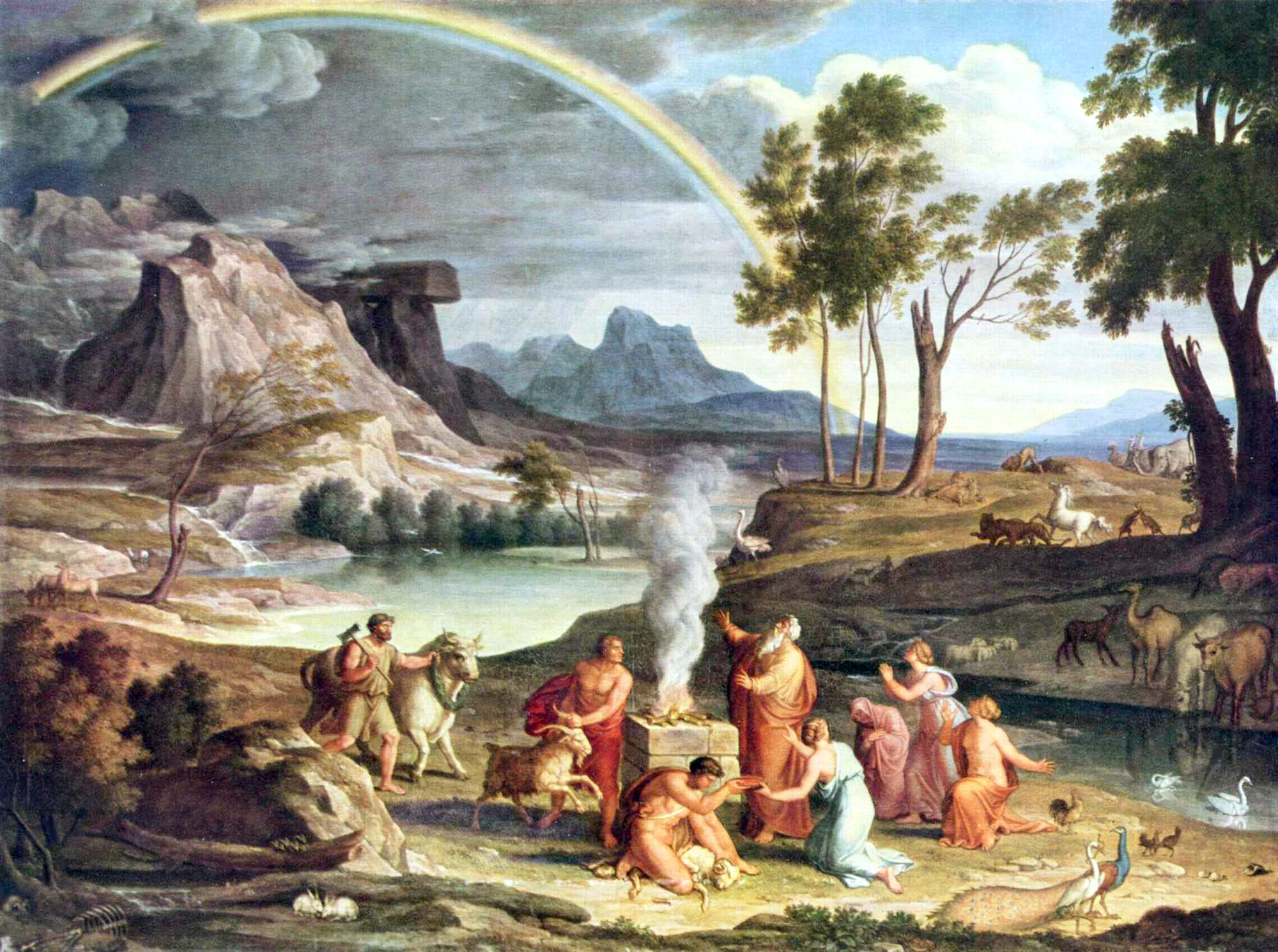
Now, if you know the original story, this has elements of the truth. Noah is described as a “righteous” man, but this doesn’t mean he was perfect. It means he was “right with God”. But he was still sinful, and so was all his family. This is most clearly shown in the fact that the very first thing they did when they got out of the ark was make a sacrifice. (see Genesis 8:18-21) That’s right! They killed an animal and offered it as an act of humility and appeal to God for mercy. And God responds to their sacrifice by promising not to wipe everyone out with a flood ever again “even though every inclination of the human heart is evil from childhood” (Genesis 8:21). Nothing has changed in the human heart by the end of the biblical story. God’s justice and mercy has been clearly shown, but mankind’s sin remains the same. That’s why the sacrifice was needed.

In fact, the sacrificial system (though only a new thing back in Genesis) was a bigger part of the Noah story than people realise. It definitely was completely skipped in Aronofsky’s version of the story. You see, Noah wasn’t actually told to put two of every kind of animal in the ark. Check out Genesis 7:1-4. He was told to put two of every kid of “unclean” animal, but he had to put SEVEN of every kind of “clean” animal. Why more “clean” animals? Because they were the ones you were allowed to sacrifice. Even before the flood came, the biblical story tells us, God was providing a way for Noah and his descendants to remain in righteousness (right relationship with God). It wasn’t through being more good than bad. It wasn’t through puttin’ a little love in your heart. It was through sacrifice and the mercy of God. It’s actually the sacrifice of a “clean” animal in the place of an “unclean” sinner, that makes way for God’s mercy to a people that actually deserve judgement. This theme is carried all the way through the bible and is ultimately fulfilled in the one person the whole system was pointing to – Jesus. The original story of Noah concludes with the message that “mercy triumphs over judgment through sacrifice”. Which is a very simplistic, but accurate, description of the New Testament gospel.

I wasn’t surprised the Aronofsky missed this message in his film, but I was surprised of how much he explored the theme. Apart from his weak ending, I thought he explored it well and raised great questions and moral dilemmas about the sinfulness of the human heart and whether we can overcome it.
noah sacrifice

5. My last surprise is that I can heartily recommend this film.

Now, if you’re the sort of person who gets offended by films like “Life of Brain” and “Constantine” due to their biblical inaccuracies, then give it a miss. On the other hand, If you’re the sort of person that bases your knowledge of the bible on films like “The Da Vinci Code” and “End of Days”, then please also give it a miss. Remember Aronofsky’s comment that it’s “the least biblical biblical film ever made” and just go read the Bible itself. Noah’s story is only 4 short chapters (Genesis 6-9).

But if, like me, you are interested in what a weird atheist director like Darren Aronofsky might do with a tale like Noah, and you’re fascinated by how the world explores issues like judgment, mercy, love, sin and human nature, then you don’t have to boycott this film to make some sort of protest. If you have the ability to think and critique and discuss and reflect, then go see this film with a big bag of popcorn and a good friend to chat about it afterwards!

(3872)

Share Button
March 31 2014

Jesus’ review of “Noah”

Noah movie

There’s lots of movie reviews about the new film “Noah” by director, Darren Aronofsky. Some praise it, some can it, some grieve that it’s not a close enough depiction of the actual Bible story, and some have even said that the film is “the least biblical biblical film ever made”. Actually, that last quote is from the director, Darren Aronofsky himself (see here), so I don’t know what some Christians are getting so offended by. It’s not a biblical film. End of debate. The film has even been released by Paramount with the following clarifying statement:

“The film is inspired by the story of Noah. While artistic license has been taken, we believe that this film is true to the essence, values, and integrity of a story that is a cornerstone of faith for millions of people worldwide. The biblical story of Noah can be found in the book of Genesis.”

NoahAndTheFloodWell, I think it’s maybe a bit of a stretch to say the story of Noah is a “cornerstone of faith”, but at least they point to where you can actually read the biblical account.

Some people debate whether the story of Noah is true history or just a fable. Whether it can be adapted with rock monsters, or whether it is just totally irrelevant for modern audiences. What interests me, as a follower of Jesus, is whether Jesus has anything to say on the topic.

You might not worship Jesus as I do, but most people have a general respect for Jesus and his teaching. Christians are criticised if they ignore things that Jesus clearly taught on, like caring for the poor, and they are also criticised if they focus too much on topics that Jesus didn’t specifically talk about, like homosexuality. And rightly so, I say. Jesus’ teaching matters, and if he taught on something clearly, it should be acknowledged as a core part of Christianity.

Now, Jesus didn’t give a movie review of Aronofsky’s film, but it may surprise you that he did give a commentary on the source material. In both the gospel of Matthew and the gospel of Luke it is recorded that Jesus referred to the story of Noah and taught how we should apply it to our own lives. Aronofsky, said in an interview with MTV (see here) that the biblical story of Noah is “the first apocalypse story – it’s about the end of the world” and Jesus picks up on this exact theme. When Jesus reviewed Noah, he uses it as an analogy of the last apocalypse story – the actual end of the world – referring to his Second Coming.

Now, if you have never read the actual original story of Noah, you should probably read it before you hear Jesus’ review of it. It’s not that long and you can find it in Genesis 6-9. But if you are familiar with it, let’s read Jesus’ teaching from the gospel of Matthew (you can find the same account in Luke 17:22-36).

“But about that day or hour no one knows, not even the angels in heaven, nor the Son, but only the Father. As it was in the days of Noah, so it will be at the coming of the Son of Man. For in the days before the flood, people were eating and drinking, marrying and giving in marriage, up to the day Noah entered the ark; and they knew nothing about what would happen until the flood came and took them all away. That is how it will be at the coming of the Son of Man. Two men will be in the field; one will be taken and the other left. Two women will be grinding with a hand mill; one will be taken and the other left. Therefore keep watch, because you do not know on what day your Lord will come.” (Matthew 24:36-42)

Now, for a bit of context, this passage fits in a larger section where Jesus is teaching about the “coming of the Son of Man”. This is referring to the idea that jesusbrb-434 copysome time after his death, resurrection and ascension, he will return as judge and saviour of the world. If the idea of the Second Coming of Jesus or “Judgement Day” is new to you, then you might want to read other places in the Bible that talk about it (like the whole of Matthew 24-25, or much of the Book of Revelation, or even the end of the Book of Daniel in the Old Testament) Hebrews 9:28 sums up the first and second coming of Christ very nicely I think: “Christ was sacrificed once to take away the sins of many; and he will appear a second time, not to bear sin, but to bring salvation to those who are waiting for him.”

So if Jesus is teaching about the “Second Coming”, why does he talk about the story of Noah? What do they have in common and what aspects of the Noah story does Jesus apply to us as relevant for our lives? He says in verse 37, “As it was in the days of Noah, so it will be at the coming of the Son of Man.” So basically, he uses it as a simile. It’s a sermon illustration. Jesus is saying, experiencing his Second Coming will be like experiencing Noah’s flood. But in what way? Well, Jesus mentions 3 aspects:

1. It will be unexpected.

That seems to be Jesus’ main point. He stressed that only God the Father knows when the Second Coming will happen and concludes with the warning to “keep watch because you do not know on what day your Lord will come”. The story of Noah is used by Jesus as an analogy of this. People were just going about their daily lives (eating, drinking, marrying etc.) and were completely unprepared for the flood to come. In the verse after the passage above, Jesus uses the analogy of a thief coming to rob a house to make the same point. And what is the point? Don’t be like them and be unprepared. You won’t know when it’s going to come, so make sure you are ready for Jesus’ Second Coming. Everyone around you may be unprepared, but don’t you be.

2. Some will be taken away for judgement.

Jesus isn’t in any way afraid or embarrassed to talk about an ultimate final judgement. The idea that God will one day separate all of mankind into two groups – one to live with God forever and one to be separated from God forever – is a reality that is spoken throughout the Bible, both in the Old and New Testament. Anyone who wishes to engage with Jesus’ teaching (and especially anyone who calls themselves a follower of Jesus) must engage with the fact that Jesus taught very clearly about Judgement Day. He spoke about hell. It’s unpleasant. It’s unfortunate. But you can’t argue that it’s un-Jesus. The most foolish thing to do would be to simply live your lives – eating, drinking and marrying – without engaging with this part of Jesus’ teaching. That would really miss Jesus’ point! Jesus uses the story of the flood that took some away to point us to a future event that will also take some away. Not all will be saved and Jesus is warning us to so that we might not be in that group.

3. Some will be left.

The other parallel to the story of Noah and the Second Coming is that not all will be taken away. Some will be left. Some will be spared. Who are these people? Well, in the story of Noah Jesus says it’s those who “entered the ark”. This is quite similar imagery to the parable of the “Ten Virgins” that Jesus tells in the very next chapter (you can read it in Matthew 25:1-13). In both this parable and the story of Noah, those who are prepared go inside something and those who are unprepared are stuck outside the door. Jesus links both of these as analogies of his Second Coming. In the parable of the Ten Virgins, Jesus is represented by the returning Bridegroom. In the Noah story, who is Jesus? Is Jesus saying he is like Noah, ushering people into the place of safety in preparation for the coming judgement? Or is Jesus saying he is the ark itself, and that only in him are we protected from being taken away? Either way, he uses the story of Noah to point to himself as the one who can bring salvation.

JusticeandMercyIn his MTV interview, Darren Aronofsky said of his film, “It’s about justice. And over the course of the film, mercy and grace are learned.” Now, I know as a staunch Atheist he has taken a lot of liberties with the text and probably doesn’t care what Jesus thinks about the message of the story of Noah, but I think the above quote is pretty on the money. Both the story of Noah and the Second Coming are not simply about judgement and justice. They are about mercy and grace as well. That is what the Christian gospel proclaims. That is why Jesus came. That is what we see in the crucifixion of Jesus. Justice as God condemns sin in the sacrifice of Jesus, and mercy as Jesus dies in our place and we are offered forgiveness.

I might be seeing Aronofsky’s interpretation of Noah later this week. If you want a review of it, there are tons on YouTube (here’s one I like). But in the end, I’m more interested in Jesus’ interpretation of Noah. Jesus’ review is that the biblical story of Noah is an action-packed, dramatic morality tale that also has a redemptive theme and makes relevant commentary for a modern audience as to how they should live and what their future may hold.

I think Jesus would give the biblical story 5 Stars.


(2242)

Share Button
March 8 2014

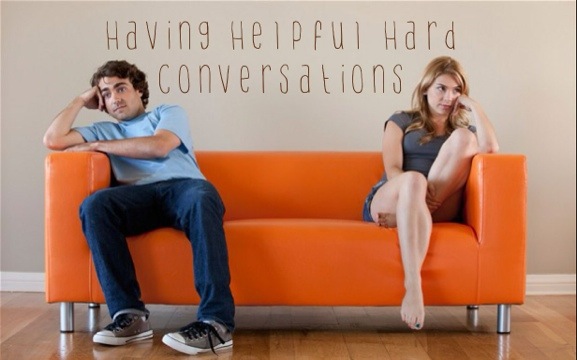
Having Helpful Hard Conversations (Rules 6-9)


This is Part 2 of my 3-part post on “Having Helpful Hard Conversations”.

If you have not read Part 1, click HERE and go through it before reading on.

If you have read Part 1, before we tackle Rules 6-9, here is a refresher on Rules 1-5:

RULE #1: Love
Have an attitude of selfless love before engaging in conversation.

RULE #2: Choose the time and the place
Be wise and thoughtful about when and where you should talk.

RULE #3: “This is not going to come out right…”
Allow yourself and the other person freedom to talk it out.

RULE #4: Actively Listen
Really listen and make sure the other person feels you have heard them.

RULE #5: Be grateful that something hard was brought up
Before responding, thank them for their trust and honesty.


20131027-140026.jpg

Ok, let’s get back into it! Here are Rules 6-9 for having helpful hard conversations.

RULE #6: Trust their motives

If there exists little to no trust between two people, it is basically impossible to have a helpful hard conversation. If you believe that the other person is completely two-faced and you can’t believe a word that comes out of their mouth, then how will you be able to follow any of the other rules I have outlined? You may listen to their words, but your filter of mistrust will interpret them to simply be insincere, manipulative or deceptive. You will think, “Yeah, that’s what they’re saying, but I really know what they mean.” Both parties have to at least trust that the other person (deep deep down on their best day) is trying to engage in a helpful conversation. Without that trust, the whole thing collapses.trust-torn

Now, it is true that trust can be validly lost and that people need to work hard at earning trust when that happens, but I have also seen many times a hard conversation descend into an argument or not be able to start at all, simply because one person didn’t trust the intentions of the other. Now, in each of the situations I am thinking of, the non-trusting person had a valid reason to be skeptical of the trustworthiness of the other, but they fostered that mistrust and would not let it go. They were committed to not trusting the other person and this meant that the other person just didn’t have a chance. No matter how much they might try, the mistrusting person would look for any little sign that might justify their lack of trust and they would pounce on it! Lack of trust is poison to having helpful hard conversations.

Now, this may not be so obvious in your heart. You may need to reflect on whether you don’t really 100% trust the intentions of the person you are going to talk to. It may be subtle or rooted in deep pain or long term disappointments. It may be completely valid or it may be mixed with your own bias and self-defensiveness. Either way, it needs to be addressed if a helpful hard conversation is to be had. Firstly, you can be honest with the other person and share that you are having a lot of trouble trusting them. This may give them an opportunity to ask for a chance to just be heard out or to see what can be done to help build that trust before the conversation takes place. Secondly, you may need to repent of your lack of trust. That may sound a bit harsh, but if the person is not completely untrustworthy, you may be judging them unfairly by not giving them a chance. Not trusting someone is a defence mechanism – we use it to protect ourselves from not being hurt or mistreated. Sometimes it is very valid and sometimes it simply prevents us from moving forward and showing grace to people. Sometimes it is better to put your mistrust aside and make the conscious choice to trust the other person – or at least give them the benefit of the doubt. When you go into a hard conversation with a commitment to trusting the other person’s intentions, you will be allowing the other person to stumble through their words even if they potentially hit a nerve. You will think, “I can’t believe they said that, but I’ll trust that they are at least trying to engage”. This will allow you to have grace and patience and a listening ear.

RULE #7: Stick to the topic

bullseye

This is such a useful rule and one of the first ones I ever learnt – You can and must only have one hard conversation at a time. During a hard conversation, it is important to be clear about what you are talking about and ensure that any other issues that you may want to bring up – however important and valid – must wait for another time.

People bring up multiple issues during a hard conversation for three main reasons:

1. It may be that you actually have a few things you want to discuss (ie. The rude way your partner spoke to you the other day AND the fact that they’re always late). If that’s the case, even if all the issues are valid, it may be loving and wise to bring them up one at a time. Otherwise, the other person may feel overwhelmed and respond either by shutting down or getting aggressively defensive.

2. It may be that you only start with one thing that’s on your mind, but it is the catalyst that brings up all the other things you find frustrating  (ie. “You don’t help me when I’m tired. Like the other day, I came home with the groceries and you were talking to your mother. She bugs me sooo much! I can stand the way she always criticised me.”) Now the lack of help and the criticising mother may be both valid issues worth discussing, but you have to stick to one topic at a time. 

3. The third reason people bring up another topic is when they are wanting to defend themselves from the main issue being discussed. If the conversation is hard or is getting a little heated it is very easy for someone to raise a new issue in an attempt to strengthen their case, make the other person look bad and ultimately “win” the argument. For example, one person says, “I’m really worried about how much debt we’re in. We need to discuss your money management with somebody from Credit Help Kansas City MO.” Then the other person says, “Money management? You’re going to talk to me about managing money? You can’t even manage your drinking! What was that the other night at my parent’s place? You were so embarrassing!” “Well, maybe I wouldn’t drink so much if your family was less awkward!” And with a few sentences, three completely different issues have been brought up and the hard conversation is going nowhere helpful. Often the change of issue is more subtle than this, but hopefully you get the idea.

At times, it may be very hard not to bring up a different issue into the conversation. Like if someone wants to talk about a petty issue with you, when you’re really upset about a much more important issue that you want to bring up with them. But the goal of these rules is making sure you have helpful hard conversations. There are exceptions of course – like if your partner wants to discuss your nose-picking habit after you just found out they were cheating on you – but generally, you must only bring up one issue at a time. This rule needs to be something you both really agree on, so that at any time in the conversation, no matter who is “in the right”, either one of you can say, “Now, that’s a valid issue but that’s not what we are discussing right at the moment.” When this rule gets broken (as it often will in a hard conversation), you both need to be free to alert the other to the fact and you both need to respect it when it gets alerted.

RULE #8: Avoid absolute language

When we are having a hard conversation we often express ourselves in an emotionally charged way. Sometimes colourful or exaggerated language can be useful to get across an idea to someone who is downplaying the issue. Jesus even used “hyperbole” in this way at times (for example, “If your eye causes you to stumble, gouge it out and throw it away.” – Matt 18:9) But exaggerated language can also be used unfairly and will often inspire people to become defensive.

The most common examples of absolute language is “You always”, “You never” and “You are”.

“You always/never” statements get used to express frustration about an ongoing behaviour (such as “You always leave the lights on!” or “We never go out any more!”). The problem with these sort of absolute statements is that they are just too easy to reject (ie. “If I always leave the lights on then every light in the house should be on now!” or “That’s ridiculous! We went out last month!”) It is wise to avoid these types of statements. Partly, because they just encourage the other person to feel justified in their behaviour because you’re obviously being over the top, but also because, when all is said and done, these statements just aren’t true.

If you want to be accurate and truthful, it might be best to say something like, “The last few nights, you’ve been leaving the light on” or “We haven’t gone on a date for a couple of weeks.” Even a statement like, “I feel like we never go out anymore” is much more productive because, although it is still an exaggeration, it is a statement about how you feel – which is something that should be acknowledged and addressed.Dunce-cap

“You are” statements are even more unhelpful. To bring up an issue and accuse someone of not just doing something, but being something, is an approach you want to be very careful about. Consider these statements: “You’re so lazy.” “You’re a liar.” “You’re so stupid sometimes.” “You’re disgusting.” “You’re a real dissappointment.” “You’re a terrible person to live with.” These are statements that can be easily thrown around during an emotional discussion, but they can hurt very deep. To say “you are” is to make a conclusion about someone’s character and identity. It is to define them. We may do this in order to strongly get our point across, but sometimes a lot more can be unintentionally communicated. The person you say it to may hear that you think that deep down they really are that type of person. You have now labelled them. The ironic thing is, once you label someone, there is actually a greater chance that they will continue in that behaviour. You see, they may actually believe the label you have given them, and once that happens, there will almost be a valid justification for them to act accordingly. If you call someone “lazy”or “stupid” or “disgusting” why would they change their ways?

The gospel has a completely different strategy. Those that turn to Christ are given a whole new identity. They become new creations! Who we are in Christ is defined, not by our present behaviour, but by the person God is turning us into. As Paul writes in Colossians 3:1-10…

“Since, then, you have been raised with Christ, set your hearts on things above, where Christ is, seated at the right hand of God. Set your minds on things above, not on earthly things. For you died, and your life is now hidden with Christ in God. When Christ, who is your life, appears, then you also will appear with him in glory. Put to death, therefore, whatever belongs to your earthly nature: sexual immorality, impurity, lust, evil desires and greed, which is idolatry. Because of these, the wrath of God is coming. You used to walk in these ways, in the life you once lived. But now you must also rid yourselves of all such things as these: anger, rage, malice, slander, and filthy language from your lips. Do not lie to each other, since you have taken off your old self with its practices and have put on the new self, which is being renewed in knowledge in the image of its Creator.”

Do you hear how he instructs Christians to change their behaviour? Paul doesn’t say “you are sexually immoral, lustful, evil, greedy idolaters.” No, he says that a Christian’s “life is now hidden with Christ in God” and because that new identity is true, then we should live it out and “put to death” and “rid ourselves” of anything that doesn’t fit that new identity. Sometimes we think a person’s identity is defined by their behaviour, but often the exact opposite is true – people’s behaviour will be shaped by whatever they believe about their identity. Now this point may seem like a bit too deep theology or psychology for a discussion about how to have hard conversations, but it’s worth keeping in mind. Avoiding absolute language is a useful rule for keeping the conversation respectful, honest, kind and productive.

RULE #9: Allow absolute language

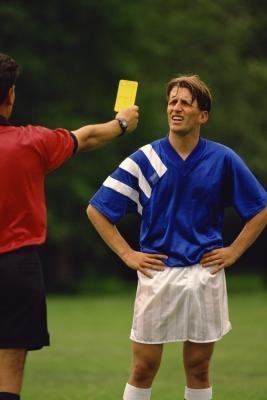
yellow card.jpgHaving said all that, you have to be gracious and allow absolute language now and then. Not in yourself. No, you should keep to this rule as much as possible. But if you’re in the midst of a heavy, hard, heated discussion and someone says, “You never listen to me!”, instead of pulling out the yellow card, you should probably just listen.

Go back to part 1 of this blog series and read the first few rules. If you are showing love (Rule #1) you won’t attack the person for breaking the rule about not using absolute language. If you accept Rule #3 you won’t expect it to “come out right” and so you’ll half expect the other person to use extreme or unreasonable words to try to express what they’re feeling. If you follow Rule #4 you’ll be focussed – not on the absolute language they just used – but on what they are trying to communicate and you’ll be doing more listening than reacting.

It’s funny to have a rule that straight up contradicts the one before it, but I remember that the Book of Proverbs – that ancient book of wisdom – often does the same thing. Like Proverbs 26:4-5…“Do not answer a fool according to his folly, or you yourself will be just like him. Answer a fool according to his folly, or he will be wise in his own eyes.” There is often great wisdom in finding the balance between two rules. In regard to having hard conversations, it is wise to be very careful what words you use, and at the same time, be gracious with other people (and yourself) if this rule takes a little practise to do naturally.

That’s true for all “rules” really. Rules are important and they keep us from hurting ourselves and others. I am convinced that we all followed all 13 rules I will outline over the 3 blog posts I will write, we would have much more helpful hard conversations. But we all are imperfect and we all need time to grow into new patterns of behaviour. I know I still have a long way to go before all these rules become second nature to me. So make sure you have a bit of grace and patience with people and with yourself as you grow in all this.

Now, I think I’ve written enough for you to chew over this time.

Rules 10-13 are about how best to “finish” a hard conversation, so I might leave that for another post.

Here’s what I will be covering:

RULE #10: Be ok with ending the conversation unresolved

RULE #11: Respond with what you both understand and what you will both do

RULE #12: Pray

RULE #13: You both have to be more committed to the rules than the conversation

I hope some of these Rules you have found thought-provoking and helpful.

Please write your comments and thoughts below!

For a bit of a laugh, here is Brad Pitt explaining his “rules” for the art of conversation.

(2527)

Share Button
December 27 2013

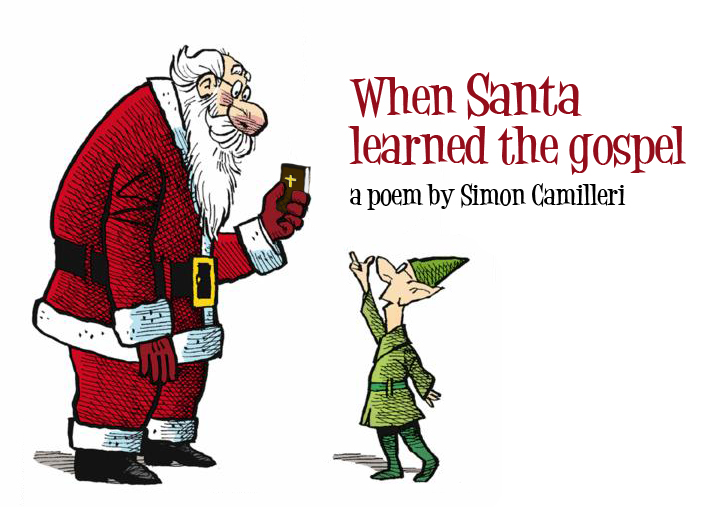
When Santa learned the gospel – a poem

santa gospel 2


UPDATE! This poem has now been turned into a children’s book and animated video.
Find out more at

www.SantaGospel.com


When Santa learned the gospel, he first heard it from an elf.

This tiny Santa’s helper had just learnt of it himself.

*

A child had asked for Christmas to receive a Bible book.

This elf had made one in the shop, then paused to have a look.

*

He read all about Jesus and the call to follow him.

He learned how Jesus lived and taught and died to pay for sin.

*

He learned how Jesus rose again and how he will return

And then this elf read how he should respond to all he’d learned.

*

He shut the book, put down his tools, then closed his eyes and prayed.

Right there and then this little elf trusted in Christ that day.

*

The next day he told Santa. It was awkward, unprepared.

He knew he didn’t know that much, but what he knew he shared.

*

He told Santa the gospel. It was simple. It was short.

But a seed was sown in Santa’s heart, which grew into a thought.

*

Santa reflected on his life and the message he supported,

Then compared it to the gospel that the elf had just reported.

*

He’d always thought that everyone was naughty or was nice.

He had them all on two big lists. He even checked it twice.

*

He’d always thought that you got gifts only if you’d been good.

The naughty kids got lumps of coal. That’s what he understood.

*

They’d all line up in shopping malls and sit upon his knee

And claim that they were always nice. As nice as nice can be.

*

Of course, he saw them when they slept and knew when they awoke.

He also knew their nice attempts were pretty much a joke.

*

Their heads were filled not with nice thoughts of kindness, peace and joy,

But with the never-ending list of their desired toys.

*

He knew their hearts, but he had thought, “They’re trying to be good.

That’s good enough to make the list. Otherwise no one would!”

*

So every year their “good enough” with toys would be rewarded.

And every year (he realised) this message he supported:

*

THE “GOOD” WILL GET THE PRESENTS.

THE “BAD” WILL GET THE COAL.

AND TRYING TO BE GOOD ENOUGH

IS GOOD ENOUGH A GOAL.

*

That was the message that he knew, but now he knew another.

He had just heard the gospel. So he compared them to each other.

*

The message of the gospel turned his message upside down.

The good, the bad, naughty and nice, it switched it all around.

*

“There’s no one good but God alone” he’d heard Jesus concluded.

And those who claim they’re “good enough” are simply just deluded.

*

If there’s a list of who is “good”, the standard we’ve all missed.

And Santa saw that even he was on the naughty list.

*

That shook his world. That rocked his boat. That gripped him in his soul.

To think that even Santa Claus deserved a lump of coal.

*

But that was only half of what the gospel message said.

It also flipped what happened to the naughty on its head.

*

Instead of being written off as just not good enough.

The message to the naughty list was one of grace and love.

*

The gospel offered mercy to all those deserving coal.

The gospel offered forgiveness and cleansing of your soul.

*

The gospel told how Jesus died our death to pay the price

To reconcile us all to God – both naughty and the nice.

*

This offer was a real gift, unlike presents ‘neath the tree.

It was not earned by being good. It was offered for free.

*

For all his life Santa had claimed that if you had been bad

Then you would not get presents and your Christmas would be sad.

*

Santa compared his message with this new one he had learned.

His message said you get the presents your good deeds had earned.

*

The message of the gospel offered something so much greater…

Jesus had come to reconcile the world to their Creator.

*

When Santa grasped the gospel, he did not know what to do

And so the elf said nervously, “How ’bout I pray with you?”

*

Then that night at the North Pole, by the fire in his den,

With a simple prayer led by an elf, Santa was born again.

*

And now, in Christ, forgiven, free – his new life had begun

and Santa had a new message to share with everyone.

(29858)

Share Button
October 27 2013

Having Helpful Hard Conversations (Rules 1-5)

20131027-140026.jpg

For many years I have been interested in learning how to have hard conversations that are productive, respectful and helpful.

When a topic of conversation is “hard” it is usually very important to one or both parties and it is often emotionally charged. Because of this, it is easy for hard conversations to descend into a yelling match or a hurtful attack or one person just shutting down completely. A hard conversation can end with one or both parties feeling even more distant and upset and unheard. Is that your experience? Well, if it is, know that there are a few simple rules that you can follow to help you and your friend, colleague, housemate, partner or family member have helpful hard conversations in the future.

These rules are not psychological theories. They are tried and true practical steps that my wife Cat & I employ with great deliberateness every time we have a hard conversation. They are the reason that we have almost never had a fight. Sure we’ve had lots and lots of hard conversations (in fact our year long dating relationship seemed to be one big boot camp of hard conversations), and we’ve also had the occasional heated argument – some that didn’t go very well. But as we learnt and applied the rules outlined below, we got better and better at having hard conversations and now, nearly two years into our marriage, I would have to say it’s possibly the aspect of our relationship that we do best incommunicating-love

The best thing about knowing how to have helpful hard conversations is that it has a wonderful “snowball” effect. Every time you have a hard conversation that leaves you feeling closer and more intimate and positive about what was just discussed, your trust in the other person grows. You develop a confidence that you can share anything with them and that they could share anything with you, and even when you hit something really difficult (like talking about an issue of sin or something very personal) you can go into the conversation knowing that however hard it is going through it, you will get through it and be better off for it.

If you’d like to see that sort of trust and confidence grow in your relationships, then read on and try to start employing the following rules.

(Note: I have presently come up with 13 rules for having hard conversations. I will post them over three blogs to make each post easier to read and reflect on)


RULE #1: Love

If you need to bring up a hard conversation, check your heart and your motives. If you are a Christian, you know that you are commanded by Jesus to even love your enemies, so there is no excuse for bringing up something hard with the motive of hurting, shaming or condemning the other person.

20131027-134508.jpgConsider Paul’s words in 1 Corinthians 13:4-6… “Love is patient, love is kind. It does not envy, it does not boast, it is not proud. It does not dishonour others, it is not self-seeking, it is not easily angered, it keeps no record of wrongs. Love does not delight in evil but rejoices with the truth.” Loving someone doesn’t mean you avoid hard conversations, after all, love rejoices with the truth! What love means is that you do so in a way that is marked by humility and selflessness. If you are just trying to pick a fight or get something off your chest, you will not be able to follow any of the other rules outlined below. As the first verse of 1 Corinthians 13 says, “If I speak in the tongues of men or of angels, but do not have love, I am only a resounding gong or a clanging cymbal.” That definitely describes what a loveless hard conversation can end up sounding like! Selfless love must guide all of our hard conversations, so before you bring something up, make sure you search your heart, test your motives and ask God to give you genuine love for the person you need to talk to.

Note: If, in the end, you can’t control your emotions or the topic of the hard conversation is so painful you just can’t think about acting lovingly, then consider bringing in a neutral third party (be it a mutual friend, pastor, or counsellor) to mediate the hard conversation. This in itself may be the most loving thing to do.


RULE #2: Choose the time and the place

There is no perfect time or place to have a hard conversation. By definition, hard conversations are… hard. In fact, in an effort to follow this rule, you can put off having a hard conversation almost indefinitely.
Having said that, in following the number #1 rule of Love, you will think about when and where it is most loving to have a hard conversation. In general, here are a few times or places that may not be the wisest to have a hard conversations:

  • When it’s late: This is a hard one to avoid, as you may have developed a habit of having deep and meaningful conversations ONLY late at night, but hard conversations during the day usually give both parties more time, energy and headspace.
  • When one or both of you are tired, unwell, stressed, angry or emotionally drained: Again, you may never be able to avoid these factors, but keep them in mind and see if waiting a day or two might be the best thing.willens_girlsfight_post
  • In public: Having a hard conversation when you’re out a a restaurant or when you’ve got friends over is just unfair. It creates opportunities for shaming and embarrassing that may feel satisfying, but do not come from a motivation of love. Also, if the hard conversation is stirring up emotions, the public setting will not allow either party to freely express themselves.
  • When you have limited time: It is unwise to start a hard conversation on the drive to an event or just before someone has to go to work. The pressure created by the limited time may easily make the conversation descend into an argument.
  • When you one or both of you needs time to think: You or the other person may not be great at having long conversations or articulating what you are feeling or thinking. It may be worth just flagging the conversation and it’s topic and asking if it can be thought about and talked about at another designated time. Yes, that may mean you say something like, “Darling, I want us to discuss how you spend your money. I know it may be a hard conversation, so I was wondering if we could talk about it tomorrow night.” Now, naturally the other person may have a few questions, and it may be fair and loving to clarify what you mean, but it still maybe good to suggest that the full conversation take place after you’ve both had time and space to reflect. If you start a hard conversation and you then realise the other person needs more time to think before they can properly respond, you would be loving to ask if they wanted to postpone the conversation til a later date. Putting the conversation on pause will take a lot of selflessness, as you probably needed a lot of courage just to bring up the hard conversation, but if may be vital for your conversation to be truly helpful.

TRY THIS: When there doesn’t need to be a hard conversation, ask your partner, friend or family member, this question: “If I ever had to bring up a hard issue with you, what would be the best way to do it? What sort of time and environment do you need to be able to hear me out and respond well?” Different people like different things. Some like physical space, some like their hand to be held. Some like it while relaxing at home, some like it while going for a walk. Now, of course, even this conversation may be a hard one for you to have if your relationship with the person is distant or strained, but when it is possible, learning the best time and place to have hard conversations may save you both a lot of grief.


RULE #3: “This is not going to come out right…”

When addressing a hard topic of conversation, one of the best ways of communicating properly is to “talk it out”. This means you have to just say whatever you can and then refine your words and your thoughts in discussion with the person listening. The problem is, the first few things we say may sound a lot harsher than we intend them to be. But the damage is done. The words are out there, and the other person has already begun defending themselves or attacking you back.

DemersOne of the main reasons we avoid hard conversations is we don’t know how best to explain what we are feeling and thinking. We worry that the person we want to talk to will not hear us out or hear us properly. We worry about communicating the wrong thing and hurting the other person unintentionally.

My solution to this is Rule #3. Before bringing up a hard conversation, you simply say, “This is not going to come out right…” and then you just keep going. What that opening statement does is give you permission to say what is on your mind before you have fully processed it. It allows you to get it off your chest. It opens up the discussion without an expectation that the words are going to be perfect or even completely accurate! It just gets the ball rolling.

It is very useful for the person being approached as well. It asks them to be patient and to not react straight away. It allows them to put down their defences a bit and just listen and allow the person to talk it out for a bit.

Now, it may feel a bit fake or artificial to start every hard conversation with the same 8 words, but if you both are aware of Rule #3, then it will remind you both of its purpose. Nowadays, my wife and I rarely use this rule as explicitly. For us now, it is often our “unspoken rule” where we both know when we begin a hard conversation that “this is not going to come out right”. But for the first year or two of our relationship we followed this rule, word for word. It served us very well and allowed us to have many helpful hard conversations. If you still feel like your working out how to have hard conversations with someone, I recommend allowing this opening sentence to be part of your agreed vocabulary.


RULE #4: Actively Listen

This rule is particularly relevant for the person who is approached, rather than the person initiating the hard conversation. If someone has asked, “Can we talk?” you’re probably a little nervous. If they then start by saying, “This is not going to come out right…” then you really will be worried. But hopefully you will also be patient and willing to let them talk it out. Your goal, before responding, before apologising, before defending, before correcting, before speaking… is to listen. As James (the brother of Jesus) writes: “My dear brothers and sisters, take note of this: Everyone should be quick to listen, slow to speak and slow to become angry, because human anger does not produce the righteousness that God desires.” (James 1:19-20) That’s great counsel – quick to listen and slow to speak.

Listening-nowThis is primarily what most people want when they are bringing up a hard conversation. We all want to be heard and understood. Even more than we want people to change, even more than we want people to apologise, we want them to first simply acknowledge what we are feeling. We want to be known and we want to know that the other person “gets us”. During a hard conversation, both parties must put listening as the primary goal of the conversation. If both parties are just trying to fight for their own voice to be heard then the conversation will descend into a battle of words.

There are many techniques for what the communication books call “active listening“. The most common and most helpful is repeating back to the person what you have heard them say. Even if you simply repeat word for word what they just said to you, it can be helpful to make sure they know that you have heard them. Other times, the person will find it more helpful if you put it in your own words, so that it shows that you have not only heard them, but you understand what they mean. The danger of this, is when people get too interpretative or when they filter what the person actually said through their own insecurities or wrong perceptions. For example: Mel says “I think it’s time we started going to the gym together.” Then Sam says, “So… you’re saying I’m fat and you find me repulsive?” This is bad active listening.

Basically, you never want the other person to have to say, “No, that’s not what I said!” Make sure you listen – carefully, intentionally, actively. To me, active listening is not so much a technique, but an attitude. It is an expression of love for the other person. Even if they are saying something that sounds harsh or unfair or ridiculous, you want to hear them out without judgement. You want to listen and you want them to feel heard.

REFLECT: One of the main reasons why people don’t bring up hard conversations is because they don’t feel like the other person will really listen. Are you that person? Think of your loved ones, your family members, your work colleagues. Do they possibly avoid talking to you about hard issues because you are prone to being quick to speak and slow to listen? Maybe ask someone if that’s true of you.


RULE #5: Be grateful that something hard was brought up

Try this next time someone brings up something hard with you… Thank them. Thank them that they told you about your bad breath. Thank them that they want to discuss your porn use. Thank them that they brought up the issue of your inappropriate parents. Before you respond, even if the hard topic has pushed all your buttons, make sure you take a breath… and thank them.

Why? Well, think about it. Bringing up the hard conversation with you would have been quite nerve-wracking. They would be worried about how you’ll react, worried if it’s worth bringing up, worried if they should just let it go, worried that you’ll misunderstand them. They may even be worried that bringing up this hard topic, whatever it is, might jeopardise your relationship with them. They faced all those worries and in the end decided that honesty was the best policy. They decided that you were worth it. And they also decided that you could take it. They put a lot of trust in you to bring this topic up. In fact, you could see their efforts to have this hard conversation as an incredible compliment! That’s right! Telling you that your breath stinks could actually be a compliment!

Get-Rid-OF-Bad-Breath

I keep bring up the “bad breath” example, because that is actually a hard conversation that Cat & I had a few months into our dating relationship. I’d like to say I wasn’t the one with the bad breath, but unfortunately that’s not true. Cat was terrified about bringing it up, but it was a real issue for her and so she awkwardly, nervously and bravely started the hard conversation. Now, of course, I was embarrassed and in the moment I would have preferred for Cat to simply endure my face-melting halitosis rather than to have to talk about it, but even back then, I knew the principle of Rule #5. Very quickly I said, “Thank you Cat. That would have taken a lot of courage to bring that up. Bad breath is one of those taboo topics that no one talks about, so it really shows that you value this relationship to want to talk to me about it. It also shows that you trusted that I wouldn’t fly off the handle. Thank you.” Immediately, Cat let out a sigh of relief and we began a conversation that was a little less hard and much more helpful.


Now, that’s all I’ll give you to think about for now. I will leave the other rules for another blog post.

But if you’re curious as to what they are, I have put them below.

RULE #6: Trust their motives

RULE #7: Stick to the topic

RULE #8: Avoid absolute language

RULE #9: Allow absolute language

RULE #10: Be ok with ending the conversation unresolved

RULE #11: Respond with what you both understand and what you will both do

RULE #12: Pray

RULE #13: You both have to be more committed to the rules than the conversation


Try putting them into practise. Read through this blog with your partner or friend and discuss, how you can implement them. That itself may be a hard conversation!

If any of them are helpful, please post a comment (I always appreciate them) and feel free to share this blog with others.

Finally, here’s something, just for a laugh!


(2801)

Share Button
August 12 2013

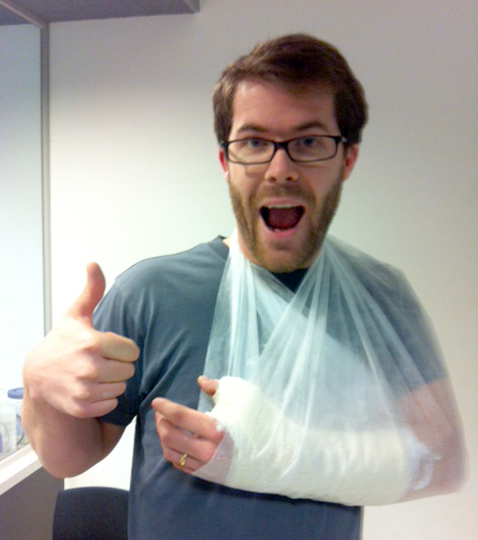
Without a Thumb – a poem for Matt Salter

thumb

WITHOUT A THUMB

A poem for Matthew Salter
By Simon Camilleri (12/8/2013)


Without a thumb, is life that bad?

Does it really disable?

The corporate myth that “thumbs are great”

I’d say is just a fable.


Sure scientists may claim that Man

is more evolved, proposing

that we would still be like the apes

without our thumbs opposing.


But I say “bah!” What do they know?

They’ve never lived without them!

Until they try a thumb-free life

I’ll continue to doubt them.


They could (like some) shatter their thumb

and if they did I’d wager

they’d soon discover life thumbless

is nothing really major.


Sure, you can’t grip, things tend to slip,

and doorknobs are an issue.

True, jars stay jarred cos lids are hard

without that thumby tissue.


Sure, you feel hexed when trying to text

and pens are also tricky,

And standing at the urinal

It’s hard to hold your…keys or other such items you might be holding while standing at the urinal.


And don’t begin to think you’ll win

if “Thumb Wars” is declared.

But still it’s true, the cons are few.

You shouldn’t really care.


See thumbs were useful long ago

in times now in the past.

You needed them to throw a spear,

but that need didn’t last.


In Roman times at colosseums

your thumbs had need worth noting.

Thumbs up was life. Thumbs down was death.

No thumbs was donkey voting.


In times Shakespearian you’d bite

your thumb to pick a fight.

Since then it has evolved across

two digits to the right.


And in more recent times people

used thumbs to go hitch hiking.

But now with global warming those

without a car are biking.


Even now babies don’t need thumbs

to suck them til they tire.

We’ve now replaced God-given thumbs

with plastic pacifier!


So you can see, without a thumb

your life won’t really change.

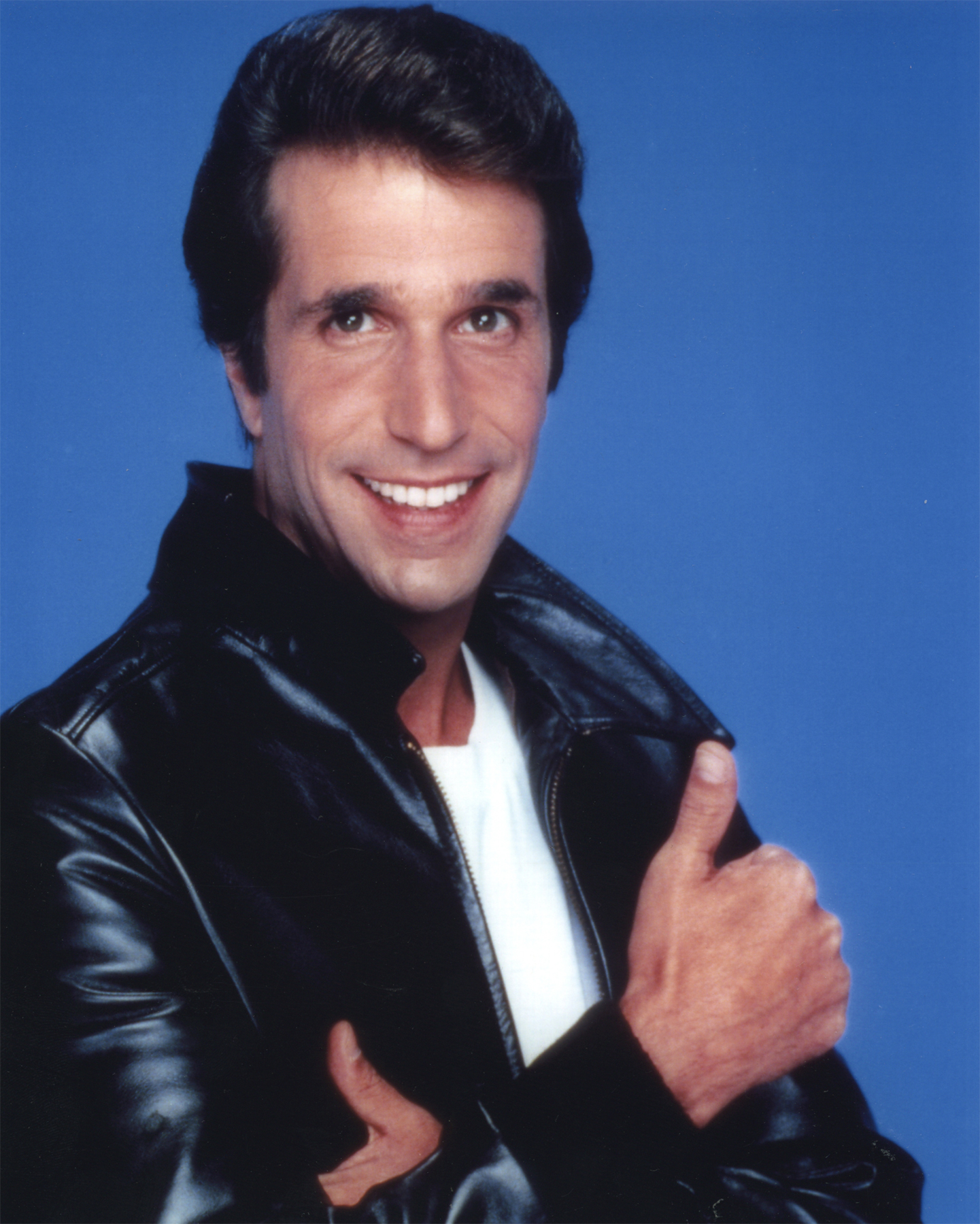
Sure, if you tried to be The Fonz,

your catch cry might look strange,


But generally, you will be fine.

In fact life can be greater!

Who cares if you can’t count to 5.

Just use a calculator.

fonz

(7433)

Share Button
July 24 2013

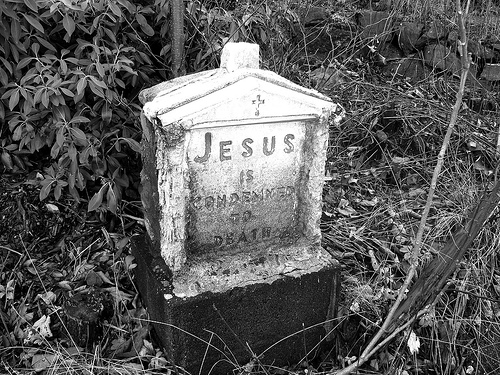
death – a poem

Jesus tombstone


death

a poem by Simon Camilleri

I’m not afraid of death

I have no fear to take that final breath

I have no need to clasp

And clammer to hold my life within my grasp

Death has no sting

When your life is held by life’s King

See, I have already faced

My death when Jesus died in my place

He died my death for me

Exhausting my sin’s deserved death penalty

What could I do

But repent from my allegiance to

The sin that caused his death

Opening my empty hands to receive this gift

In the blinking of an eye

My life estranged from Life did die

And it was then

That my new life was born again

And so I now fear not

That my body will one day begin to rot

My end already came

My death certificate already framed

My funeral is done

And now my everlasting afterlife has come

And though I still

In some sense live in wait until

Jesus returns again

I do not live in fear of the end

When I farewell mortality’s strife

I won’t face death – but more and better life

So now I am free to live

A life where I am free to give

Free to bless

With blissful self-forgetfulness

Without a thought

Of holding on to what I’ve bought

For Jesus’ sacrifice

Has bought my life and paid the price

That I could never pay

And so for him I live today and every day

Free of fear

Even as death draws daily near

.
“Jesus shared in our humanity so that by his death

he might break the power of him who holds the power of death — that is, the devil —

and free those who all their lives were held in slavery by their fear of death.”

(Hebrews 2:14-15)

.

“Listen, I tell you a mystery:

We will not all sleep, but we will all be changed –

in a flash, in the twinkling of an eye, at the last trumpet.

For the trumpet will sound, the dead will be raised imperishable, and we will be changed.

For the perishable must clothe itself with the imperishable, and the mortal with immortality.

When the perishable has been clothed with the imperishable, and the mortal with immortality,

then the saying that is written will come true: “Death has been swallowed up in victory.”

Where, O death, is your victory? Where, O death, is your sting?

The sting of death is sin, and the power of sin is the law.

But thanks be to God! He gives us the victory through our Lord Jesus Christ.”

(1 Corinthians 15:51-57)

(2567)

Share Button
July 18 2013

Fear Full Circle

20130718-115645.jpg


The fear of God
is the beginning of wisdom…
(Proverbs 9:10)


The wisdom of God

is the gospel of Jesus…
(1 Corinthians 1:24)


The gospel of Jesus

is the perfection of love…
(Romans 5:8)


The perfection of love

is the end of fear.
(1 John 4:18)


(1863)

Share Button
June 2 2013

Living “Free-to-air” Free

Break glass BLOG

I’ll never forget how my Year 10 Media Studies teacher described television: “TV is a series of programs to keep you watching in between the commercials.” It may have been a bit of a cynical view (I’m sure there are many artistic purists in the television industry), but from that point on I began noticing how much advertising was on television.

TV+addictAn average prime-time show on tv has about 20 minutes of advertising PER HOUR! That means 1/3 of your viewing time is filled with companies telling you that you need to buy their product or service. That is why “free-to-air” TV is not really free. You have to pay in time and brain space as your mind is filled with messages of materialism, greed, dissatisfaction and the woes of “first world problems”. And the hope is that you will continue to pay when you step into your nearest shopping centre or drive past your local car yard. If the marketplace was a church, then TV commercials are their never-ending sermon!

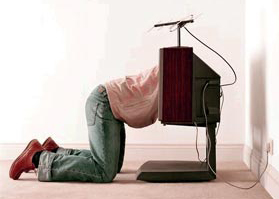
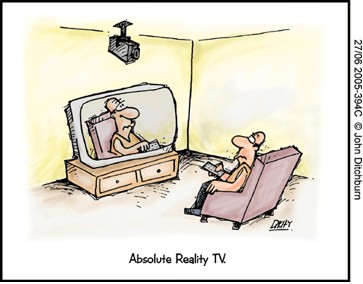
For many years I wanted to try an experiment… to live “free-to-air” free. I realised that free-to-air tv did not hold much interest for me. This was not always the case. When I was young, it was a real family treat to sit down and watch “Hey, Hey it’s Saturday” or “Murder She Wrote” or even “Neighbours” when it first came out. But over the years, as more and more “reality television” shows filled the time slots and it became easier to purchase tv series that I liked on DVD, I came to realise what tv had become in my life – Plonkvision. It was the thing I turned on in the morning as I had my breakfast and it was the thing I turned on when I came home from school or Uni or work as I plonked on the couch. It was mindless background noise.absloute-reality-tv

I wondered what my life would be like if I didn’t have free to air tv. I wasn’t so radical as to consider getting rid of the tv altogether. No way! My dad had brought me up on a staple diet of classic movies and my love for cinema is something I really enjoyed. I also had purchased a playstation 3 and a nice tv, so the bold move of getting rid of all that was probably not on my radar! But I did muse about whether I really needed the aerial. That little cord that connected me to the plonkvision world of two thirds reality tv and one third commercials. Would I really miss it?

Well, at the beginning of 2012, as I was moving into the apartment where my soon-to-be wife and I would live, I asked my then-fiance Cat what she thought of the idea. She liked it, as she also wasn’t really interested in tv shows other than the ones she had on DVD (which she had heaps of). So when we got married on the 21st of January 2012, we tried it as an experiment. It has been 16 months since then, and I thought I might share some of our findings so far.


1. IT’S NOT EASY TO WEAN OFF IT.

Despite the fact that I didn’t really have an interest in the actual shows on tv, I discovered that I had developed a habit of turning on the plonkvision whenever I had some down-time. In the first few days I literally became anxious and agitated, like a smoker trying to give up nicotine. And really, that’s what had happened – I had become addicted to free-to-air tv.

tv-brainThe consistent practice of turning on the tv when I got home and plonked on the couch had trained my brain to expect that stimulus. It became a soothing and relaxing practise. A way of winding down. Not because of any content that was on the tv – that was almost incidental – but it was the action itself, the bright colours and the familiar noise of brainless programs and commercial that my brain had grown dependant on.

So initially, when I took it away, my brain craved it like a baby crying out for its security blanket. I was actually surprised by this at first, as I hadn’t realised it had become such a habit in my life. But my commitment to the experiment forced me to find other things to do. Fortunately, I loved to play the piano, practise magic tricks, write blogs and do lots of other things that relax me, and those other hobbies were not filled with commercials! Imagine if they were. Imagine if every 6 minutes of me playing the piano, someone came into my house and told me to buy stuff for 3 minutes and then left for another 6 minutes or so. What hell that would be!

Weaning off free-to-air tv has helped me develop lots of other healthier and less time-wasting ways of relaxing. I still plonk for an hour or so at the end of the day, which is a habit I also may need to break (especially when I have kids), but there are other reasons why I am glad I don’t use free-to-air tv to do it.


2. CHOICE RATHER THAN DISCOVERY

The main benefit that I have found in living “fre-to-air” free, is this one powerful reality: If I turn on the TV I am choosing rather than discovering what is going to go on the screen.

The TV is no longer a portal to the free-to-air tv world. It is simply a monitor. It is plugged in to my playstation so I can watch a movie or play a game of my choosing  It is also plugged into my Apple TV device – which we most often use for its online radio function and to bring up what’s on my iPad on to a larger screen (for example, I use it in Bible Studies, to bring up the text we are working on or to show relevant YouTube clips).

I still use the tv heaps, but now it is simply a screen. I choose the quality and the appropriateness of the content that it will display, not a television network that has less than my best interests at heart.

In regard to relaxing, this does require a little more effort as you have to actually think about what movie or game you are in the mood for. But that’s a great thing I find! Consider this senario… Cat & I are in the mood for watching a movie after dinner (or during dinner if we’re feeling more lazy). Now, whenever we feel like this when we’re on holidays and we’re in a hotel room with free-to-air tv, we say “Well, let’s see what’s on tv.” We turn it on and discover the only thing half worth blurayswatching is a trashy 80’s horror flick which we inevitably get sucked into and then HAVE to watch it to the end just to see how the stupid plot concludes. Cat is left feeling crap (she doesn’t really like horror) and I am left feeling like we paid all this money to stay in a hotel room to pay for 90 minutes that I will never get back!

At home on the other hand, where we live “free-to-air” free, instead of saying, “Well, let’s see what’s on tv”, we ask each other, “What sort of movie are you in the mood for?” It gives us both the opportunity to love and serve each other as we offer suggestions and try to find a movie that will both enjoy. Some nights we watch “Sister Act”. Some nights we watch “Die Hard”. And because Cat doesn’t really like scary movies, we almost never watch horror. A movie night becomes a way of consciously choosing for the sake of the other, rather than simply discovering what is being offered to us by someone else.


3. IT’S GOOD FOR PURITY

Apparently, due to a recent study, it’s said that men think about sex around 19 times a day (much better than the myth of “every 7 seconds”). Whatever is the case, one thing I know is that for a Christian guy in this sex-saturated world, the thing you have to think about  – is purity. Christian guys (and increasingly girls) are getting sucked into, shaped by and addicted to this pornified culture and although internet porn is probably the biggest problem, tv can also be a particular trap.

1156296_vector_warning_sign copyI used to find late night tv a real danger as I was getting tired and my other housemates had gone to bed. I’d start thinking, “It’s late. I need to get to sleep” as my zombified brain would be mindlessly flicking channels. Suddenly, I’d come across something that warned me of the nudity and sex scenes that would be featured in the upcoming movie. My mind (and the Holy Spirit) would say, “turn it off now”, but like the fool described in Proverbs 7:22-23, my lustful heart would be stirred and the weakness of my lack of discipline would be proved once again as I get led off “like an ox going to the slaughter, like a deer stepping into a noose.”  This scenario is not uncommon for Christian guys and all Christians who care about avoiding it and other areas of sexual temptation should consider what they can do to simply reduce the chance that they will be exposed to it.

In regard to the “forbidden woman” being talked about in Proverbs, Solomon’s advice is “Keep to a path far from her, do not go near the door of her house.” (Proverbs 5:8). Jesus gives an even more radical teaching on the subject of sexual purity, “You have heard that it was said, ‘You shall not commit adultery.’ But I tell you that anyone who looks at a woman lustfully has already committed adultery with her in his heart. If your right eye causes you to stumble, gouge it out and throw it away. It is better for you to lose one part of your body than for your whole body to be thrown into hell.” (Matthew 5:27-29)

The message is, don’t put yourself in temptation’s way. Run from even the potential of sexual immorality. Be radical! Walk on the other side of the street, gouge out your eyes, or if you struggle with sexually explicit stuff on free-to-air tv then why not like me, get rid of the aerial. Living “free-to-air” free does not change the lust in my heart – that is a cooperative work between me and the Holy Spirit over time – but what it does do is removes a source of temptation, which is always a wise thing to do. Like I mentioned in the second point, having to choose what you watch on tv rather than just discovering what’s on, may be good for you and your marriage in more ways than one.


4. YOU’RE NOT LOCKED IN

As Cat & I weaned ourselves off of watching free-to-air tv, we compensated it by watching a lot of tv shows on DVD. I know that illegally downloading tv shows is pretty common nowadays, but as Christians we didn’t want to do that and so we would either watch online shows on something like ABC iView or we would buy the series we were interested in.

We’d often wait for a sale at JB HiFi and pick up a few and then work our way through them over many months. Or, we’d give ourself a prize or a treat for some other area of discipline that we were working on by buying a BluRay of a tv series from Amazon UK (If you didn’t know, the UK has the same BluRay region as Australia and Amazon can sometimes be a lot cheaper).

2012-07-30-Olympic-wrestle-for-the-remote-600

Now a lot of people don’t want to spend money on buying tv series that they could watch on free-to-air tv, but we have found the financial investment is not all that huge and in the end it’s really worth it. The lack of commercials chopping up the show is fantastic and the addition of special features is also pretty cool, but one of the major things I like about watching a tv series on DVD is that you are not “locked in” in the same way you are on free-to-air tv.

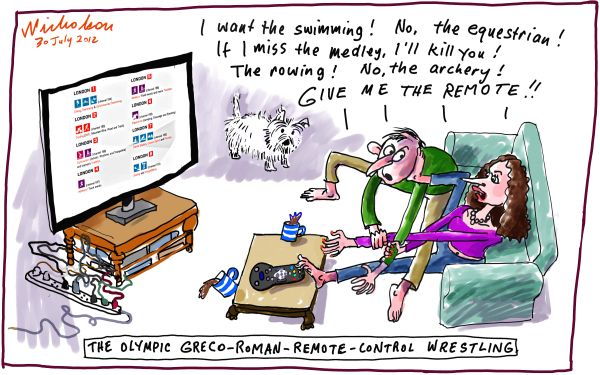
What I mean is, when it comes to watching a show on free-to-air tv, even if you are not in the mood for it, you feel forced to watch the show because the time it is on is set. The potential of missing a show actually causes some people a fair bit of anxiety and can cause arguments between those who live together. Some people solve this conflict by buying a tv recorder, but that can sometimes create an even worse scenario. You then have the freedom to record every show that you want and I know Christian married couples who now fight over making time to watch all the shows that they have now recorded!

Also, different shows create different types of moods. Some shows are light and fluffy, others are heavy and disturbing. Watching a show on DVD allows you to turn the show off or put off watching it if you don’t feel it would be helpful to you or those you live with.

Breaking-Bad-S1

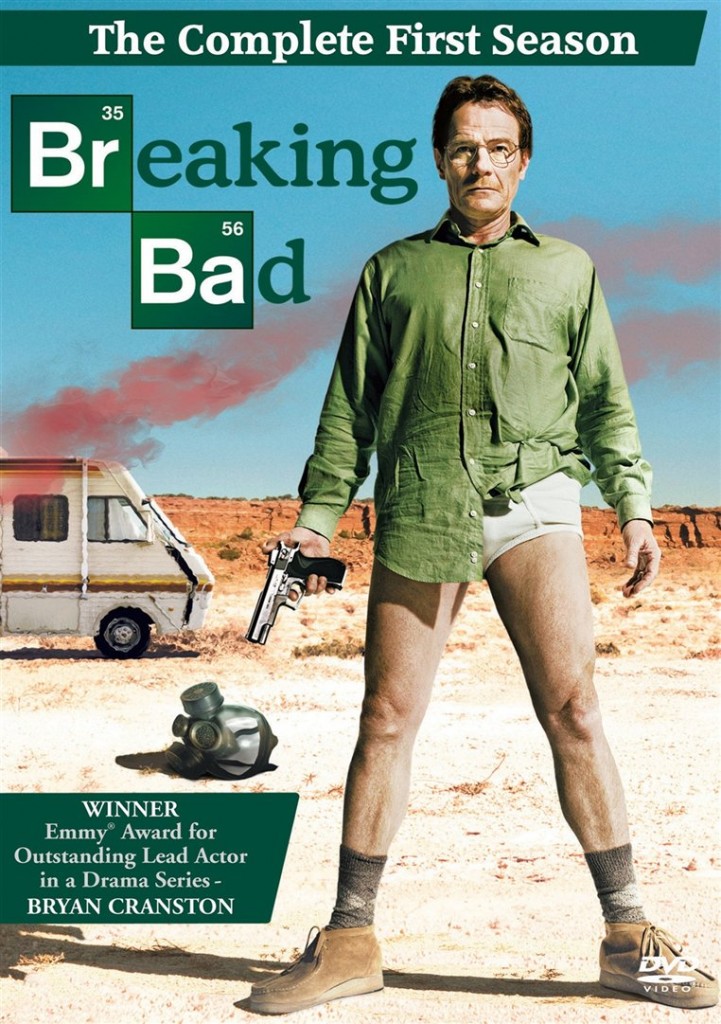
For example, Cat & I love “Breaking Bad”. We have bought the first 4 seasons of it and we think the performances and scripting is amazing. But the show is really intense and the themes are very heavy and at times quite unsettling. Cat & I watched the first two seasons and began watching the third but found that we were being left in a dark place after watching the show. It even was causing me to have bad dreams about divorce, marital conflict and infidelity (some of the side themes in the show). It was so interesting and captivating to watch, but we were finding it not healthy for our marriage or our personal mood, and so we stopped watching it. We now haven’t gotten back to watching it for months and are contemplating getting back into it. We couldn’t have made that choice if we were locked in to watching it on free-to-air tv.

Living “free to air” free has allowed us to continue to watch the shows we love, but with the freedom of choosing when they would be good for us to watch. It gives us an another opportunity to serve each other and our marriage and that makes the financial cost of buying a series when they come out on special, worth the money. Also I expect, when we have children, this ability to choose will be even more beneficial.


5. CATCHING THE NEWS

Some people watch free-to-air tv in order to catch up with the news. When I was living at home my parents used to watch news on tv from the 6:30 Report to the “current affair” shows which finished at 8pm! It was painful as they all contain fluff pieces to fill it out and the actually important news was repeated on every show.

online_newsWhat I have learnt by living “free to air” free is that if the news is important enough, you will hear about it on social media. When Julia Gillard, Australia’s first female Prime Minister, came into power, I found out while sitting with my brother Tony in a cafe in Bendigo as I looked at Facebook on my phone. In fact, even the news programmes on free-to-air tv sometimes get their news from a tweet or a facebook post they they find. Social media is a powerful and unfiltered tool for communicating important news.

Due to this reality, I don’t feel like I will ever miss any important news that I need to know about. I also read the newspaper when I can and keep an eye on a lot of online news from a variety of sources, so that keeps me on top of the topics I am interested in. Also, some of the topics I am interested in will never she shown on free-to-air tv, but I can learn lots about what is happening from a variety of perspectives online. On the internet, news is instant, varied and world-wide. The ability to access this news is a freedom and a privilege of our modern world, and it means that the corporately owned free-to-air news programs don’t have to be my only source of information.


6. KEEP THE AERIAL HANDY

25oscar-best-speech1One last thing to point out is that Cat & I keep the aerial handy. It’s actually plugged into the wall and tucked under the couch so that whenever we want we can plug it into the tv. We do this for the rare occasions that something special is being shown on free-to-air tv that we want to watch – the Grand Final, the Oscars, the Melbourne Cup, an Election Night, etc.

The aerial is not something we see as “evil”. Rather we treat it like a projector. Many people have a projector that they bring out on special occasions, but that generally lives in its case in the cupboard. That’s why I used the picture at the heading of this blog. The aerial is something that we use “in case of emergency”.

The key thing is that we know the cost. Free-to-air tv is not free. It is not free of commercials. It is not free of dangers. It is not free of a culture of consumerism and apathy. It has a cost. On occasion we are willing to pay that cost, but we do so knowingly and rarely.


FIRST WORLD SOLUTIONS TO FIRST WORLD PROBLEMS

I do realise that to find alternatives to free-to-air tv also includes a cost. We have bought DVDs, Blurays and an Apple TV device to fill the space that free-to-air tv used to occupy.

FIRST WORLD PROBLEMI want to acknowledge that this whole conversation is really about me suggesting “first world solutions” to “first world problems”. Bloody hell! There are heaps of people in Australia who can’t even afford a tv and on a global scale, only 20% of people own their own tv.

If you so have a tv, but you’re doing it tough or you don’t want to waste money on DVDs and the like, then please accept my apologies and enjoy free-to-air tv to your hearts content! Or give us a call and you can borrow some of the DVDs we have purchased! Either way, I definitely hold no judgement against those who choose to watch free-to-air tv. I just want to suggest a slightly alternative lifestyle for those that like the idiot box, but feel like free-to-air tv may be making them too much of an idiot.

One thing I do want to say is that over time, Cat & I have even stopped watching tv shows and movies, and I almost never play playstation games any more. The effort to choose what we want to view on the tv has encouraged us to spend more time doing other things that don’t involve the tv at all… Now if only I could do the same for YouTube and Facebook! (Hmmm. Maybe that’s another experiment to try!)


TRY THE THREE “FREE” FREE EXPERIMENT!

If you’re in the same-ish demographic to me and you find free-to-air tv is wasting a lot of your time or causing conflict in your relationships, why not try it for yourself! I’m calling this challenge the THREE “FREE” FREE EXPERIMENT! The idea is that just for three weeks you pack up the aerial cord and put it away. See what happens! Maybe you’ll hate it. Maybe you’ll enjoy it. Maybe you’ll go mad and realise you have an addiction! Or maybe you’ll want to try it for longer than three weeks.

It’s not that extreme really. I’m not saying throw all your technological devises out the window and join a commune! It’s just an experiment. If you’re married or you’re living with housemates (or even if you’re still living at home with your parents) why not talk to them about the idea and suggest giving it a go. If you want to be even more hard-core, you could make the “THREE” represent three months rather than three weeks.

If you try it (or if you’re already living “free-to-air” free), please tell me and post your comments below. I’d love to hear what you have discovered along the way.

Who knows… over time, we may actually be able to get out of this culture of just plonking infront of a screen altogether and begin using our down-time to pick up a book or play a musical instrument or… shock horror… even just talk to the person sitting right next to us on the couch.

couple-talking-on-couch

(3898)

Share Button
May 20 2013

The Summit (a short story)

helping-hand


The icy, fresh wind blows in my face, gliding over my eyes making them cry. I squint through the tears and take in the view before me.

Epic.

The rising sun spreads its blanket of warm light across the vast landscape like butter being slowly spread on morning toast. The view from the summit gives you a unique perspective. Everything else looks small. Accomplishable. You can see further and wider than ever before and the beauty of God in the face of nature is breathtaking.

My guide stands beside me. We huddle together keeping warm, enjoying the view. She squeezes my shoulder in a silent expression of pride in what I have accomplished. I squeeze her shoulder back in a silent expression of humble gratitude. I could not have reached the summit without her help. She knew how to read the map, she planned each leg of the climb, she told me where to put my feet when the ground threatened to give way and I fear plunging to the bottom of a cliff. She was my guide, my companion, my help mate.

I had not wanted to do this climb, really. I was happy living at the bottom of the mountain. I was happy living in its shadow just trying to ignore it. But then she came along.

“The view!” she’d tell me. “You’ve got to see the view up there! It’s spectacular!”

She’d tell me of how the wind blows in your face and you can see for miles. She would try to inspire me with descriptions of how wonderful it would be to not live in the mountain’s shadow and how the sun stretches it’s blinding yellow hand across the plains making the darkness run and hide. She would speak of the peace and the silence at the summit and the satisfying exhaustion you felt as you collapsed at the top.

All that didn’t sound pleasant at all. I knew that the beauty of the view of the summit came at the excruciating cost of the climb to get there. I hadn’t seen the sunrise for a decade and I knew why. I knew that the gigantic shadow that I was living in was caused by an equally gigantic mountain. She could try to lure me in with visions of the achievement I’d feel, but the only reason why I’d feel that sense of achievement is because it was going to be so hard. I had lived long enough at the bottom of the mountain to get used to its shadow and if it took something that hard to get out from under it, I could put it off for a little longer.

The problem was, the mountain wasn’t getting any smaller. Every year that went by, the mountain grew a few metres. Every year I avoided facing it, it because a little harder to face. The summit got a little further away. The shadow I lived in grew a little bigger.

The one reason that convinced me to make the climb in the end, was the road.

There was only one road and it led straight to the mountain. It travelled up it’s rocky cliffs, winding past dangerous outcrops and through terrifying caves, leading always up to the summit. Over the summit I had no idea where the road went, but I presumed it went down again and then continued eastward towards the horizon that I never saw.

Many years ago, I had stopped at the base of the mountain. It wasn’t really a mountain back then. It was more like a small hill. I wasn’t very good at travelling on the road at that age. I often lost my supplies and ran out of water. I was a pretty annoying travel companion and I often twisted my ankle or stubbed my toe, making everyone who walked along with me have to slow down and wait for me to catch up.

When I got to this hill, I just stopped. Not sure why. It was a long time ago. But I stopped and set up camp and didn’t move on.

tallest_mountains_291538I managed to distract myself for years as the hill became steeper and steeper, and one morning – I don’t know when – I couldn’t see the sunrise any more. I looked up at the incline before me and I shuddered. The hill had become a mountain. I got back into my tent and there I stayed… until she came along.

I knew that if I wanted to travel with her, the only road I could travel on was the one that headed right up the mountain. It was either that or stay in this tent forever. She didn’t want that. She wanted me to see the sunrise again. She wanted to travel  much further down the road, past this mountain and off into the horizon. She was patient and she was wise and she was a bloody good mountaineer. She was a gift to me. But if I wanted to have her as my travelling buddy, I knew I had to leave the tent and face the mountain.


It took nearly two years to climb to the summit, but together we did it. And now, as I stand next to her, squinting through my tears and marvelling at the view, the memory of the painful journey to this point is slowly slipping away. Fading like the shadows that retreat from the sun’s warm glow. Drowned out by the soft whistle of the wind and washed away by the tears and sweat that cover my face.

I could tell you of the caves that we had to crawl through, the mounds of earth we had to dig through and the confusing rock formations we had to navigate. I could tell you of the dark demons we had to face and the cold and lonely nights we had to endure. I could tell you of the exact path we took and what we met at each stage of the climb.

But none of it would help you.

If you have a mountain to climb, the road will be different. The mountain will be different. The obstacles will be different.

The sunrise might be the same though. And so that is what I will speak of. The clear, rich, beautiful sunrise that I long since learned to live without.

After what seems like hours, I begin to look at the path down the mountain. It seems easy and well lit by the morning glow. There are clear steps and a handrail and the road continues at the bottom.

I follow the road with my eyes across the plain and notice that a way down it, its path comes across a small hill. A little further, it hits another hill, and then another and another.

My heart sinks.

It seems, every few hundred kilometres or so the road hits a hill and from what I could see, this carried on until the horizon.

I point it out to my guide. “What’s with that?? It took me everything I had to tackle this mountain! I thought it was all over! I thought it would be a clear, level path from here on!”

“They’re not that big, you know.” she encourages me. “Just one small hill once a year. And as long as you don’t let them grow, that’s all they’ll ever be.”

She squeezes my shoulder again, realising that, though I had climbed to this great height, I still had a way to go to learn how to travel this road. I’m grateful for her patience. Grateful for her wisdom and her grace.

I turn away from the landscape and stare at her beautiful face. It glows with the morning sun as she smiles at me, her lip quivering from the icy wind that blows across her face, messing her red hair.

The view is breathtaking. God is on display everywhere I look.

We grab our backpacks and help each other put them on, taking a final swig of water before walking towards the staircase that leads down from the mountain’s summit.

I don’t look back. I don’t need to. The view all around is too beautiful.

couple-walking-pentland-hills-regional-park

This story is dedicated to my wife, best friend and sister in Christ,

Cat.

(5062)

Share Button